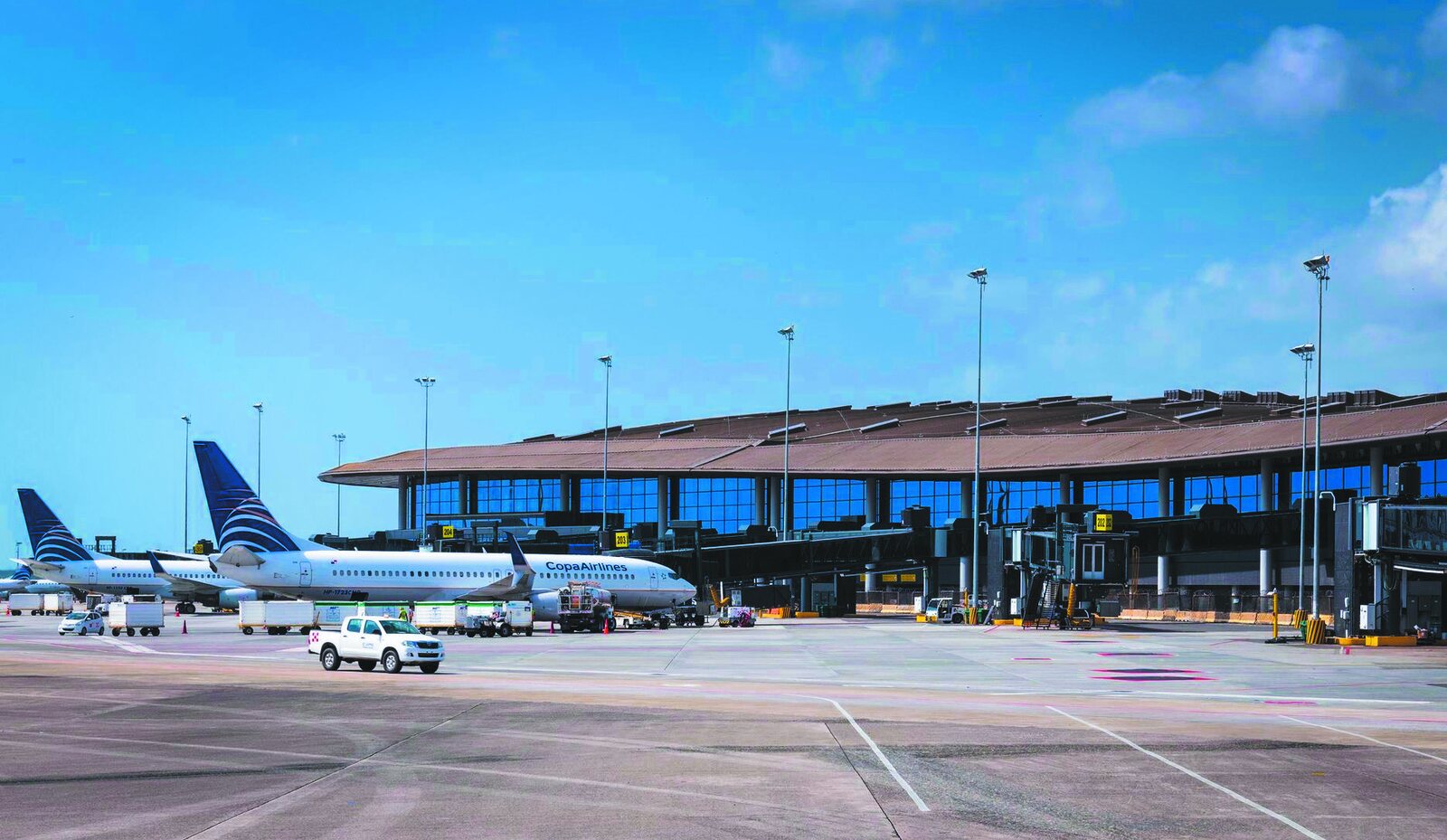
Leadership with Global Reach
The management of Tocumen International Airport reflects a vision that goes beyond airport operations. Under the leadership of José Ruiz Blanco, the infrastructure is framed as a platform for regional integration with direct implications for national competitiveness.
A career spanning diplomacy and private enterprise informs this approach. From 2009 to 2014, diplomatic responsibilities based in Singapore extended across Australia, New Zealand, and Myanmar, offering a broad view of international flows—of people, trade, and investment. That global exposure now translates into the management of a complex asset at the heart of the Americas.
“Managing this is a spectacular responsibility—it is the face of the country,” Blanco emphasized.
Scale Beyond Borders
Panama’s position as a connectivity hub is underscored by a striking contrast: a population of just over four million supports an airport handling close to 21 million passengers annually. More telling still, 74% of that traffic is in transit.
This dynamic reinforces Tocumen’s role not as a domestic gateway, but as a hemispheric bridge. The airport operates as a vital interchange linking North and South America, while also serving as a conduit for broader global routes. Its efficiency and scale allow airlines to optimize networks, and passengers to move seamlessly across continents.
The disproportion between population size and passenger volume highlights the airport’s strategic relevance for the country, Blanco noted.
Driving National Visibility
As the primary entry point into Panama, Tocumen plays a central role in shaping international perceptions. Infrastructure quality, operational efficiency, and passenger experience all contribute to how the country is perceived by investors, tourists, and business travelers alike.
The airport’s positioning as the “Gateway to the Americas” is not merely branding. It reflects a structural advantage rooted in geography, but sustained through continuous development and management. In this sense, Tocumen acts as both a logistical hub and a strategic showcase of Panama’s openness and connectivity.
Transformation in Motion
Nearly two years into the current management, a period of operational refinement is already underway. The focus has been on strengthening the airport’s capacity to handle its disproportionate traffic volumes while improving service standards and efficiency. Blanco points to early operational adjustments already taking shape, signaling a shift toward higher performance standards.
This phase signals a broader ambition: to not only maintain Tocumen’s status as a leading hub, but to elevate its performance in line with global benchmarks. Incremental improvements in operations, infrastructure, and coordination are shaping a more resilient and competitive platform.
A Platform for Growth
Looking ahead, Tocumen International Airport stands as a cornerstone of Panama’s growth strategy. Its ability to facilitate connectivity at scale enhances the country’s attractiveness as a destination for investment and as a base for regional operations.
With demand for air travel continuing to expand across the Americas, the airport is well positioned to capture future flows. The combination of geographic advantage, operational scale, and strategic leadership reinforces its role as a gateway not just to Panama, but to the wider region.
“This is a major challenge, but also a great opportunity to continue strengthening the country’s position,” Blanco concluded.