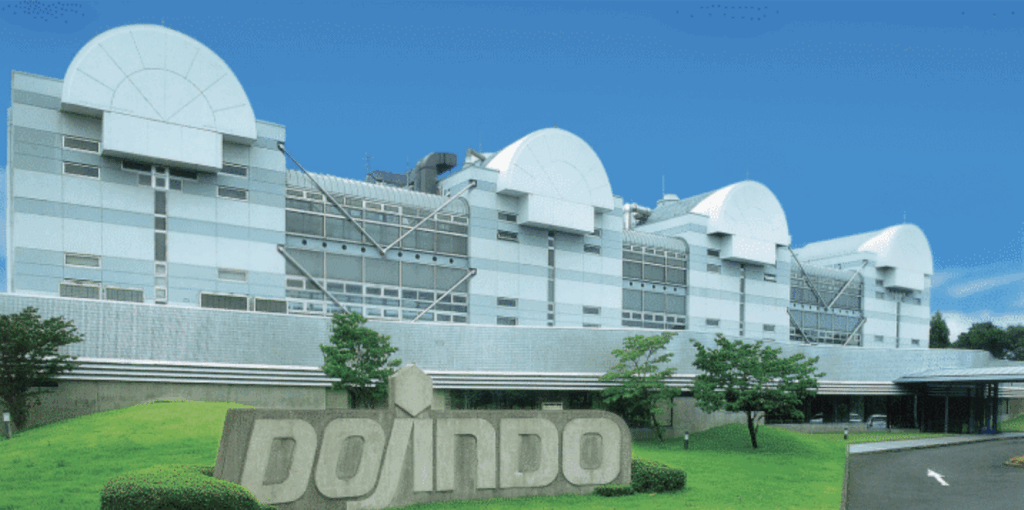
Japan’s Chemistry of Trust: From Kumamoto to California in Clinical Diagnostic
Dojindo Laboratories, a life sciences company founded in Kumamoto in 1946, is sharpening its focus on supplying high-quality reagents and clinical diagnostic materials to researchers and biosensor firms worldwide.
In Japan’s economy, the medical and life sciences sector has become a crucial pillar of growth, both for domestic healthcare and as a driver of export competitiveness. As the country faces an aging population and rising healthcare needs, specialized companies are playing an increasingly important role in developing tools that support research and diagnostics. Among these is Dojindo Laboratories, a Kumamoto-based firm that has built a global reputation in chemical reagents and raw materials for clinical applications.
The company was established in 1946 by Dr. Keihei Ueno, a scientist and professor at Kyushu University, who began by manufacturing chemical reagents. His vision of bridging academia and industry has carried forward through three generations. “We are proud that Dojindo was one of Japan’s first university-based startups,” said Dr. Yuichiro Ueno, the company’s current president and grandson of the founder. “Our mission has always been to provide reliable, high-quality materials that advance science and benefit society.”
Today, Dojindo’s business is defined by two core pillars: reagents for research and raw materials for clinical diagnostics. In research, the company concentrates on some of the most pressing medical challenges of our time—cancer, aging, and neurodegenerative disease. On the clinical side, its focus is on supplying the building blocks for diagnostics, particularly in the rapidly expanding field of biosensors.
“We want to be the supplier of choice for companies developing diagnostic materials,” said Chief Technology Officer Munetaka Ishiyama, who has been leading the company’s U.S. outreach. “Our compounds can be used in glucose monitoring systems from global leaders like Dexcom or Abbott. For us, the West Coast of the United States, especially California, is a key market.”
Dojindo’s approach to business reflects a client-first philosophy. Rather than simply selling products off the shelf, its scientists and managers meet directly with customers to understand their needs and then develop customized solutions. “We go to the market, listen carefully, and then create materials that match specific requirements,” Dr. Ishiyama explained. “This takes passion and commitment, but it is also what makes us different.”
Headquartered in Kumamoto with about 130 employees—and 180 worldwide—Dojindo operates a lean but international network, with offices in Beijing, Shanghai, Guangzhou, Munich, Maryland, and Malaysia. Despite its size, the company has proven resilient. It maintained operations through the 2016 Kumamoto earthquake and the global COVID-19 pandemic, drawing on strong partnerships and employee dedication to ensure supply continuity.
Recognition has followed. In 2025, the company’s foundation was upgraded to a public foundation, with approval from Japan’s Cabinet Office, allowing it to expand support for young researchers. Dojindo also received a quality award from the European Society for Quality Research, underscoring its high standards of production. “We see it as our responsibility not only to innovate but to foster the next generation of scientists,” Dr. Ueno said.
This commitment is rooted in monozukuri, the Japanese tradition of craftsmanship. Employees are encouraged to take pride in their work and enjoy the process of making, creating what executives describe as a positive cycle: high quality leads to stronger sales, which funds further research, which in turn benefits society. “Sometimes people say we are too serious about quality,” Dr. Ueno admitted with a smile. “But we believe that seriousness is our strength.”
For Dojindo, competing internationally also means overcoming perceptions that Japanese companies can be slow in decision-making. “We are a small company, but that makes us fast,” said Ishiyama. “In global business, speed is essential. We adapt quickly to international standards and move decisively when opportunities arise.”
Looking ahead, the company plans to deepen its role in clinical diagnostics, particularly in diabetes monitoring, which executives note is a global challenge, not just a Japanese or American one. “Diabetes affects millions worldwide,” Ishiyama said. “By supplying the right materials for biosensors, we can contribute to better health outcomes on a very large scale.”
For Ueno, the company’s international expansion carries a broader message about Japan itself. “Japanese virtues—courtesy, diligence, responsibility, and hospitality—are built into how we do business,” he said. “Made in Japan means reliability, and we are proud to share that spirit with partners around the world.”