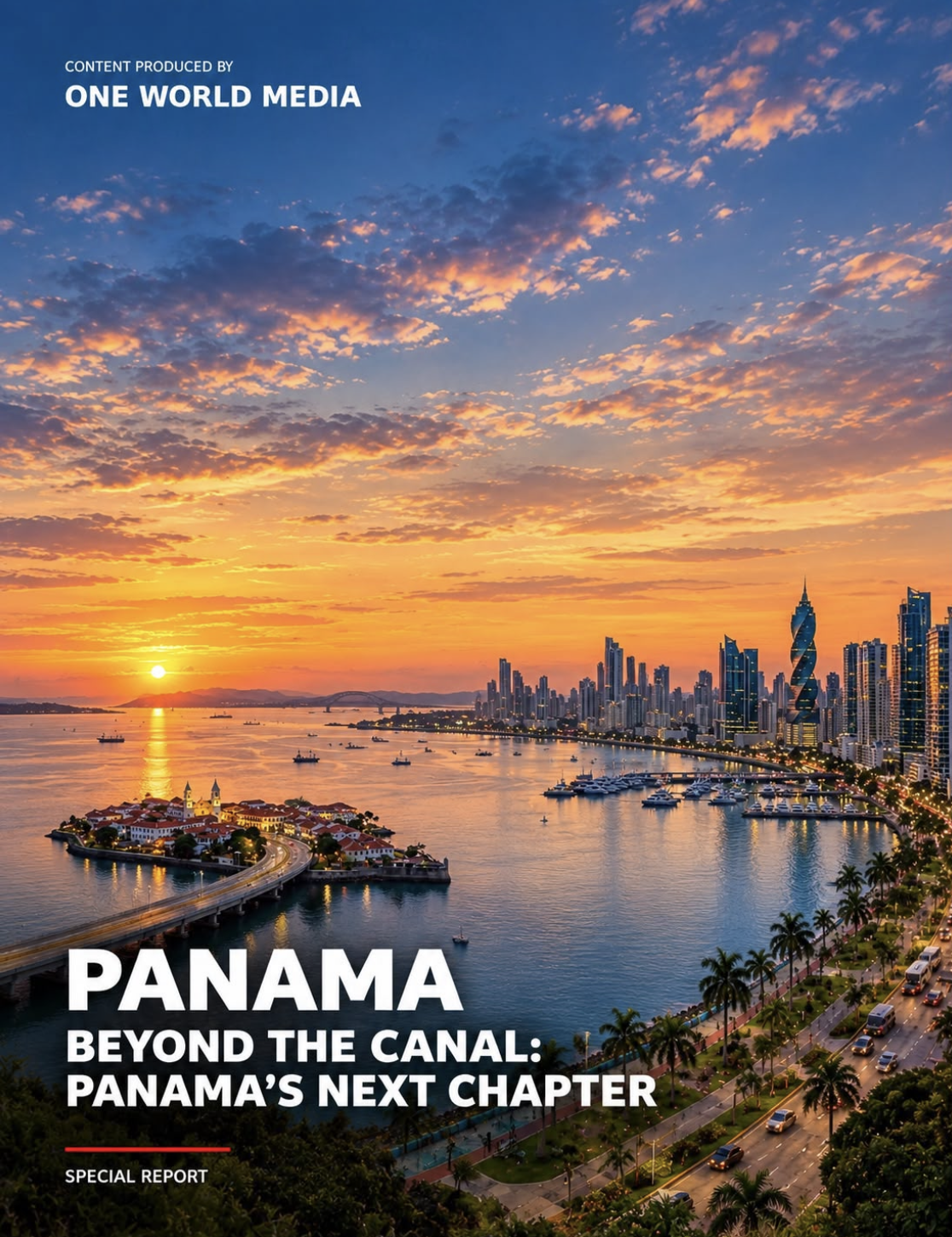
For generations, Panama’s economic identity has been defined by a single extraordinary asset: the Canal. Connecting two oceans and reshaping global trade, it transformed a country of just over four million people into one of the world’s most important logistics and financial hubs. But Panama’s next chapter is being written around a broader proposition—one in which its geography is only the starting point.
Today, the country is seeking to translate its strategic location, connectivity, and robust infrastructure into a more diversified platform for global business. This focus aims to inspire confidence in Panama’s capacity to adapt and grow, reassuring investors and policymakers of its promising future.
That transition is already visible in Panama City, where urban development, digital infrastructure, tourism, financial services and new investment are reshaping the capital. A younger generation of leaders is approaching public administration with an emphasis on efficiency, transparency and measurable results. At the same time, the private sector continues to identify opportunities in sectors extending well beyond traditional logistics and finance.
The country’s appeal rests on a combination of structural advantages. Panama offers international connectivity, a dollarized economy, established financial and legal frameworks, modern infrastructure-including the [new Panama Metro line] and [expanded port facilities]-and access to markets across the Americas. Its position as a regional headquarters destination has also created an increasingly sophisticated ecosystem of multinational companies, professional services and international talent.
Yet infrastructure and geography alone are no longer enough. Competition for global investment has become more demanding, and countries must show not only where they are located, but what they can offer businesses and people looking toward the future.
The country’s response includes strengthening sectors such as technology-intensive industries, digital services, and education. This focus is designed to generate optimism about Panama’s evolving economy and its potential to create broader opportunities for all stakeholders.
This evolution also extends to Panama’s international positioning. Diplomacy is increasingly viewed as an economic instrument: a means of reinforcing confidence, strengthening relationships with global partners and communicating the country’s value proposition to investors. Recent efforts to reinforce Panama’s reputation for transparency, legal certainty and constructive international engagement reflect a recognition that investor confidence is built not only through incentives, but through credibility.
The opportunity is significant, but so is the challenge. Sustaining competitiveness will require continued investment in infrastructure, talent and innovation, while ensuring that growth reaches communities beyond the capital. Modernizing agriculture, expanding connectivity and creating pathways for Panamanians to participate in emerging industries will be critical to building an economy that is both globally competitive communities.
The result is a country at an important inflection point. Panama is no longer simply a place through which global commerce passes. It is positioning itself as a place where companies can establish regional operations, where talent can develop, where new industries can take root and where investment can generate long-term value.
The Canal gave Panama a unique role in the global economy. The question now is how fully the country can leverage that foundation to build what comes next.