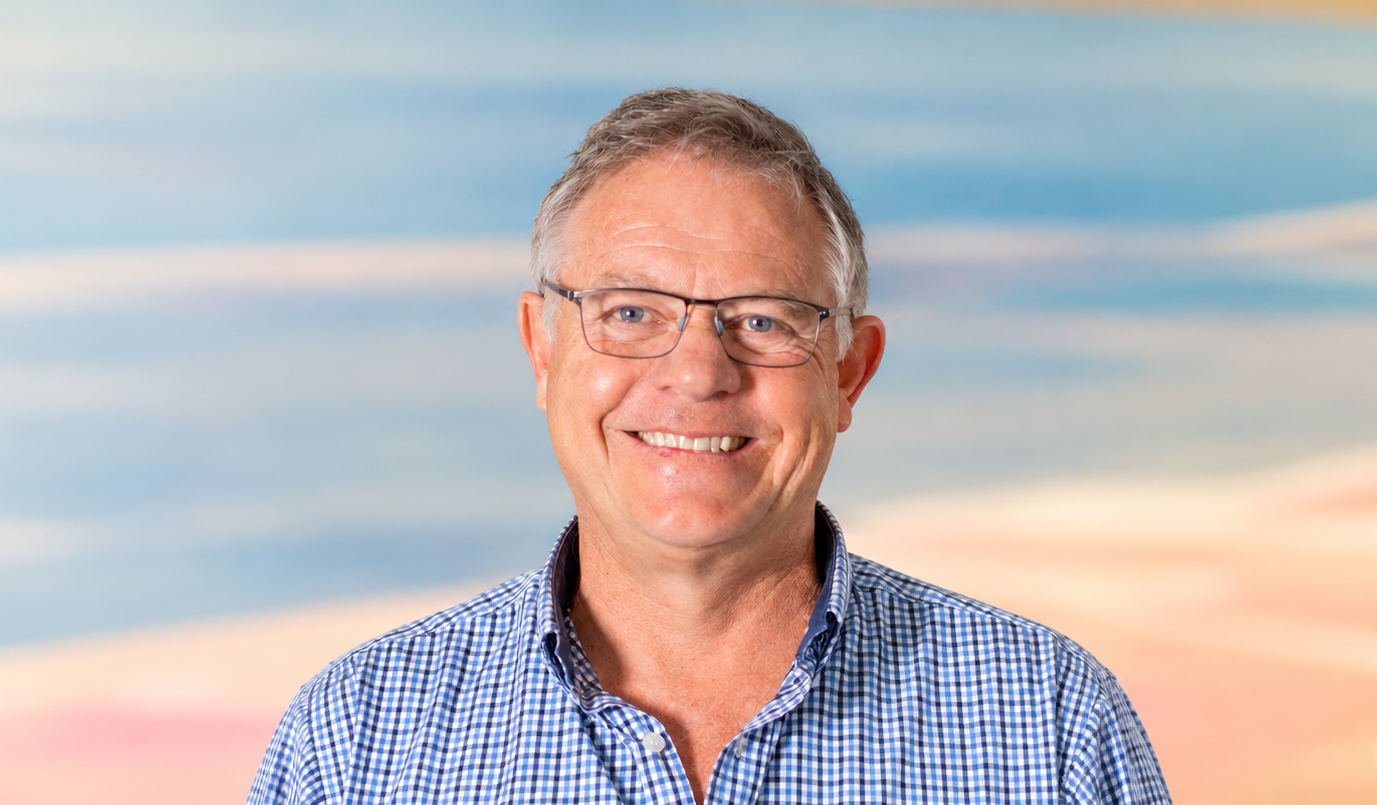
Walvis Bay Salt has established itself as sub-Saharan Africa’s largest solar sea-salt producer, with annual production exceeding one million tonnes. How has the company evolved to reach this scale, and what are your strategic priorities for its next phase of growth?
When I started, the annual volumes of the company were between 650 and 700,000 tonnes a year. Over time, we have grown it to 1.1 million tonnes, and we are now targeting to reach 1.3 million tonnes.
How did we get there? First, we identified new markets. We have improved the value and the quality of our product, but we have also increased our value proposition to our clients, in terms of our specifications, efficiencies, and cost structures; in terms of the total value proposition that we give to the client.
Along with that, we had to make investments into infrastructure to optimise our cost of production to be more efficient, to implement our lean principles and, in general, to move with the ambition to become a world-class salt producer. There is definitely a push to achieve that. We want to be seen as a world-class solar sea salt company.
The first strategic opportunity that we’ve identified going forward is going up the value chain, in terms of value addition. This goes together with volume growth. We look at finding ways and means to make our salt field bigger, in doing so, you increase and you improve your base, your unit cost per tonne through economies of scale. The economies of scale will bring for us lower unit costs. We want to increase our margins, and you do that in two ways: you either drop your costs or improve your value proposition. And a huge portion of our delivered costs is logistics. We deal with a very low value product, and often logistics associated with a low value product are more costly than the product itself. We have to focus on logistics and value chain optimisation, we have a lot of opportunities there.
And then there is the culture and management of our talent. We believe in investing a lot in our people in terms of the culture, to embed our values and associated behaviours. We want to see people in their day-to-day demonstrating the behaviours that were originated from the values of the company, and we want to see how they exercise these behaviours.
And last but not least, there is the use of technology. As an example, we make use of AI wherever we can as a Bud Group initiative, which is the group of companies we are part of.
We operate in a dynamic environment, and we realize we have to constantly change and adapt to outside forces. But it is important to read what is going on in the macro environment and, ultimately, it is your choice how you want to adapt or become complacent and stay in a comfort zone. We don’t want to be seen as in a comfort zone, and that’s why we attend international conferences, and we listen and see what’s going on in the salt world. Next year, the 11th World Salt Symposium is taking place in Ireland, and although I will be retired as Managing Director, we will still go there and bring all the industry ideas to the table. With the ambition to become a world leader, you need to stay on top of the world. With trends and ideas, of course, but also reacting appropriately to challenges.
Beyond increased crude salt production, the company is diversifying into refined and higher-value chemical-grade salt markets. How important is value addition to your long-term strategy, and what opportunities do you see to develop more sophisticated salt-processing capabilities in Namibia?
We cannot only be a bulk salt, commodity – based minerals exporter forever. The growth is locked up in value addition, where you get a higher value product. And we have already produced a premium table salt through our association with the premium Cerebos brand, Then, we are involved in the value chain of producing cattle blocks, licking salt blocks enriched with minerals for cattle.
And now we are also venturing into fertilisers. From the waste stream from our salt field, after removing the sodium chloride out of the brine, potassium can still be extracted. Most fertilisers are a combination of N (nitrogen), P (phosphorus), and K (potassium). And we are currently looking at extracting potassium from our waste stream and produce potassium sulphate, or sulphate of potassium (SOP). We are working with an Australian investor and with a technology partner in Germany to get this project running. It is an exciting time for us.
Walvis Bay Salt supplies customers across Africa and into international markets. How do you see demand and export opportunities evolving, and what advantages allow a Namibian producer to compete with established international suppliers?
To be able to compete internationally, you generally need three things. You have to meet the international standards and the specifications, and international specifications of salt are going one way, improving all the time. Higher specifications, lower moisture, lower impurities. In second place, your cost per tonne has to improve in order to be competitive relative to other suppliers in the world. And the third thing is that you need to optimise your value chain, meaning you need to be on top of your logistics. You need to find ways and means of how to be more efficient in terms of your value chain and route to market. As an example, our loading rate in the port used to be 10,000 tonnes in a day. We’ve now invested in technology so that we increase our loading rate to 15,000 tonnes a day. By doing so, our customers understand that we can load much faster, which is better for them in terms of our value proposition because his vessel will wait for a shorter period of time before it is fully loaded.
To illustrate this, recently we have made two important investments. There was a N$100 million investment for a warehouse in the port, for two reasons. Number one, to protect the integrity of our product in terms of pollution. With the occasional dust storms in the area, together with a dirty port, we experienced pollution challenges. And there’s another strategic reason, which is that by having stock in the port you can have a vessel loaded even in short notice. The stock is there already, so your response time in terms of lead time is immediate.
Then we have the other investment, which is the loading system that we now are commissioning to enable faster loading. These two together signify an investment of US$10 million.
As a major industrial operation in Walvis Bay, the company contributes to employment, local procurement and Namibia’s export capacity. How can Walvis Bay Salt deepen its economic contribution while creating opportunities for Namibian businesses and strengthening the country’s wider industrial base?
More new projects, new income streams. That is where we can potentially add more jobs. However, we need to be very sensitive in adding costs to our processes. Because you can easily put yourself in a situation where you are not cost competitive anymore.
Job creation will be the result of viable additional investments and additional projects, like the potassium sulphate project that we are looking at, where we can appoint up to 40 more jobs to the company. Although there is still a long way before we approve the project. In the meantime, we invest heavily in training and developing our existing workforce, and we upskill them as far as we can in various ways. Because, at the end of the day, your people are your biggest asset. It’s not your equipment, it’s your people. Your core is a staff with a positive mindset that gets them motivated, and we continuously invest in that. This is just one way in which the Namibian economy is benefiting from our operations.
Walvis Bay Salt demonstrates how Namibia can turn its natural advantages and strategic location into an internationally traded industrial product. Looking ahead, what lessons can the country draw from your experience, and why should investors consider Walvis Bay Salt as their partner of choice?
Firstly, Namibia has to be investor friendly. We need to remain a stable country, attract investors and remove any bottlenecks or concerns about FDI (Foreign Direct Investment).
That usually has to do with local ownership, where there’s often a tendency – especially in the mining sector – to argue that a certain percentage of ownership has to be Namibian at all costs. I believe that the government must be very cautious to make sure that this is not a deterrent for investment in the country.
Secondly, I’m of a firm opinion that the country must improve the transportation systems. Although we’ve generally speaking got good roads, there’s a lot of our railway system that is not working. The whole corridor of movement of cargo through the port is not optimised. We used to have a railway system that worked and it collapsed. If we can have a workable rail network in Namibia and link it up to the north and with other countries in Africa, it’ll really make a change.
Walvis Bay Salt is the partner of choice because of what we bring to the table. Our value proposition to any of our customers has to be the best compared to our competition. When a customer works with us, it has to be a pleasant experience in terms of efficiencies and value proposition. It’s not about being the cheapest, it’s about being the best. And if you’re the best, it will be win – win for all.