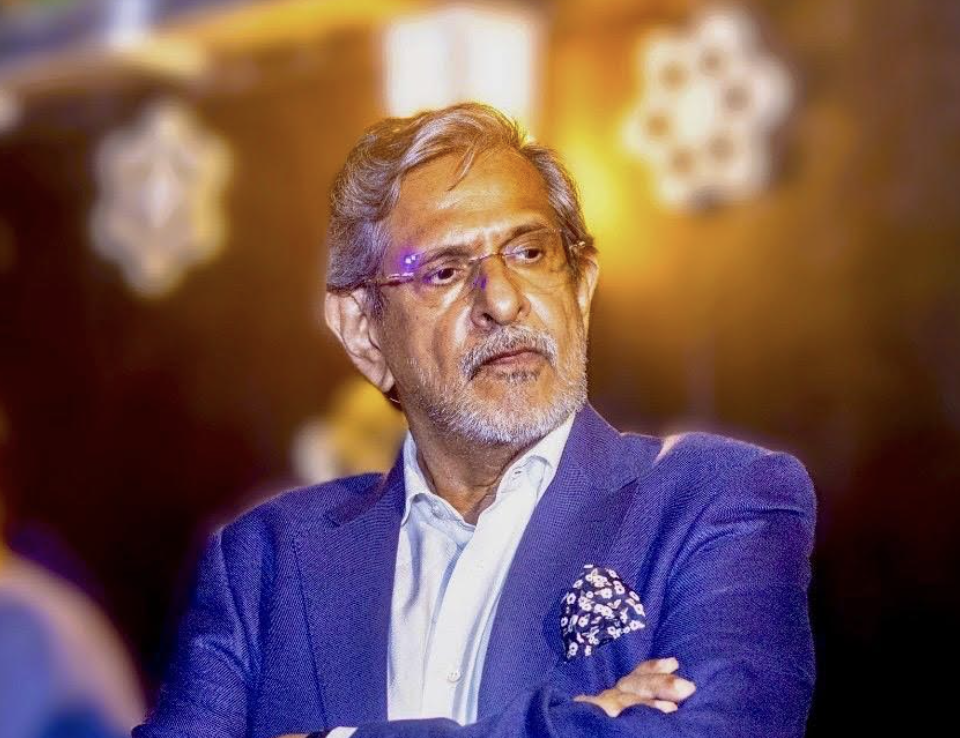

1. REMAX Angola is celebrating six years of operations in Angola. Since the launch of its first Luanda agency under your leadership, what have been the company’s most important milestones so far, and how has REMAX Angola helped professionalize the real estate sector in the country?
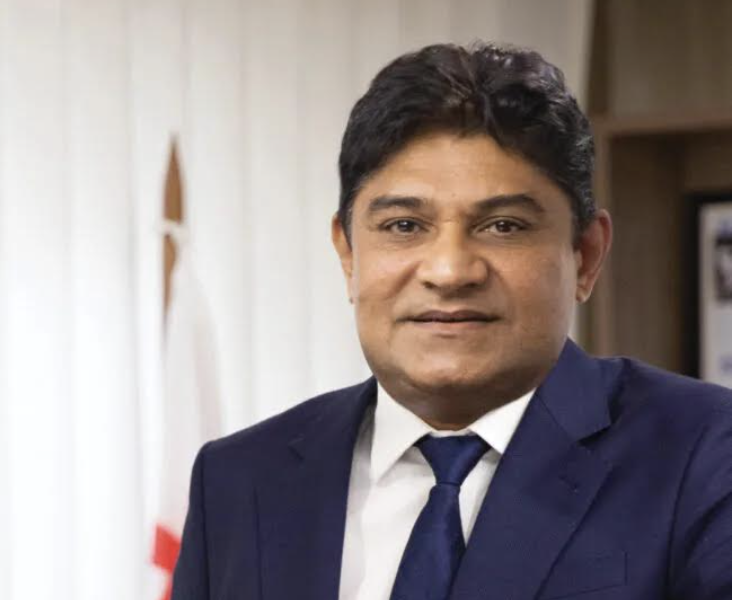
Mahomed Ibrahim:
Since entering the market in 2020, our primary strategic milestone has been the institutionalization of formal business processes in a sector historically dominated by informality. We built a highly structured corporate hierarchy—spanning general management, commercial operations, and dedicated legal and financial departments—allowing real estate workflows to operate systematically.
However, operational structure does not automatically guarantee market success. The core of our business relies on our real estate consultants, many of whom required extensive training to transition from informal practices to professional standards. While internal procedures and proprietary digital platforms ensure external market relevance and property visibility, human capital retention remains a critical macroeconomic hurdle:
- Global Retention Lows: Angola exhibits the lowest real estate consultant retention rate globally, with the average tenure lasting roughly one year during the initial phase.
- Maturity J-Curve: A consultant typically requires 6 to 12 months of market maturity before generating their first invoices. Because independent agents must sustain themselves during this onboarding window, initial efforts to subsidize them proved unsustainable; long-term partners must find independent means to bridge this gap.
- Contractual Exclusivity: RE/MAX agents operate as exclusive contractual partners rather than traditional employees. Notably, RE/MAX pioneered the widespread enforcement of exclusive listing contracts (typically for six-month periods) in a market traditionally accustomed to loose verbal agreements.
By bypassing unverified parallel platforms and relying strictly on our audited database, we maintain tight control over property entry, management, and direct owner relationships. This structural differentiation means we do not currently face direct institutional competition regarding formalized corporate processes.
2. REMAX Angola is listed as a Luanda-based real estate company with a team of 200 to 500 employees and an active property platform. Which figures best show how REMAX Angola is growing today in terms of listings, transactions, client demand and market reach?
Mahomed Ibrahim:
The definitive metric of our scale and market impact is our training volume: we have trained over 3,000 individuals across our six years of operation. In a mature real estate market, a 25% to 30% retention rate would translate into an active force of 700 to 800 agents. In our current economic context, RE/MAX functions effectively as the “Real Estate Academy of Angola,” absorbing the upfront costs of professionalizing the local workforce, even as a significant portion of that talent eventually transitions into independent operators or joins competitors.
Agents who fail to sustain themselves within a structured corporate environment often fall back into the informal market as a “micheiro”—an informal intermediary who handles unstructured sales across disconnected verticals, from real estate to consumer electronics. Our goal is to demystify this practice by equipping professionals with economic literacy, client relation skills, and structured transaction strategies.
To expand our institutional reach, we have established four strategic agencies—two in central Luanda and two in Talatona—complemented by three high-traffic client service stands at Intermarket, the Alvalade Premium Building, and Condomínio V-Gardens.
From a financial model perspective, commission revenues are split between the corporate brand and the consultants. While agents sometimes underestimate the overhead required, our corporate infrastructure demands substantial ongoing capital expenditure toward platform maintenance, physical real estate, and international brand licensing. This backing is vital, as the truth is that the vast majority of consultants who attempt to operate independently in the informal sector fail to scale due to a lack of institutional backing and structural infrastructure.
Finally, we mitigate transaction risk through strict legal compliance. High real estate asset values often create a false illusion of easy, rapid wealth. To protect long-term market stability, we enforce a zero-tolerance policy for undocumented or poorly documented assets, intentionally walking away from revenue opportunities to avoid future liabilities. For salvageable assets, we operate an internal department dedicated exclusively to helping property owners accelerate and regularize incomplete paperwork.
3. Just to wrap this up, you have four service points in the city?
Mahomed Ibrahim:
Yes, we operate four full agencies: two situated within the central city: Torre Ambiente and Rua da Missão, and the other two located in Talatona: Belas Shopping and Alegro Retail Park. The Intermarket location functions as an outreach stand dedicated to client engagement, communication, and marketing collateral distribution.
4. Now that you were talking about transparency, how is REMAX Angola using technology to make buying, selling and renting properties simpler, faster and more transparent for clients?
Mahomed Ibrahim:
As I explained, historically, unmonitored private platforms allowed intermediaries to upload listings without verifying legal titles, leading to outdated, unvetted property inventories. RE/MAX addresses this vulnerability by adding an unskippable manual legal verification layer prior to digital onboarding.
Before any asset is listed on our platform, owners must supply mandatory documentation:
- The Property Certificate (Certidão de Registo Predial), which serves as the property’s legal identification card.
- The Tax Matrix (Matriz Predial), representing the property’s official tax document.
- Alternative State/Municipal Titles: In instances involving historical state purchases or municipal land grants for self-construction, we require formal settlement receipts or administrative surface rights documentation to initiate the legalization tracking process.
Because high-value real estate transactions demand absolute asset security, this manual legal audit layer remains a non-negotiable step before any listing enters our active digital archive.
5. REMAX Angola operates under a franchise agreement with REMAX Southern Africa, benefiting from the strength of an international real estate brand. How does this international network help your team bring stronger standards, training and investor confidence to Angola’s real estate market?
Mahomed Ibrahim:
Membership in a global network of approximately 130,000 consultants fundamentally streamlines inbound and outbound cross-border transactions. International investors can seamlessly discover Angolan assets via the RE/MAX websites of their respective home countries. Furthermore, foreign brokers can directly collaborate with our local agents to execute transactions tailored to institutional needs.
While international real estate integration peaked during the boom periods between 2000 and 2014, we have witnessed a noticeable resurgence in cross-border capital inflows and outbound requests over the past two years, signaling a steady return of international investor confidence.
6. Recently, the government announced plans to regularize around 3,000 state-owned housing units with digital tools to make property processes simpler and more secure. How can professional real estate companies like REMAX Angola support a more transparent and formal property market?
Mahomed Ibrahim:
While RE/MAX strongly supports the state’s digital regularization initiatives as an essential step for market awareness and transparency, technology by itself cannot legally regularize a real estate asset. Digital platforms serve as vital informational and communication channels to guide citizens through statutory legal frameworks. However, actual legalization requires deep coordination with physical state institutions. Consequently, our company maintains a rigorous, manual legal audit layer to protect clients until state databases achieve full, nationwide integration and absolute data integrity.
7. Expo Casa Angola 2026 brought together real estate, construction, architecture, finance and investment, with a focus on housing solutions. How does REMAX Angola see its role in promoting better living standards and long-term value for communities?
Mahomed Ibrahim:
This is a topic that has been discussed a lot at the societal level: the need to create housing. Addressing Angola’s severe housing deficit requires a profound structural overhaul. With a population growth rate hovering around 3% annually—adding roughly 900,000 citizens per year—the current formal real estate supply of 150,000 to 200,000 new homes annually falls critically short, leaving a massive portion of the population in informal settlements, or musseques.
To resolve this imbalance, the public and private sectors must align through Public-Private Partnerships (PPPs) anchored on real economic data. Any successful housing framework must utilize a multi-stakeholder model connecting four specific pillars: 1) The State: in charge of the regulatory alignment, land allocation, and macro policy; 2) Construction Sector: responsible for cost-efficient development tailored to real construction values; 3) Real Estate Mediation: to handle market matching, transaction structuring, and demand data analysis; and 4) Commercial Banks: Providing mortgage liquidity and long-term financing.
The primary bottleneck under current conditions is mortgage accessibility. Financial institutions hesitate to extend credit due to high default risks and the absence of clear legal frameworks to recover assets in default scenarios. To break this deadlock, we must accurately calculate average household income data across the country, ensuring that prospective residential projects are mathematically aligned with the real purchasing power of the population.
8. Talking about the future, what will be your priorities for the coming years in terms of expansion, growth and opportunities in the sector?
Mahomed Ibrahim
Regional expansion into the Angolan provinces remains a core component of our long-term vision. However, because replicating our high-standard operational model requires significant upfront investments in talent development and training, we have intentionally delayed provincial deployment until our baseline operations in Luanda are entirely solidified. We project a highly sustainable expansion footprint into selected provinces over the next one to two years.
9. When REMAX entered Angola in 2020, you were already an entrepreneur with many years in the Angolan market. You had experience in transport and technology before leading the launch of REMAX. How has your journey shaped your leadership vision, and what legacy would you like to leave behind in Angola?
Mahomed Ibrahim:
My leadership philosophy is strictly operational and day-to-day focused. Arriving in Angola in 2004 as an employee, I later co-founded a logistics and transport enterprise in 2010/2011. Operating extensively within the strict compliance ecosystems of major international oil corporations ingrained an unwavering commitment to institutional standards in my business practices. My entrepreneurial track record also includes ventures into technology—such as an award-winning digital insurance platform concept—and healthcare, where we established Angola’s very first private pathology anatomy laboratory.
This diverse background drives our current financial strategy at RE/MAX. Our entire corporate footprint has been scaled without a single dollar of banking credit or treasury debt. While a lack of traditional leverage may technically slow maximum expansion velocity, it provides unparalleled systemic security. In a high-interest-rate environment with volatile currency fluctuations, our decision to eschew traditional bank debt and rely strictly on organic equity financing ensures total operational resilience and protects us from the liquidity traps that crash heavily leveraged firms. Every strategic move we execute is fully backed by our own equity, guaranteeing that our corporate growth remains uncompromised and structurally sound.