
1. Since its establishment in 2005, Banco BIC has grown from a newly created financial institution into one of Angola’s largest private banks, expanding its branch network nationwide and developing a broad portfolio of retail, corporate, and investment banking services. Over the past two decades, the bank has also expanded internationally and strengthened its role in financing businesses and households across Angola. In your view, what have been the most significant milestones in Banco BIC’s journey since its founding, and how have these achievements contributed to the development and modernization of Angola’s banking sector?
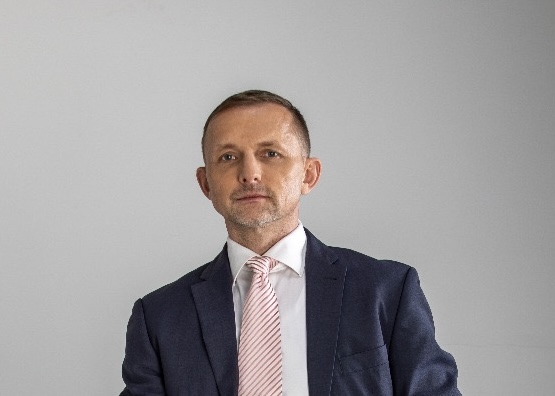
Hugo Teles:
Since its creation in April 2005, Banco BIC has grown from a newly established financial institution into one of the largest banks in Angola, progressively expanding its branch network across the entire national territory and developing a comprehensive offering of retail, corporate, and investment banking services.
One of the most relevant milestones in its trajectory was its contribution to the country’s financial inclusion. When the bank began its operations, the banking penetration rate in Angola stood at around 3%, and it has since evolved to approximately 30% today – a tenfold increase in two decades -although there is still significant growth potential.
The bank also played an important role in expanding banking presence into inland regions of the country, often being the only financial institution available. In many locations, Banco BIC provided not only banking services but also access to basic infrastructure such as electricity. In some cases, branches were the only places with electricity, becoming meeting points for the local population, where people would gather, for example, to watch television at night. This presence contributed to boosting economic activity in those regions, enabling greater financial inclusion and supporting the growth of small economic activities.
Over time, Banco BIC also consolidated its role in financing the economy, particularly through supporting private companies, including small and medium-sized enterprises that depend on bank credit to grow. In this sense, the bank has acted as a driver of economic development, contributing to the creation and expansion of businesses across Angola.
A landmark reached in 2024 was the completion of 20 years of activity, a milestone the Executive Committee marked by reaffirming its commitment to being the financial institution that extends the most credit to the productive sector. In that same year, Banco BIC also acquired full ownership of Bank BIC Namibia, marking its first consolidated international step, operating as an independent financial entity under the direct supervision of the Bank of Namibia.
2. Would you share some current key performance indicators, such as total assets, annual growth rate or customer base expansion, that highlight Banco BIC position in the Angolan market?”
Hugo Teles:
Banco BIC’s performance indicators reflect not only its size but also the economic context in which it operates. The bank navigated a particularly demanding cycle: after reaching approximately USD 7 billion in assets during a period driven by high oil prices and strong external financing, the Angolan economy entered a phase of structural adjustment that impacted the entire banking sector.
As of December 2024, total assets stood at approximately USD 2.5 billion, and the volume of business reached USD 3.4 billion. Deposits from clients amounted to USD 1.6 billion, reflecting a solid and stable funding base. In terms of credit, the bank’s total economy-wide lending portfolio stood at USD 1.9 billion, of which USD 1.3 billion was directly extended to clients — one of the highest volumes in the Angolan market.
The asset contraction from the peak of USD 7 billion largely reflects the sharp depreciation of the kwanza against the dollar over the past decade — a macroeconomic reality shared by all Angolan banks — combined with a period of reduced oil revenues and tighter credit conditions. Measured in local currency, the bank’s balance sheet has grown continuously.
Regarding asset quality, the bank presents a non-performing loan ratio that, while elevated relative to mature markets, is fully provisioned, reflecting a prudent and conservative approach to risk management. The bank has been actively renegotiating non-performing credits and reinforcing its risk analysis frameworks.
The NPL levels in Angola’s banking sector are structurally higher than in European markets, given the country’s economic transition and the aftermath of a prolonged currency adjustment. The broader Angolan banking system has faced similar pressures. Banco BIC’s response — full provisioning and active credit recovery — reflects a disciplined approach rather than an indication of structural weakness.
In terms of capitalisation, the bank maintains a strong position, with a regulatory solvency ratio of 28.9% at year-end 2024 — well above the minimum required by the Banco Nacional de Angola — and equity of approximately USD 510 million. The deliberate choice to retain earnings rather than distribute profits, even through difficult periods, has preserved this robustness and positioned the bank to face future challenges from a position of strength.
By mid-2025, the bank’s client base had grown to over 2.16 million, up 9% in two years, with 212 branches across all provinces of Angola and a team of 2,090 staff. The network rationalisation — closing branches with lower footfall while investing in digital channels — is part of a deliberate efficiency strategy.
3. BIC has explored cooperation with infrastructure-related entities, such as the Port of Lobito, to support corporate financial services and banking solutions for employees. How do these strategic partnerships contribute to strengthening Banco BIC’s financial ecosystem? And are there other partnerships the bank is considering?
Hugo Teles:
Strategic partnerships are a cornerstone of our commercial model, both on the corporate side and in terms of financial inclusion for employees.
On the institutional side, we have established credit agreements with the Armed Forces, with the Ministry of Justice, with the AGT (Angola’s tax authority), and with the Ministry of Finance, enabling us to provide simplified, pre-approved credit to employees across these public sector institutions, which also include the National Police. The public sector offers a structurally stable employer base – regular salaries, low dismissal rates, and predictable payroll flows – which translates into lower credit risk and better conditions for employees.
We also actively seek partnerships with private companies that we see growing and that invest in their people. Teixeira Duarte is a good example: all employees, even those without formal education, receive structured training that allows them to develop technical skills in areas such as electricity, tailoring, metalwork, and electromechanics – and to move into more qualified roles over time. These are the kinds of partnerships where banking and human development genuinely intersect.
In the automotive sector, we have established financing partnerships with CFAO Mobility and Daimic Motors, facilitating vehicle acquisition for individuals and companies. And in the infrastructure space, our cooperation with the Port of Lobito supports corporate banking services for port-related businesses and payroll solutions for a large and growing workforce — particularly relevant given Lobito’s increasing strategic importance as a logistics hub.
Looking ahead, we see growing opportunities in sectors linked to Angola’s economic diversification agenda – agriculture, manufacturing, and renewable energy – where the need for structured financing is significant. These are areas where Banco BIC can play a catalytic role, as it has done historically in underserved regions.
4. What were the results of Banco BIC’s digital transformation and automation initiatives?
Hugo Teles:
Digital transformation has been one of our strategic priorities in recent years, both as a tool for client service and as a driver of operational efficiency. The bank has implemented digital platforms – BIC Net for desktop and BIC Mobile for smartphones – which allow clients to carry out a full range of operations remotely: transfers, bill payments, deposits, tax payments, and international transactions.
By mid-2025, Banco BIC recorded over 2.1 million clients, with digital and remote channels absorbing an increasing share of transactions that previously required branch visits. This shift has meaningfully reduced queues, shortened processing times, and lowered the cost per transaction – an important metric in a market where cost efficiency is central to financial inclusion.
Processes have become significantly less dependent on paper, and clients now have real-time visibility over the status of their operations. We have also been investing in upgrading our compliance and AML (anti-money laundering) systems, deploying more robust platforms aligned with the regulatory requirements set by the Banco Nacional de Angola.
New features are under active development, including PIN generation and management through the mobile app, improvements to the account opening process — including biometric identification solutions — and enhanced corporate banking functionalities through BIC Net Empresas.
In 2024 and into 2025, cybersecurity has become a key investment axis. The bank restructured its IT units with a sharper focus on fraud prevention and resilience against cyber threats – a necessary adaptation as digital volumes grow and threat landscapes evolve.
5. Banco BIC has implemented several social responsibility initiatives, including the “Crescer Juntos” program launched in 2022, which supports NGOs and community organizations working in areas such as education, healthcare, social inclusion, and entrepreneurship across Angola. Through this initiative, the bank has contributed to funding community projects, supporting schools and training programs, and strengthening civil society organizations. In this context, could you share the impact that these initiatives have had on the society? And are there other ESG practices Banco BIC is looking into?
Hugo Teles:
Corporate social responsibility is embedded in our identity as an institution. Banco BIC implemented the “Crescer Juntos” (Growing Together) programme, which supports non-governmental organisations and community projects in the areas of education, health, and social inclusion.
The programme is designed to ensure that support reaches those most in need and promotes the sustainability of the projects we back, rather than one-off interventions. Among the concrete actions developed are support for hospitals and health infrastructure, provision of treated water and nutritional aid, improvement of school buildings and community facilities, and initiatives that convert waste into productive economic activity and vocational training.
A concrete example worth highlighting: Banco BIC has provided direct support to healthcare infrastructure in provinces where public services are limited, bridging gaps that would otherwise go unaddressed. In education, the bank has supported schools in inland provinces – some of the same communities where BIC branches were historically the first formal institution to arrive. This continuity between financial inclusion and social investment is not accidental; it reflects a long-term view of what it means to be embedded in a community.
The “Crescer Juntos” programme also aligns with Angola’s broader national development goals, contributing to the social pillars of the country’s Vision 2050 framework. We see corporate responsibility not as philanthropy, but as an integral part of sustainable business. We see corporate responsibility not as philanthropy, but as an integral part of sustainable business.
6. What values, passions, and professional experiences have most shaped your leadership journey and your vision for the bank’s role in Angola’s economic development?
Hugo Teles:
In my current role, my activity has inevitably become more focused on institutional governance, strategic positioning, and external representation. But if I am honest, what has always given me the deepest satisfaction in banking is the direct relationship with clients – visiting companies, understanding their operating reality, identifying where the constraints and the opportunities truly lie.
I have always been struck by the gap between perception and reality in business. You encounter organisations that project a very structured and sophisticated image, but in practice show little dynamism and real activity. On the other hand, there are more modest cases – a small workshop in a provincial town, an informal trading business – where you immediately see the potential for growth and where a well-structured financial solution can genuinely change the trajectory of that business and, through it, the livelihoods of the people it employs.
It is precisely in that kind of context that banking can play a truly transformative role. And that has always been my north: not banking as an end in itself, but banking as a lever for economic activity.
That conviction shapes how I think about Banco BIC’s role in Angola’s future. We are entering a period of economic diversification – the country cannot, and should not, depend on oil revenues indefinitely. The productive sectors – agriculture, manufacturing, services – need patient capital and financial partners who understand their business models. That is the bank I want Banco BIC to be: the institution that finances not just the obvious, large-scale projects, but the emerging businesses that will shape Angola’s next chapter. Twenty years in, that ambition is stronger than ever.