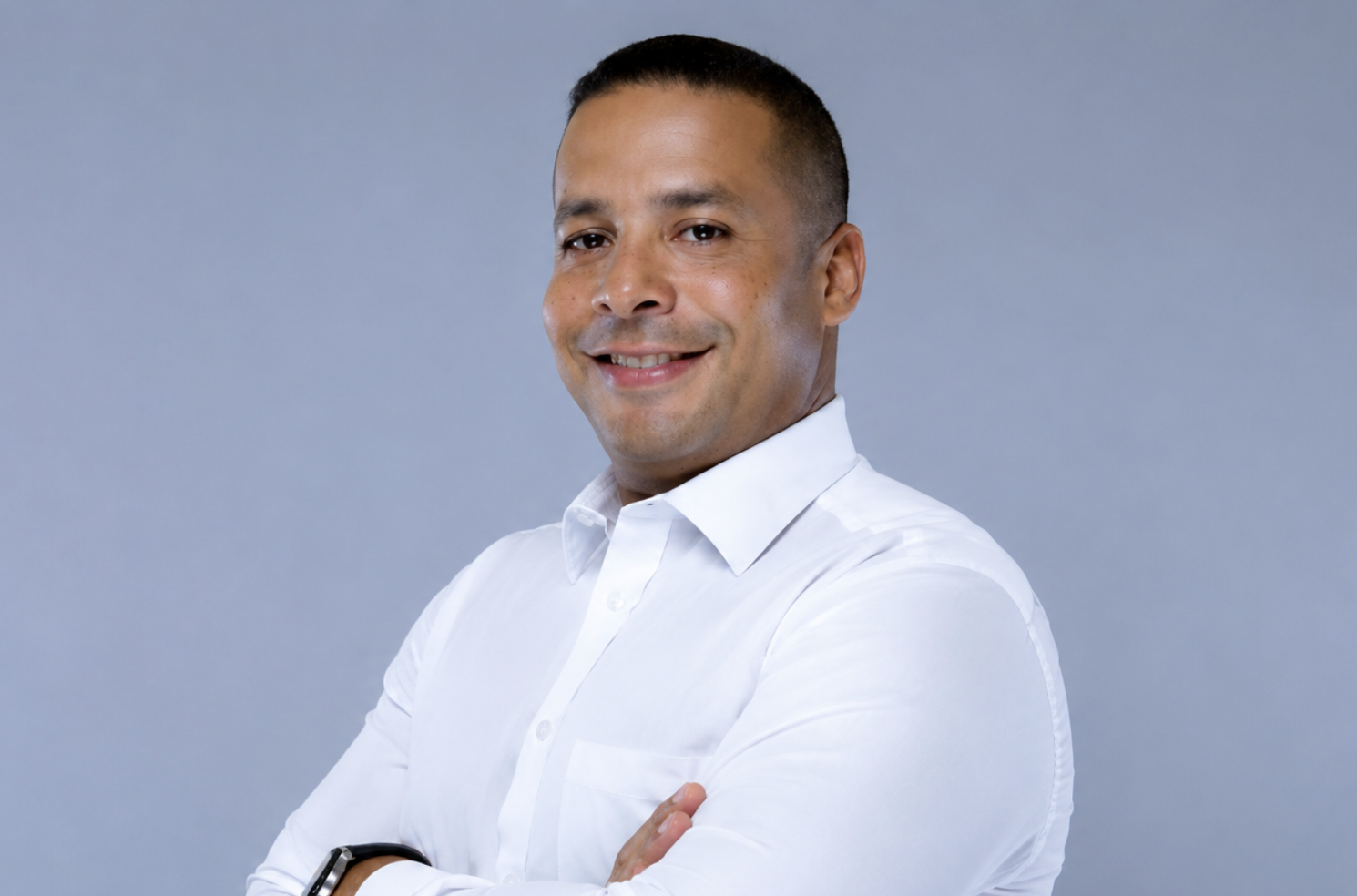
1. DP World has invested US$290 million in the Port of Luanda’s Multipurpose Terminal, increasing operational efficiency and making it the first terminal in Angola able to handle two large vessels at the same time. In this regard, which milestones best show how this transformation is strengthening Angola’s trade infrastructure?
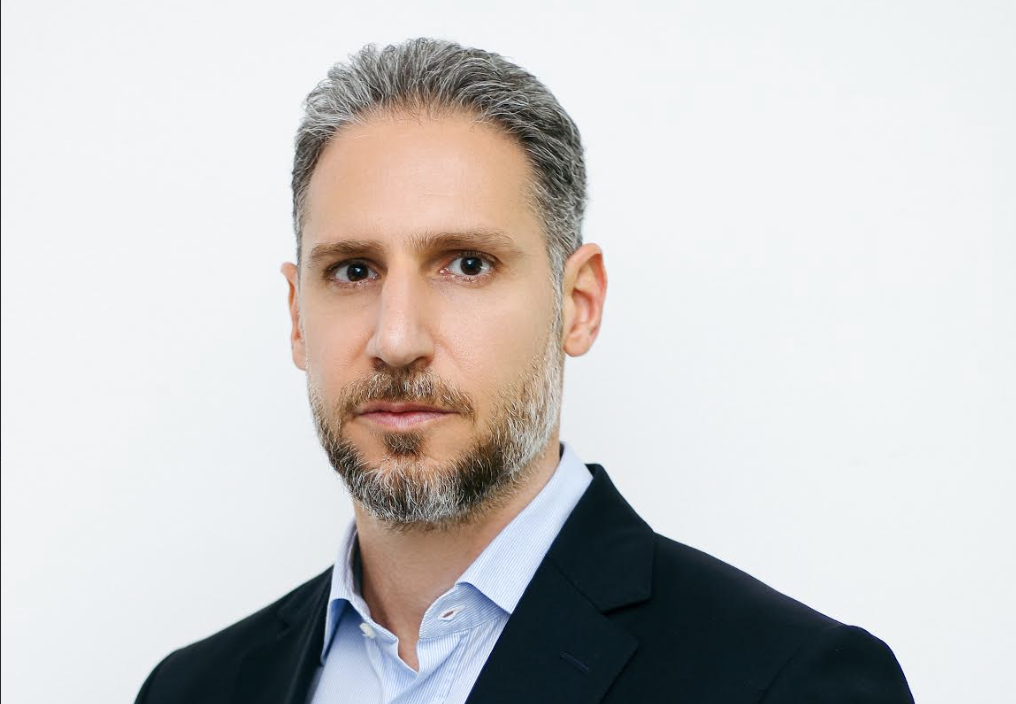
Francisco Pinzón:
First of all, I have to start by saying that DP World is a global company and our vision is to be an end-to-end supply chain solutions provider for all our customers.
We have a presence in ports and terminals in 85 countries around the world and have a global capacity of 110 million TEUs. We also have a strong network in the logistics sector, whether marine logistics or other logistics solutions. In Africa, we have been here for more than 20 years, and we have a presence in 50 markets across the continent.
In Angola, we began the concession of the terminal in March 2021. Since then, we have invested around US$290 million in the development of the Port of Luanda.
We came here in 2021 with a very clear strategy. It was simple in concept but complex in execution: to position Angola as a strategic trade hub in this part of the Southern African region. Today, we are very proud that we have achieved that strategy.
We have been able to compete with other terminals and ports in Southern Africa, as well as Pointe-Noire in Congo, in the transshipment of cargo. Since 2021, we have handled more than 1 million TEUs of transshipment cargo. This means cargo that was previously being handled by other regional ports, and which we have managed to attract by showing customers that Luanda is a feasible option to transship their cargo.
We have done the same with RoRo (Roll-On/Roll-Off) vessels that carry cars and other vehicles. Today, we handle almost 100% of the RoRo market in Angola.
We started diversifying our portfolio in that business in 2022 or 2023, and it has been very successful. We now not only handle the import of vehicles, but we are also doing transshipment of vehicles in Angola.
That means major shipping lines are trusting us and are trusting Luanda as a good connection point to bring vehicles from Asia and then ship them to different countries in Africa. It is a market where we see a lot of potential, and we are committed to continuing to develop it.
2. The terminal has deep-water access, Angola’s largest storage capacity and doubled average hourly throughput. With this progress in mind, which figures best show the terminal’s growth today, particularly in terms of capacity, cargo volumes, operational performance and impact on Angola’s trade flows?
Francisco Pinzón:
In 2021, when we took over the terminal, it was able to handle approximately 250,000 TEUs only.
We have expanded our footprint, and we have also invested in additional equipment. Today, we have a terminal that is capable of handling 500,000 TEUs. That is, we have doubled capacity in five years.
Our volumes have also increased by more than 100% compared to 2021. We are very proud of the investment we have made as a company, as well as of the innovation we have brought into the sector. In the last five years, vessel productivity has risen by 202% and vessel waiting times have dropped from over a week to less than a day.
We are proud of our people, who have taken on the challenge of working for a multinational company. They learn from our network of terminals around the world, and from our framework for development and learning.
Today, as a result of this combination of investment, our people and our commitment to the community, we are very proud to be market leaders in Angola.
3. DP World has upgraded terminal operations with advanced digital systems, improved yard capacity and stronger operational control. Building on this platform, how are these systems making cargo movement faster, more reliable and more transparent for customers?
Francisco Pinzón:
When we took over the terminal in 2021, we took over a terminal that had no system at all. The only way to find a container or cargo was to deploy 250 people in the yard and look for it physically.
Apart from being inefficient, it was also a safety hazard for our people. So, the first priority was to implement a system immediately. We did it in record time. In 45 days, we implemented a world-class Terminal Operating System, and were able to record a proper inventory of all the cargo in our terminal.
That system was fully connected with all the machines and equipment that we also brought into the terminal. So the operators and our people no longer had to physically search for containers. They received instructions in their equipment about where the cargo was and to whom it had to be delivered.
Since then, we have brought in other types of innovation. Today, our customers go to our CCS (Cargoes Community System), which is our cargo platform. From there, they can look at their outstanding balances, retrieve the pro forma, make payments online and immediately receive their invoices.
In addition, we are the only terminal in Angola that has a digital vehicle booking system, a truck booking system. If you want to come and pick up a container or cargo, you simply go online and tell us exactly when and at what time you want to come and pick it up, and then you receive access to the terminal.
The truck driver arrives on time, and we are ready to deliver the cargo. The greatest benefit is that we have eliminated congestion outside the terminal and have managed to distribute the vehicle schedule across a 24-hour period. In the past, we had 200 trucks waiting outside all the time for containers. This also has a positive environmental impact in terms of CO2 emissions.
This also benefits the truck drivers, because they no longer need to wait for 12 – 18 hours to pick up their container; the total process now takes less than half an hour. This also allows them to have more cycles and more frequency, which ultimately has a financial benefit too.
4. Angola is gaining visibility as a regional logistics platform, while the Lobito Corridor continues to attract major international financing attention in 2026. In this context, how can DP World help position Angola as a stronger Atlantic gateway for Southern and Central African markets?
Francisco Pinzón:
We support Angola, first of all, by supporting the government’s vision of diversifying into the non-oil sector. That is one of the contributions we make to the government and to the different developments happening in the country, such as Lobito, Barra do Dande and the new mining areas in the north.
The way we see it is that we want to bridge the gap between these investments and our terminal, regardless of whether they are in Lobito or in the north of the country.
What we want to do is offer a value proposition to these projects so they can see Luanda as a preferred gateway to connect to the rest of the world.
I can give you an example. In the case of Lobito, we were the first terminal to support the movement of copper from Congo, from the Lubumbashi and Kolwezi area, into Luanda. We took the copper, put it into containers, and since our terminal has more ship frequencies going to Asia, we shipped it directly from our terminal.
The same happened recently with avocado from the Cuanza Sul region. We supported the first reefer container with avocado exports.
We do not need to be physically in Dundo, for example. What we need to do is become an enabler for them to export their goods. That is how we see it.
Our purpose is to bridge that gap and see how we can offer more services beyond the gates of our terminal to facilitate this kind of export.
5. DP World has reduced monthly water consumption in Luanda by 180,000 litres through equipment upgrades and the reuse of storm-drain run-off. In practical terms, how are these initiatives helping the terminal grow more efficiently while reducing its environmental footprint?
Francisco Pinzón:
On one side, when we talk about sustainability, everything related to CO2, emissions and the environment is very important to us.
We have a very clear strategy. In this phase, we initially want to migrate to hydropower to reduce CO2 emissions. But our long-term plan is to start replacing our equipment with electric equipment.
It is important to know that when you move to electric equipment, the power you receive also needs to be clean power from a sustainability perspective.
In Angola, we have a very clear framework based on the company’s global sustainability strategy, based on three pillars. One is education for children. The second is the empowerment of women. The last one is the environment.
As a region (Africa) in FY25, we invested US$ 4.5 million in community development and sustainability initiatives. Here in Angola, we have invested around US$1.2 million to US$1.3 million since we arrived.
Every year, we build a new school or refurbish and improve an existing one. The last one we built was in Barra do Dande. It was a school that probably had two classrooms, and we delivered a brand-new infrastructure with around eight classrooms, as well as an area for teachers to rest and a canteen.
On the empowerment of women, we have just concluded a fantastic project. It is probably the most impactful project of my entire professional career.
We went to a place called Kimbala, in Gabela. We selected four villages that had no electricity and identified four women, one from each village, and flew them to Dakar, Senegal for training in solar energy with our partners – Barefoot College International.
This is a very good story, because some of these women were in Luanda for the first time, and all of them were on an airplane for the first time. They showed great courage to take such a big step.
In Senegal, Dakar they received training in solar energy for three months in a project called ‘Solar Mamas’. The training teaches them how to maintain and install solar panels and how to work with electricity and power systems. To date, DP World has trained 40 women from rural communities in Africa to become Solar Mamas.
They also received training on how to create soap using the natural resources available to them, such as oil.
Upon their return to Angola after the training, we imported all the equipment including solar panels and delivered it to their villages. Then they were the ones who installed all the solar panels. In the end, we connected 400 houses in this area.
The community is on a remote mountain, in a very beautiful part of Angola, with a lot of agriculture and potential.
They were so excited. This is truly a life-changing and impactful project. When you look at the project and enter these villages and the houses where people live, you realize that the impact is more than just light. You could smell the kerosene or other chemicals they were using to have some kind of light inside the house. Then you imagine the children breathing that every night, every day, for years.
On the environment side, we continue doing activities. We have partnerships with Otchiva, an institution that is committed to the environment and, more specifically for us, to the planting of mangrove seeds.
We have planted almost 50,000 mangrove seeds so far. We host various planting activities throughout the year and we invite our customers, partners, and employees – as well as their children – to join us. It is a good opportunity because not only do you plant the seeds, but you also see the flamingos coming back into the area.
Those are the three pillars in which we will continue investing: education, empowering women and the environment.
This is what makes us DP World Luanda. This is what I tell all our employees: this is our DNA now. It is our identity. We want to be an organization that gives back to the community. We want to create a very positive impact on the community, and we are very active in that.
6. DP World’s current priorities in Angola include stronger systems, higher productivity, sustainability targets and the introduction of digital solutions to make trade easier. Looking ahead, what are the company’s main priorities for the next phase of growth and value creation in Angola?
Francisco Pinzón:
The future is around the corner, and it is very competitive. What we have seen lately in the Port of Luanda, with new concessions, is that the future holds a very competitive environment.
At the top of our priorities are our people. We need to continue developing our people to make sure that we are in better shape to compete, and to protect and defend the market share and the business that we have today.
Investment is also a priority. We are looking at increasing our investment by about US$80 million more in innovation and in equipment that is semi-automated. This equipment does not exist in Angola so far.
We are also looking at expanding our footprint so we can continue supporting our business model, which is different from our competition.
Our business model is to handle all cargo inside our terminal and not transfer anything to ICDs or dry ports, as they call them here, because this only increases the cost of imports and exports.
Already in Africa, the cost of moving goods is very expensive. So we are very loyal to that business model because we believe we have to contribute to the country by reducing the cost of doing business.
7. You have more than two decades of experience in port operations across several international markets and now lead DP World Luanda’s next phase of development. With this journey behind you, how has your global experience shaped your leadership vision, and what legacy would you like to leave in Angola’s port and logistics sector?
Francisco Pinzón:
For me, the most important thing is the human part that the business allows you to do.
The only thing I think I will take with me is what we have done for people in general. Not only our people, our employees, but also through the sustainability actions and the decisions we have taken to change the lives of people around us.
Another example I can give is a project we did earlier this year to empower young women.
Since our business has been growing, we needed 40 new truck drivers. Coincidentally, we had gone to an orphanage to support them, and while we were there, we learned that they had 40 young women, all of them 21, 22 or 23 years old.
So when my operations manager said, “Francisco, we need 40 more drivers.” I said, “I know where to find them.”
Of course, they did not even know how to drive a car. But once you meet them, you see that these girls are fantastic; they have been very well raised and educated by the orphanage.
We took them and paid for their driving lessons. They got their licenses. Then we brought them into the terminal and invested thousands of hours training them to drive the trucks and to handle the computer inside the truck.
Now we have 40 truck drivers in the terminal, all of them young women who are doing fantastically well. They are now able to earn a meaningful income and inspire other girls in the community.
You can see on my LinkedIn that we have a post about this project. It is a clear example of the things that I do not know if I would call my legacy, but it is what I take with me.
This is not about me; it is about all of us. Another organization might have seen this as the typical standard move of simply going out and getting truck drivers. Even at the beginning, internally, some people said, “You are going to create confusion.” But I said, “No, they can do it. They can learn.”
And they did. They learned, and they are working very well with us.
Of course, there are always some issues when someone has never driven a truck in their life. But they are doing fantastically well. We have a process for that, and we prioritise safety and ensure sufficient training for that.
They also bring happiness into the whole organization. Even those who at the beginning were skeptical are now very proud of themselves because they trained them.
It was a fantastic project. It is excellent for these women, but it also freed a lot of space in the orphanage. Now they can be independent. But they still go back to the orphanage to support it. So it is a cycle of upliftment.
Overall, my impression is that companies need to do more. Here, there are many opportunities to change what is possible and to create impact.
That is why we expose many of the projects we do. Not because we want recognition or credit, but because we strongly believe that other companies should use these examples and do the same.
We have seen this in our industry. Companies similar to us are now investing in infrastructure for children and in schools. I am not saying that comes because of us, but it is good that we do this because we have a responsibility toward our communities.