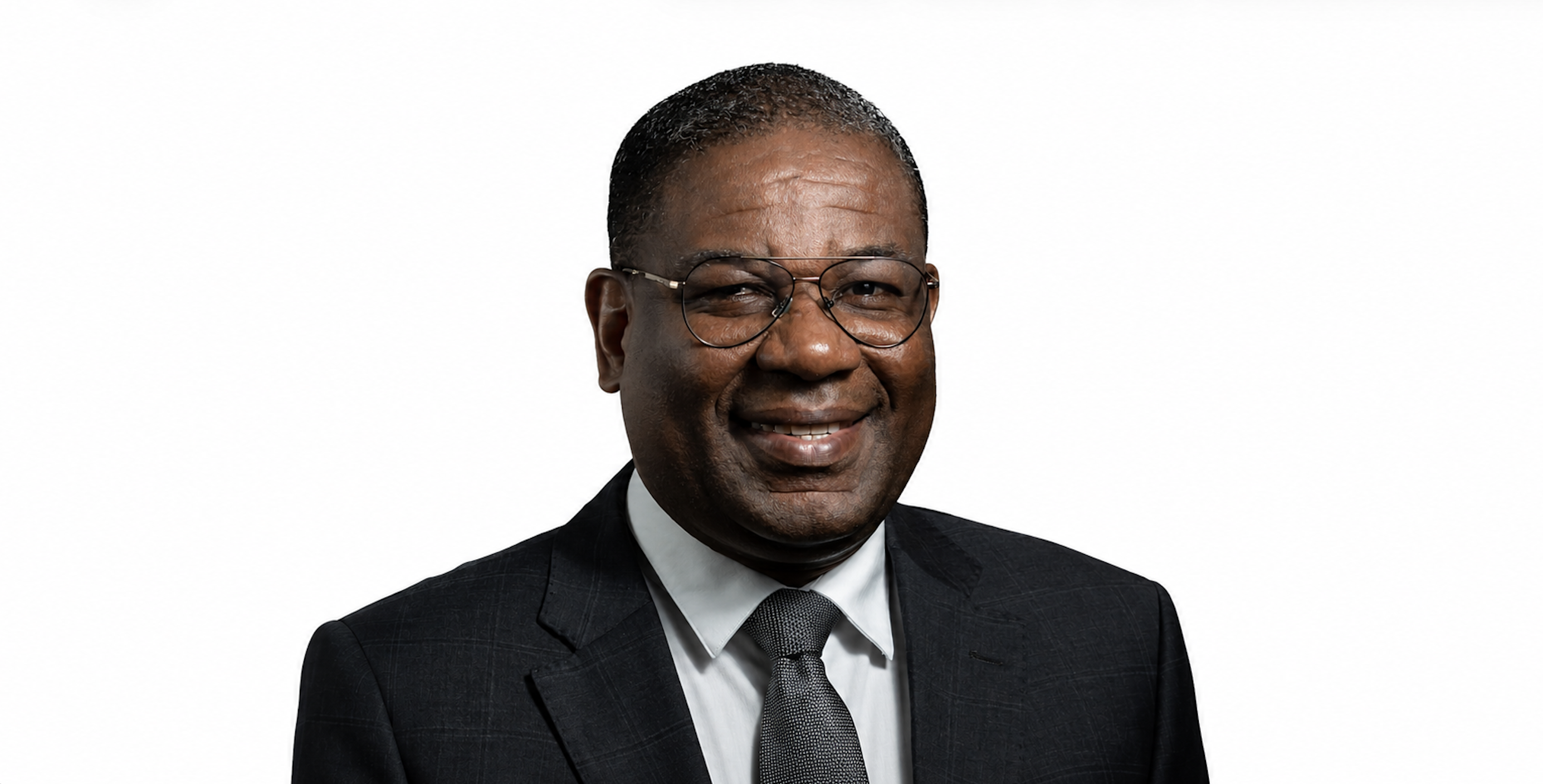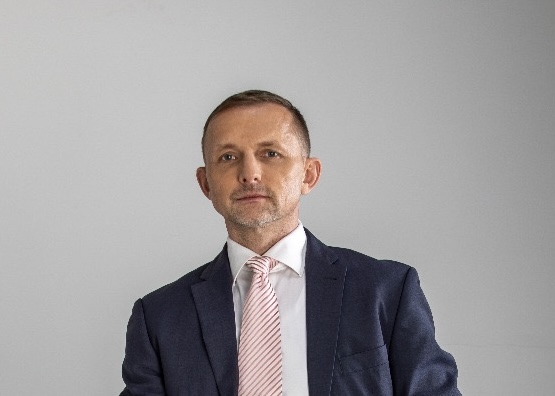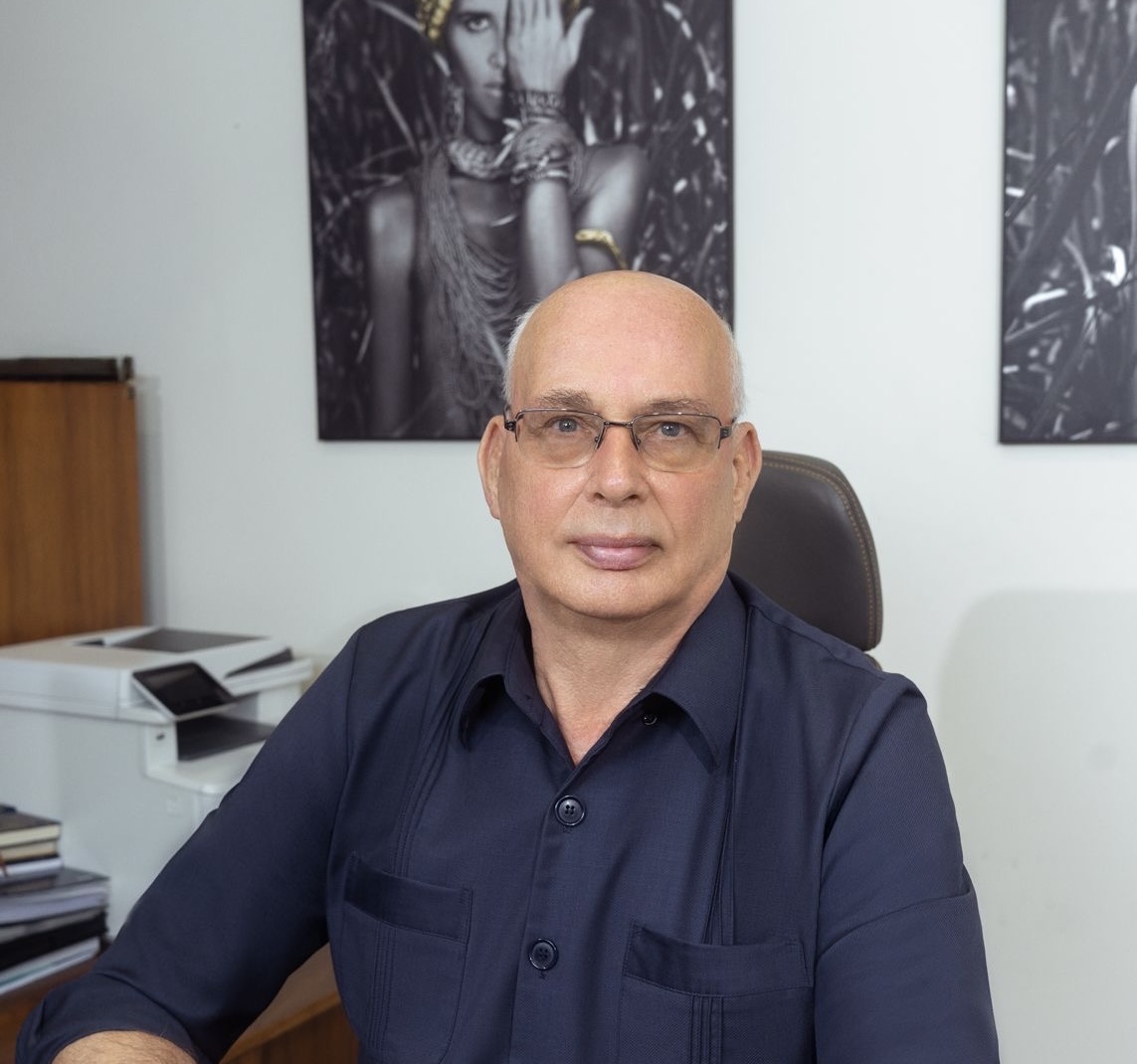

What led you to take on the challenge of leading the Commonwealth Economic Development Authority?
What I find interesting about this question is that upon joining the Commonwealth Economic Development Authority (CEDA), I had no plans or desires to lead the agency. My intentions were to oversee the finances and investment instruments. However, upon being thrust into the position in an Acting capacity, and at the recommendation of the previous Executive Director, I felt the duty and responsibility to fulfill the mandates of CEDA. These mandates are economic development and development finance. This duty and responsibility eventually turned into passion for economic development and recovery. This passion is fueled by my interest to help this community where I grew up. Having a background in business, I then took the approach of fulfilling CEDA’s mandate by simply serving others as a steward, and serving others in ways that would be beneficial for a business – integrity, professionalism, collaboration, transparency, trust, efficiency, regulatory simplification, etc. CEDA takes the position of being a “concierge” so to speak for viable potential investors. Currently, this passion has only grown and my desire to lead CEDA and The Marianas towards economic diversification and recovery is stronger. I understand and expect that challenges may arise in fulfilling CEDA’s mandate. However, I am ready to face them and with the support of CEDA’s Board of Director’s, Management, and Staff, I feel confident moving forward. Though it must also be recognized that there are many variables that affect how we fulfill CEDA’s mandate such as the roles of other agencies within The Marianas, laws and regulations affecting the business environment, the support of the current administration, external/global market forces, geopolitical events, natural disaster, etc.
What were your first priorities once you stepped in?
Upon stepping into the role of CEDA’s Executive Director, one of my first priorities was to re-establish the expectations within the organization and to align the Team’s perspective and outlook on work with the vision I saw for the agency and The Marianas.
Another major priority was developing an extremely deep understanding of the investment environment in The Marianas, the laws that govern us, our Covenant with the United States, the incentives we have to offer investors, setting the target markets and industries, and developing plans to penetrate such markets.
After extensive and voluminous research and legal discussions, we then created a new investment packet for The Marianas which was made more relevant to our target markets, packaged our suite of incentives intentionally to create maximum impact on our target markets and industries, and was vetted and verified to ensure the accuracy, defensibility, and integrity of the information we are putting out to the world.
Upon creating tools such as the investment packet, we then took our tools to events such as Select USA in Maryland this past May 2025. These new tools and marketing approach for The Marianas created tremendous impact at Select USA. Such impact crossed over to investors, federal government representatives, and US Trade Offices (US Commercial Services). This impact has led to CEDA being invited to limited invitation only events hosted by The US Commercial Services at major global events such as SEMICON Taiwan, SEMICON Korea, InterBattery Korea, and Select USA Roadshows, for example, within the Asia Indo Pacific – our region.
Current priorities are to continue marketing but also supporting the investors who are now in The Marianas looking to set up manufacturing operations, for example. Ongoing priorities are to evaluate the business environment and recommend changes where necessary to support economic development and recovery and this crosses multiple sectors of government. Another ongoing priority is to recover existing industries such as high-end retailing, hotel operations, and airline operations, for example. The creation and retention of jobs is also a major priority. The development of food systems within The Marianas is also a major priority that can reduce the cost of food but also create an export market and reduce our dependence on imports which is a major component, and highly desirable, in any developed economy. Lowering the cost of energy is another priority The Marianas must pursue as well as building up our power and water production capacity.
Tell us about that manufacturer visit and what followed.
CEDA has been supporting and working collaboratively with multiple potential manufacturers in The Marianas. These manufacturers have operations in The United States as well as in Asia. They want to do business in the US while staying close to Asian production and procurement centers, for example. The Marianas, provides this strategic linkage and nexus for such investment – We are a bridge that connects the US Mainland to the Asia Pacific and vice versa. We are entertaining zero emission manufacturing, pharmaceutical and nutraceutical manufacturing, and renewable energy manufacturing, amongst others.
How large is that proposed investment, and what would it mean for new jobs?
The proposed investments for such manufacturing ranges. The larger manufacturer may be investing upward of $355 million through multiple phases while creating an estimated 450-500 jobs throughout those phases. Other manufacturers are looking to invest $15-20 million or more while creating an estimated 50-75 jobs or more.
You describe a true one-stop shop for investors. How are you making that real?
To realize this condition, we have made a point of communicating and collaborating with the government agencies involved in economic development such as the permitting agencies, land agencies, tax authorities, port authority, tourism agency, Department of Commerce, etc. We communicate the efforts we are exerting, contact agencies who are involved when action is anticipated, discuss such actions to normalize them and create a culture of service, expediency, and collaboration. The end goal is to serve potential investors and partners to build an environment of trust and an environment that is predictable as this is a key factor for investors. Moreover, we monitor potential legislation that may support or hinder a one-stop-shop arrangement and provide comments in support or recommendations to amend language to support a business environment that is conducive to the investments we are trying to attract.
What impact did SelectUSA 2025 have on your pipeline?
Select USA’s Investment Summit this past May 2025 in Maryland was the catalyst for all the momentum we have built up to this time. We took our new promotional approach and materials to this event, revamped how we exhibit in terms of the physical exhibition booth, marketing message, etc, and took an active approach to engaging investors at the event. The Marianas’ booth was so overwhelmed with visitors that we had visitors lining up and waiting to speak to us. Additionally, we had multiple requests to meet one-on-one to discuss investing and setting up business in The Marianas. Not only did we provide an epiphany to investors but also to US Trade Offices. The US Commercial Services admitted being aware of The Marianas. However, after hearing our new marketing approach and reviewing and vetting our investment packet, these offices called The Marianas “The Best Kept Secret of the United States.”
The Trade Offices promised to market The Marianas to their clients now that they learned of the great incentives we offer. We believe they have fulfilled their promise as after Select USA in May we began receiving exclusive invitations from US Trade Officers throughout not only Asia but the world. We are now taking advantage of these opportunities and promoting The Marianas in different countries.
What advantages most differentiate The Marianas for advanced industry?
Geography is the bridge: we’re U.S. soil at Asia’s front door, connecting capital, supply chains, and markets in both directions. But the policy architecture is the true differentiator. Under our Covenant, the Marianas controls its own customs territory, which means our exporters are not subject to U.S. tariffs going in or out—an advantage that gets CEOs’ attention in today’s trade environment. Pair that with Made-in-USA labeling and our Jones Act exemption, and you have a compelling cost and speed equation for manufacturers serving the U.S. and Asian markets. We’ve pressure-tested every claim with statute and rule citations so investors—and their attorneys—can validate the advantages quickly. Skepticism is welcome; the data holds up. That credibility is why seasoned operators are reconsidering mainland expansions in favor of a Marianas footprint.
How are you preparing the local workforce for these opportunities?
Talent planning is built into our investor conversations. The industries we’re courting—pharmaceuticals, nutraceuticals, zero-emission vehicle equipment, clean energy components—demand specific skills. We’re pushing education partnerships, from trade programs to tailored training, and working across agencies to align curricula with the roles these projects create. It’s a whole-of-government effort: economic development can’t run ahead of workforce readiness. By signaling needs early, we can shape programs that deliver entry-level technicians and upskill existing workers into higher-wage positions. Investors appreciate that we’re thinking beyond permits and incentives to the human capital that makes operations sustainable. The goal is a virtuous cycle: targeted training that feeds stable, well-paid jobs; employers who invest in people; and a local ecosystem that keeps talent in the Marianas while attracting specialized expertise from abroad when necessary.
Has there been a broader shift in interagency coordination and leadership support?
Yes. We’ve seen strong support from the previous administration and the current one, and that consistency matters. Economic recovery and diversification require every permitting and land agency, plus revenue and taxation, to row in the same direction. In the past, marketing could be piecemeal; today we’re packaging the full suite of advantages into a cohesive, investor-ready offer. CEDA’s role is to facilitate, reduce confusion, and maintain cadence—meeting by meeting, milestone by milestone. As that culture of collaboration and service takes hold, outcomes improve: faster decisions, fewer bottlenecks, and clearer accountability. It’s not about one office carrying the load; it’s about the government acting as a single team. That’s how we convert global interest—especially from Asia—into signed leases, construction starts, and production lines.
What is your message to global investors considering The Marianas right now?
The timing is right and the commitment is real. The Marianas offers U.S. jurisdiction with Asia-proximate access, a unique customs position under our Covenant, and a government that will partner with you from first call to first product. We’re aggressive, informed, and aligned—from the administration and legislature down through the permitting agencies. CEDA functions as your concierge: we’ll map incentives, coordinate approvals, and help with the practicalities that make a site visit or relocation work. You won’t be alone here. As interest accelerates—from SelectUSA to semiconductor events in Taiwan—we’re seeing serious operators choose the Marianas for their next U.S. investment. If you’re looking for a strategic, defensible cost position with speed to market, come see the islands. We’ll put the advantages on the table, introduce the team, and get to work.