
1. Ericsson has been present in Africa for more than a century and promotes the continent’s digital transformation through its “Africa in Motion” vision, focused on connectivity, sustainability and inclusive growth. Within this broader context, how would you describe Ericsson Angola’s strategic role in the country’s digital evolution, and what have been its most significant milestones in Angola?
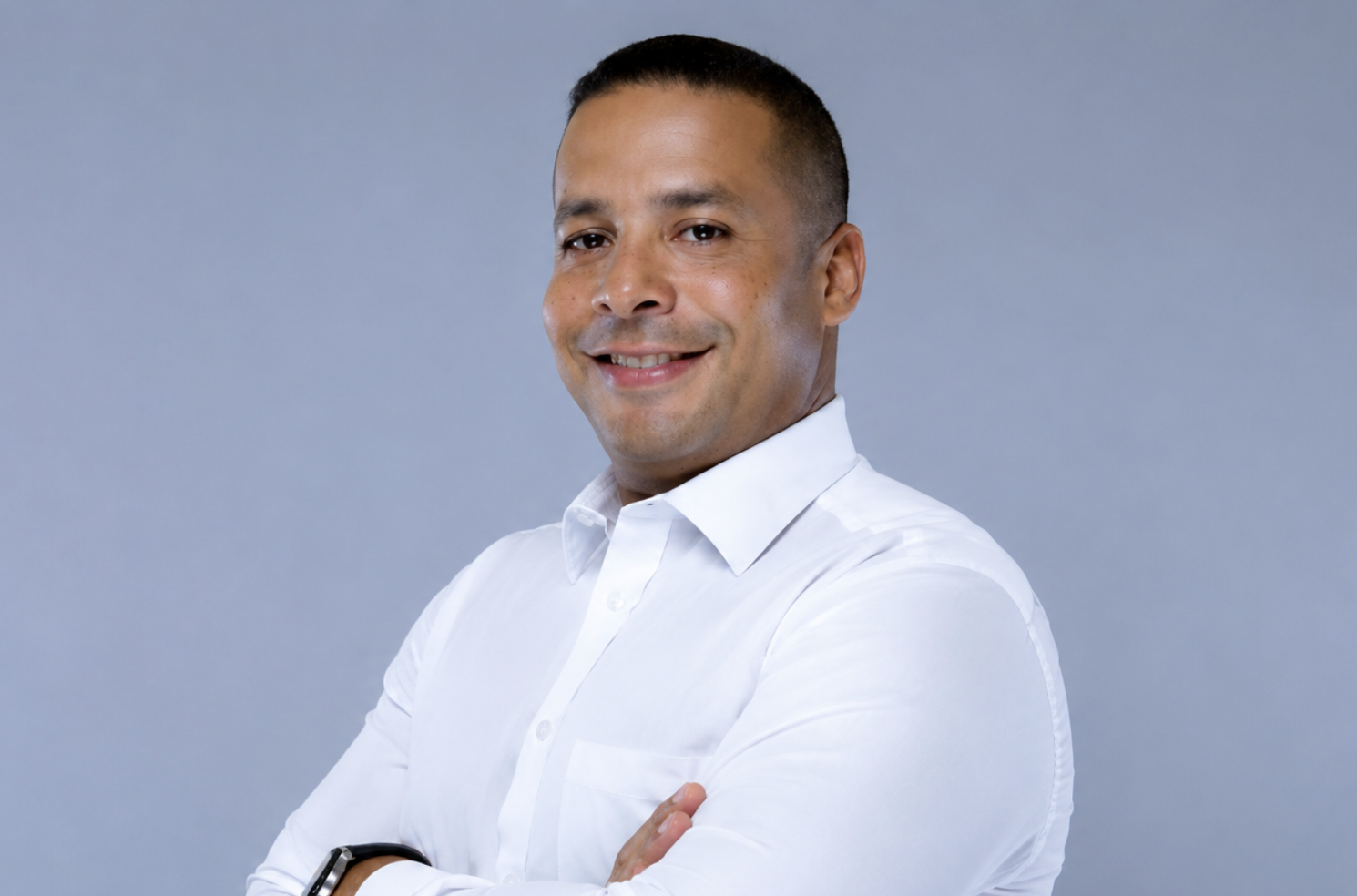
Ramy Abdullatif: First of all, thank you for having me. It is a real pleasure to be here and to talk about how Ericsson is contributing to the continent.
Ericsson has been connecting Africa for more than 100 years and has built mobile networks across all generations, from the first generation up to advanced 5G networks.
In Angola, we have been working with Unitel, our partner in the country, since day one. Since then, we have helped modernize Angola’s telecom infrastructure, supporting the rollout of 2G, then 3G, 4G and now 5G, making Angola one of the early adopters of 5G technology in Africa.
Together with Unitel, we have delivered landmark technology achievements, including Africa’s first LTE Advanced Carrier Aggregation demonstration and the introduction of 5G-ready capabilities, helping position Angola for the next phase of its digital economy.
2. Around 40.7% to 44.8% of Angola’s population uses the internet, leaving more than half of the country offline. With this in mind, which indicators best show Ericsson Angola’s performance in network modernization, connectivity expansion, technology deployment, digital traffic growth, workforce development and overall scale?
Ramy Abdullatif: You are right: there is a challenge. But when I look at it, I also see an opportunity of historic proportions. When I think of the digital divide, I also think of technological responsibility. Ericsson’s role and commitment to Angola is to make connectivity technically possible and economically viable at scale.
Let me give you a factual picture of where we stand today. In terms of presence and partnership depth, we have been in the country since 2001, when the government first introduced regulations to further develop the country’s mobile market and telecom sector.
Over those 25 years, Ericsson and Unitel have collaborated across core networks, radio access networks and business support systems, making this one of the most technologically comprehensive partnerships on the African continent.
Our most recent milestone was the completion of Unitel’s core network transformation. We implemented a dual-mode, cloud-native core network, where 4G and 5G are converged and integrated on a single platform. That is a future-proof network. In practical terms, Angola now has a core network of the type we see being deployed in very advanced markets.
When we talk about the digital divide, the network that Ericsson’s infrastructure underpins reaches millions of subscribers. Unitel is by far the market leader in Angola and serves millions of subscribers. Solutions such as fixed wireless access help reach underserved populations and rural communities, thus helping to bridge this digital gap.
Global mobile network data traffic is on a strong upward trajectory. Including fixed wireless access, it is expected to grow by around a factor of 2.4 between 2025 and 2031, reaching roughly 482 exabytes per month. Angola is not isolated from this trend. As 4G penetration deepens and 5G matures, local data consumption will follow the same curve.
The infrastructure we are building today with Unitel is sized to cater for the future, not only for today’s consumption.
In terms of workforce development, Ericsson introduced the African Graduate Program in 2020. This is a program through which we give university graduates the opportunity to work with experts in the field and upskill. One of the facts I want to mention is that many of our colleagues in the Angola office came out of this program.
3. Ericsson’s recent modernization initiatives in Angola include cloud-native and microservices-based architectures that can integrate 4G and 5G technologies on a single platform. How do these technologies improve network performance, automation and scalability, and why are they important for Angola’s telecommunications future?
Ramy Abdullatif: This question gets to the heart of why what we did with Unitel matters, not just as a technology upgrade, but as a strategic repositioning of Angola’s network.
Let me break it down across three dimensions. Before explaining the benefits, it is worth being precise about what was deployed. I see it as three interconnected elements, each significant on its own.
First, there is the dual-mode 5G core, which is capable of integrating 4G and 5G on a single platform. Second, there is the IP Multimedia Subsystem for real-time voice and data services. Third, there is the cloud-native infrastructure, which replaces hardware-dependent systems with software that runs on a standard computing environment.
Each of these is significant on its own. Together, they represent a fundamental shift and advancement in the network.
Reflecting on the benefits, I would name three dimensions: performance, automation and scalability.
When we talk about performance, in a traditional telecom network, each network function was deployed on a physical box. Whenever there was congestion or a fault, that box affected the rest of the system.
With a cloud-native environment, we eliminate those boxes. Each network function is hosted as a microservice with standardized interfaces, and this is how they interact with one another. This dramatically reduces latency in communication between the different network functions. At the same time, it allows for dynamic resource allocation and makes fault isolation much simpler and easier.
Then there is automation. With what we have today with Unitel, we can think of network slicing. For example, a hospital could be hosted on a network slice where it receives the most reliable and secure connection dynamically. That happens through automation, without intervention.
Last but not least, there is scalability. In hardware-dependent solutions, in order to expand and scale the solution, you needed to go through a hardware procurement cycle, which is very intensive: purchasing and production, shipping, deployment and installation.
Now, with a cloud-native environment, function and footprint expansion is, in many cases, a matter of software operation. Rather than going through capital-intensive work and the slow process of procuring hardware, as well as the geographical constraints of delivering hardware, scalability becomes much faster and more flexible.
The bottom line is that a cloud-native architecture means Angola’s network can now think, adapt and scale in ways that were simply not possible with the previous infrastructure.
4. Ericsson and UNITEL have maintained a collaboration of more than 20 years across core networks, radio access networks and billing solutions. How would you describe Ericsson Angola’s partnership strategy, and what role do telecom operators, enterprises and public institutions play in advancing Angola’s digital economy?
Ramy Abdullatif: Our strategy in Angola is to see ourselves as a long-term technology partner. The best example is, of course, our 25 years of collaboration with Unitel.
Looking ahead, we see our continued partnership with Unitel as our cornerstone in the country, where we continue to improve performance, coverage and innovation.
At the same time, partnering with enterprises and public institutions supports the advancement of Angola’s digital economy. You can think of safer mining, automated ports and logistics corridors, as well as agriculture with improved yields.
One of our key initiatives is also to bring our global experience to the local market in order to explore those verticals as a way to contribute to the country’s GDP.
5. Under the World Bank-funded USD 300 million Angola Digital Acceleration Project, PADA, Angola has established Environmental and Social Management Plans for digital infrastructure. In this context, how is Ericsson Angola addressing e-waste, energy-efficient network infrastructure and broader sustainability in the telecommunications sector?
Ramy Abdullatif: This is one of the most important questions our industry must answer honestly. It reflects the fact that digital infrastructure development and environmental responsibility are inseparable.
At Ericsson, we treat sustainability not as a compliance obligation, but as a core dimension of how we build and operate networks.
Network modernization, by its very nature, generates decommissioned equipment. In 2005, Ericsson launched its global Product Take-Back Program to minimize the environmental impact of products at the end of their life.
This program is now available in more than 180 countries, where we ensure that these products are collected, treated and recycled in an environmentally sound way.
6. Through Ericsson’s global “Connect To Learn” program, the company has supported digital education and 21st-century learning tools across several African markets. How is Ericsson Angola approaching social and governance responsibilities in areas such as digital inclusion, education, local talent development and community engagement?
Ramy Abdullatif: Across Africa, our social impact work focuses on digital inclusion and education.
Through initiatives such as Connect To Learn, Ericsson and its partners have brought connectivity, digital tools and 21st-century learning resources to schools in underserved areas, reaching more than 200,000 students in 25 countries to date.
In Angola and the wider region, we apply the same approach, pairing infrastructure with skills development, including graduate and youth programs designed to grow local expertise in ICT and new technologies.
All of this is grounded in Ericsson’s global Code of Business Ethics, which covers human rights, anti-corruption and responsible business practices.
7. Angola’s digital economy is being shaped by rising demand for connectivity, cloud-native infrastructure, AI-driven networks and next-generation 5G ecosystems. Looking ahead, what are Ericsson Angola’s main strategic priorities and long-term plans for the market?
Ramy Abdullatif: As Angola deepens its role in Africa’s digital economy, Ericsson’s priorities are clear, and I would put them into three distinct pillars.
First, we want to complete the ongoing network modernization wave, so that 4G and future 5G networks deliver stronger coverage and quality nationwide, based on our existing framework agreements with our partner Unitel.
Second, we want to scale cloud-native and AI-driven networks that can handle rapid data growth efficiently and support advanced services for consumers, enterprises and government.
Third, we want to build a 5G ecosystem around key sectors. By that, I mean sectors such as mining, logistics corridors and financial services, drawing on proven use cases from other markets, while we continue to invest in local talent and sustainable, energy-efficient infrastructure.
8. You have nearly two decades of experience within Ericsson and now serve as President and Head of Cluster Africa South. How has this journey shaped your leadership philosophy and vision for Ericsson’s growth across Africa, and what legacy would you like to leave at Ericsson one day?
Ramy Abdullatif: It takes me by surprise to realize that I have spent that long at Ericsson. It makes me feel old.
I have spent quite some time at Ericsson, in different roles and markets, and I have learned that sustainable success in our industry is not really about revenue or technology. It is about people, partnership and purpose.
My journey has reinforced a leadership philosophy centered on three things: listening, empowering and walking the talk.
Africa is an incredibly diverse continent, and the most effective leaders are those who stay close to customers, understand local realities, empower local teams and build ecosystems that unlock societal impact.
My vision for Ericsson in Africa is to remain the trusted partner enabling the continent’s digital future, with a guiding principle of “local first, global always.” That means relying on local talent while, at the same time, bringing our global experience into the country.
When I think of legacy, it is not measured by revenue or market share, as important as those are. It is much simpler than that. I would like the legacy to be that, during our time, we helped accelerate Angola’s digital transformation in a way that was inclusive, sustainable and future-proof, while building local capabilities and developing societal impact.
9. Finally, in your opinion as a businessman, what are the investment opportunities in Angola? What would you like to tell our readers about the opportunities the country has to offer?
Ramy Abdullatif: When I look at Angola, I see a country that is very rich in natural resources. Of course, everyone talks about oil and gas in Angola, but I think technology is an untapped area.
This is what I keep telling my team: Angola should not be just a consumer of digital services. Digital sovereignty should be part of the Country’s growth. That is one of the things I see, because it is a win-win. It helps build and uplift local talent, and at the same time it supports the country’s national GDP.
The second area is, of course, agriculture. We were just talking about how green the country is. I think agriculture is also a solid investment opportunity that will yield a lot of returns.