1. The official launch of the African Bank of Oman in Luanda last April marks the historic entry of the 22nd financial institution into the national system. What operational milestones defined this phase, and how does your local corporate framework position the bank to serve Angola differently from its competitors?
The launch of African Bank of Oman, or simply ABO, in Luanda last April was the culmination of an 18-month period of institutional construction. That included completing our BNA licensing process, which is extremely comprehensive; establishing our local structure and incorporating the bank as a commercial entity; hiring our staff ahead of launch; and deploying our capital base into the country.
Opening a bank in Angola is no easy task, and it is a milestone in its own right, particularly given that regulatory standards here have become increasingly rigorous. As you know, Angola remains on the FATF grey list, which we are working to exit, and the country is also under IMF surveillance. In May, the IMF published a report that, on at least one interpretation, pointed to weaknesses in the Central Bank’s governance over the institutions it supervises.
I was somewhat surprised by that characterization, because the level of oversight and governance we operate under is substantial. The Central Bank has come a long way in recent years, adopting Basel III principles, OECD standards and anti-money laundering frameworks, all of which place a significant compliance burden on banks, particularly around internal controls.
For that reason, we are very proud to have opened the bank in record time. The shareholders took the decision to establish a bank in the fourth quarter of 2024, when I joined, and we were able to complete the process by April. That included submitting our proposal to the Central Bank covering our strategy, corporate structure and social impact, all of which were approved.
What distinguishes our framework from other banks in the market is this: as you mentioned, we are the 22nd bank in Angola. There are already 21 established banks, most of them retail-focused or oriented toward the domestic market. ABO brings together a combination of two capabilities that are very rare in this market.
First, we are an Angolan-incorporated bank, operating under Angolan law and regulation. At the same time, we have the backing of a shareholder that is 100% GCC-owned. That places us in a privileged position to be recognized as the bank covering the Angola–Middle East corridor.
We are aiming to attract institutional capital from across the GCC, not only Oman. This gives us a distinctive position, not just in Angola, but across sub-Saharan Africa, as there is currently no Arab bank covering this opportunity set.
In terms of strategy, we are deliberately specialized in client focus and execution. We are not a retail bank, nor do we currently have a strategy to serve SMEs, although, given market demand, that is a strategy we will revisit over time. For now, that focus reflects our stage of growth and our capital base.
We are concentrating deliberately on large corporates and multinationals operating in Angola, with the goal of connecting these companies to the Middle East while also attracting Middle Eastern companies seeking to invest in Angola. Our positioning is to provide advisory services along this corridor, this bridge, between Angola and the Middle East, closing the gap between Angolan projects and companies in need of foreign capital, and investors from the Middle East looking to enter Angola.
2. Considering your target clients, what are the primary financial drivers supporting your balance sheet strategy to absorb large-scale transactional banking across your industries?
Our balance sheet strategy is built around three pillars.
The first is trade finance: letters of credit, bank guarantees and documentary collections, which are the lifeblood of any corporate operating in Angola. As you know, Angola remains heavily import-dependent, while maintaining a high concentration of exports, predominantly crude oil and diamonds. It remains, nonetheless, an export economy.
Trade finance is clearly one of our core pillars. Our target clients, i.e. multinationals and local corporates, depend heavily on imports, whether of raw materials or finished goods. Our positioning is as a banking partner that supports these entities in executing their trade instruments swiftly, backed by correspondent banking relationships that lend those instruments international credibility.
The second pillar, where we aim to differentiate ourselves and lead, is structured finance. As I mentioned, our positioning as the bank of choice for foreign direct investment allows us to provide advisory services to investors entering Angola.
From a banking perspective, foreign exchange is a critical issue in Angola. It is heavily regulated, and we work hand in hand with clients to guide them through how banking operates in this market, providing them advisory services on this chapter.
Second, we provide clear frameworks for cross-border transactions, whether in equity, where clients may need to raise capital via access to the Middle Eastern investor base, or in financing structures more broadly.
We are targeting large-scale projects. As a relatively small organization at this stage, we need to be disciplined about where we allocate capital rather than spreading ourselves too thinly, so we are focusing on these major inbound investments. DP World is a good example of the kind of GCC interest we are seeing, and there are others.
Before we opened, DP World, Abu Dhabi Ports and Dubai Investments Park had already established themselves in the country, and projects of this scale typically require structured finance to support their growth. That is the second pillar where we aim to be most relevant.
The third pillar, which is more medium-term in nature, relates to the unbanked population of Angola. In the medium term, we want to participate in addressing this.
This is something Oman did very well a few years ago through fintech-based banking rather than traditional brick-and-mortar models. Angola has had many banks over many years, yet a large share of the population remains outside the formal banking system.
The most frequently cited success story, not only in Oman but across Africa more broadly, is M-Pesa in Kenya, which later expanded to Mozambique. Angola does have mobile money, but it has not achieved the scale many expected.
It comes down to offering a value proposition where people are comfortable banking without a physical branch in front of them. This is something we are working on for the medium term, and it is also a significant priority for the Central Bank.
The Central Bank wants to reduce reliance on cash, which is costly in terms of printing and collection, while also expanding access for the population. Given that mobile phone penetration in Angola is near-universal, the foundation for this is already in place.
In my view, two things are needed. The first is a technological platform distinct from what currently exists in Angola. The second is a regulatory framework that is fit for purpose, one that both the Central Bank (BNA) and operators are comfortable with.
What happened in Kenya was a deliberate push from the central bank to make this possible. The Central Bank of Kenya created a separate, lighter-touch regulatory framework for mobile money and e-money issuers, distinct from the rules applied to full banks. You cannot apply banking-grade regulation to agile, nimble fintech companies, doing so introduces excessive cost and discourages market entry. That proportionate approach was a major factor behind M-Pesa’s success, and something similar occurred in Mozambique.
The unbanked population typically lacks the purchasing power to pay for banking services, so these services need to be provided free of charge. Bridging that gap with the Central Bank is, I believe, the missing piece, but it remains a project we are very committed to over the medium term.
3. The strategic alignment between Muscat and Luanda responds directly to the trade diversification goals outlined under Estratégia Angola 2050 and Oman Vision 2040. How are your bilateral corporate engagements shaping ABO’s positioning as a primary financial bridge to the Middle East and the GCC region?
It is no coincidence that Angola 2050 and Oman Vision 2040 are fundamentally aligned when you examine their underlying objectives. Both are about diversifying away from oil and gas dependency and building long-term productive capacity, particularly in manufacturing, production and agriculture.
This alignment was, in fact, one of the original sparks for ABO’s creation, the opportunity to capture this diversification.
Prior to 2020, Oman’s economy closely resembled Angola’s today: heavily dependent on hydrocarbons, with limited capital markets and foreign direct investment. When Sultan Haitham bin Tariq came to power in 2020 with a modernized, reform-oriented economic vision, he began precisely the kind of transformation Angola is now undertaking.
He launched a privatization program in Oman, including the country’s largest company, OQEP, followed by several other state assets, and opened the economy to foreign direct investment, enabling foreign investors to establish factories, manufacturing plants and other ventures.
The third element of his strategy was internationalizing the Omani economy to build resilience against oil price shocks. One well-known example is investment in diamond mining: Omani investors, through Taaden, hold minority stakes in Catoca and Luele, Angola’s two largest diamond mines.
The second example, one we are very proud of, is ABO itself, which represents Oman’s first 100% wholly-owned investment outside the Sultanate, a project that the Sultan and the country as a whole take great pride in. We have a strategic ambition that extends beyond Angola, though Angola is our starting point.
Looking at Angola’s economy and its fundamentals, the country possesses the necessary assets: significant natural resources, agricultural land and strategic infrastructure, particularly its ports, positioning it as a potential hub for West Africa. Geographically, Angola is exceptionally well placed.
Combine that with the GCC’s sovereign and institutional investor base, and the opportunity becomes compelling. We see ourselves as a trusted financial intermediary, well positioned to bridge GCC capital into Angola.
We understand both regulatory environments. One of the advantages of GCC capital is that it is patient, it is not solely yield-driven.
Angola has historically attracted European investors, owing to its Portuguese heritage, alongside some American investment in oil and gas. The mindset of developed-market investors tends to be heavily return-driven: a financial model is built, and the decision to invest follows directly from whether target returns are met.
What I have come to appreciate since joining this organization is that Middle Eastern capital does not necessarily operate that way. It takes a longer-term view, with a strong emphasis on contributing to the host economy.
There is a clear understanding that, unless a project is welcomed by the country in which it operates, it will not be sustainable over the medium term. That perspective allows investors to weather political shocks, whether from elections or policy shifts, by creating a platform where they are seen as welcome, generating jobs and wealth for Angolans. That long-term orientation is central to how Middle Eastern capital approaches investment.
4. ABO has deployed a modern corporate model designed to run on flexible digital infrastructure and advanced treasury tools. In what ways will this specific focus on financial technology improve cross-border clearing efficiency and liquidity management for corporate clients?
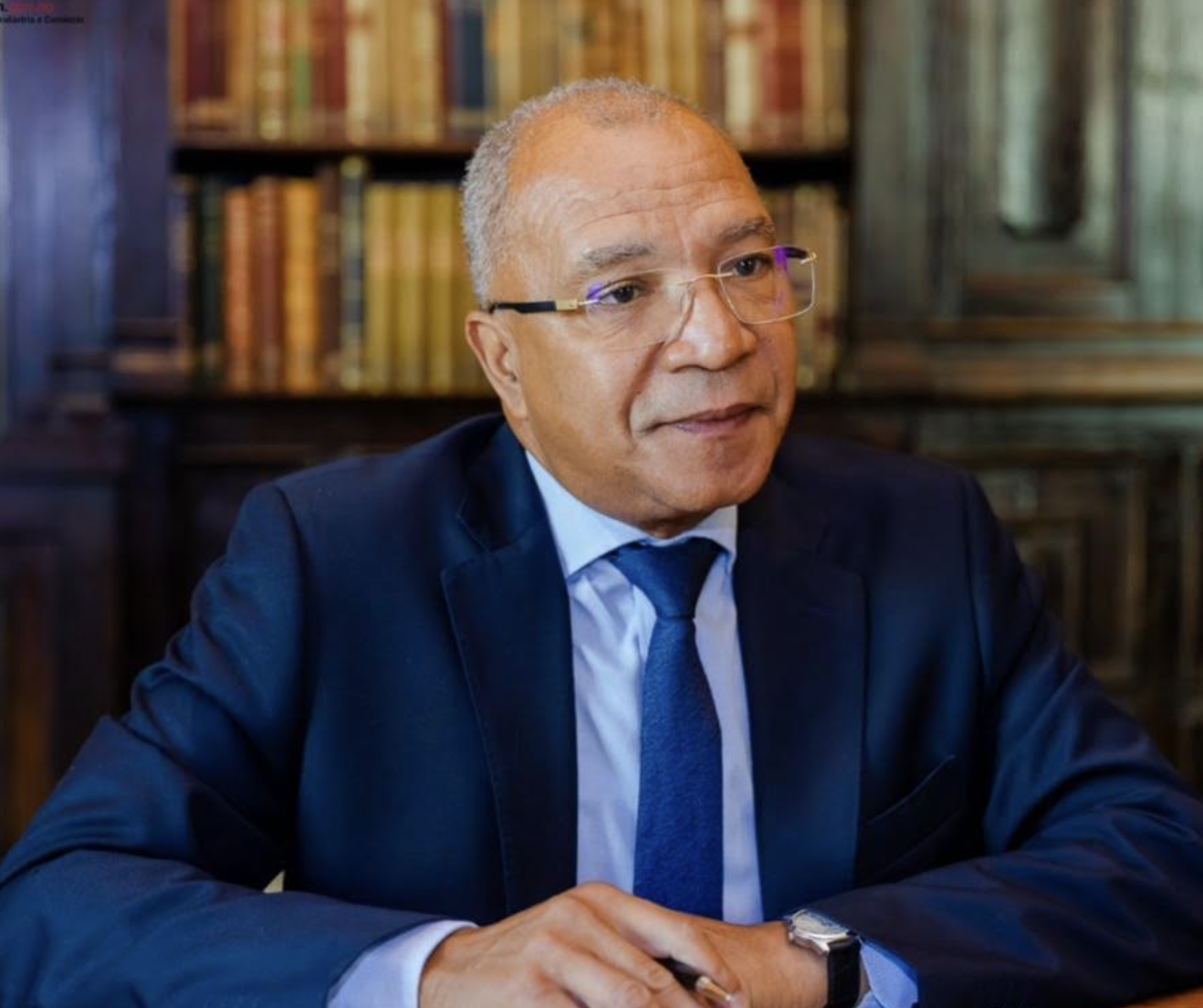
António Dinis Mendes:
When we talk about financial technology, it’s important to clarify what we mean. ABO is not a fintech, we are a regulated bank, and that was a deliberate choice on our part, reflecting the type of license required to operate in Angola.
Most established banks in Angola have been operating here for a long time and carry legacy core banking systems designed for a different era. Many of them are still running systems that predate my arrival in Angola in 2010, in some cases, systems more than 20 years old.
Integrating new systems and meeting current regulatory requirements, particularly with the BNA’s increasingly proactive stance on AML controls, treasury tools and customer experience, creates significant complexity for banks attempting to modernize legacy infrastructure.
Because we built ABO as a greenfield project, we had the advantage of a blank page: we could select our technology infrastructure and core banking system from scratch. That allows us to run modern platforms for both client-facing services and treasury operations.
In practical terms, this means our clients have clear visibility and control over all their positions through our systems.
5. As a newly established bank, ABO has chosen to anchor its corporate culture around institutional soundness, compliance and transparency from day one. For global investors reading FORTUNE, what specific internal corporate governance structures and risk management models have you implemented to guarantee accountability?
This is a topic I take very seriously. Governance is not something that can be retrofitted into a bank after the fact, the decisions made in our first year establish the foundation for everything that follows.
Our risk frameworks and board composition, a blend of Angolan talent and Omani expertise, together with our adoption of international standards for audit independence, are all part of that foundation.
Interestingly, the Central Bank recently published new legislation, Notice 03/2026, which formalizes practices we had already implemented a year earlier. A simple example: the audit function must be independent and cannot report to the executive committee, a structure we had in place since inception.
These decisions shape the bank’s character for years to come, and were deliberate from the moment we first outlined what the bank would look like.
We established a governance structure that separates ownership interests from executive management, with independent oversight, certain functions report directly to the Board rather than through executive lines.
The executive committee runs the bank’s day-to-day operations, while the Board maintains the framework around internal controls and overall governance, preserving that independence.
On risk management, we have applied Basel frameworks adapted to the Angolan context. Given that we are a foreign-owned bank operating in this corridor, correspondent banking relationships are critically important to us.
The demands that come with correspondent relationships, around internal controls, compliance, and KYC, both knowing your client and knowing your transaction, are taken extremely seriously.
We are not willing to put our correspondent banking relationships at risk by allowing transactions to proceed that should have been flagged at our level.
For global investors and clients evaluating how we operate, this is a significant strength. We welcome the scrutiny that multinationals and international investors place on us, it only makes us stronger.
6. Looking ahead, the bank’s current strategy focuses on consolidating its core services for a selective portfolio of major corporate entities before expanding its product limits. What are your immediate expansion plans regarding the introduction of new financial instruments to further support the economy and diversification?
I think this question deserves a two-part answer.
Our immediate focus is on a highly selective portfolio of corporate clients, as I mentioned. We are building deep relationships with a concentrated book of high-quality clients, which gives us the institutional foundation to expand responsibly into the next phase.
Once that foundation is solid, we can move toward introducing new instruments and strategies, potentially including a limited retail banking offering, which is something we are also considering.
Looking further ahead, our direction in project finance and advisory is clear. Angola has a substantial pipeline of investment needs across energy, water, transport and agriculture.
The financing structures required for these projects today differ significantly from the plain-vanilla, balance-sheet lending of the past. As Angola’s economy accelerates, the scale of these projects demands increasingly sophisticated financial structures, requiring banks that understand project finance disciplines and can coordinate across government counterparties, institutional investors and multilateral lenders.
We believe we have the credibility to bring the GCC investor base into these projects.
Beyond that, we see a significant near-term opportunity in capital markets development. Angola already has an established capital market through BODIVA, though it remains largely limited to Angolan investors, Angolan issuers and kwanza-denominated instruments.
While foreign investors are technically and legally permitted to invest in BODIVA, in practice they have not, and there is a lesson in that.
Our goal is to help this first generation of Angolan corporates ready to access international capital markets look toward the GCC, where there is substantial capital seeking yield and portfolio diversification. Gulf fixed-income investors are actively looking for opportunities of this kind, and Angola is a clear candidate.
To date, it is primarily the Ministry of Finance and Sonangol that have tapped international markets, the only two entities with Eurobonds so far, both sovereign-related. That is a strong starting point for bringing other private issuers to market.
We truly believe that as developed-market investor bases, in the US, Asia and Europe, become increasingly saturated, this will open the door for Gulf institutional investors to explore alternative routes into Angola’s banking sector and capital markets.
7. You have 25 years of experience, and your career spans critical leadership roles managing major risk portfolios and corporate operations at Standard Invest and Standard Bank Angola. Given your background as a key architect of investment banking, how has this journey shaped your executive style, and what legacy do you want to build for the bank?
I have genuinely enjoyed the path my career has taken. I spent 14 years working in international banks in Portugal before coming to Angola, which gave me exposure to a mature, developed market. During that period, I lived through the 2008 Lehman Brothers collapse and the broader housing market crisis.
I was then fortunate to be invited to Angola, first with Standard Bank, to help establish the bank before it commenced operations. This is, in fact, the third bank I have helped build from the ground up. After Standard Bank, I was also involved in establishing Standard Invest, a subsidiary, but still very much a new venture in its own right.
The 16 years I have spent in Angola, slightly longer than my time in developed markets, have given me a distinct perspective on banking and investment banking, which I see as two related but different disciplines.
Over those years, I have lived through three economic cycles. I arrived during the boom years of 2010 to 2015. Then, in November 2014, the oil price collapse triggered a multi-year recession and currency crisis. This was followed by a political transition period around 2017–2018, alongside continued economic adjustment, and later by the COVID-19 pandemic.
Having lived through the post-war recovery boom, the currency crisis, and the subsequent IMF adjustment period, each of these cycles taught me something different about leadership, with people, with clients, and with stakeholders.
What I take from this experience is that, especially in frontier and emerging markets like Angola, the quality of your credit judgment matters more than the sophistication of the products you offer. The discipline you maintain is what earns you credibility with stakeholders.
However difficult it may be, honesty and transparency with the person across the table build the credibility that carries you through the long run.
That principle has been central to how I have approached building ABO, both institutionally and in building our team. I am not interested in growth at any cost, sustainable growth is what serves the interests of our shareholders, the economy, and our clients alike.
What I hope to leave behind, ultimately, is an institution that demonstrates the GCC–African banking partnership, this corridor I have spoken about, can produce something genuinely excellent: not just commercial success, but an institution that earns long-term institutional respect.
Angola has previously been home to tier-one international banks that have since exited, and that gap needs to be filled. Today, the market includes African banks, alongside a Chinese branch, not yet a full-fledged bank, serving the Sino-Angola corridor.
But I firmly believe that the future of Angola will increasingly run through Middle Eastern capital.