1. Detergents are part of daily life for families, businesses and institutions across Angola. How has Basel Angola built its position in the market, and what milestones best reflect the company’s growth?
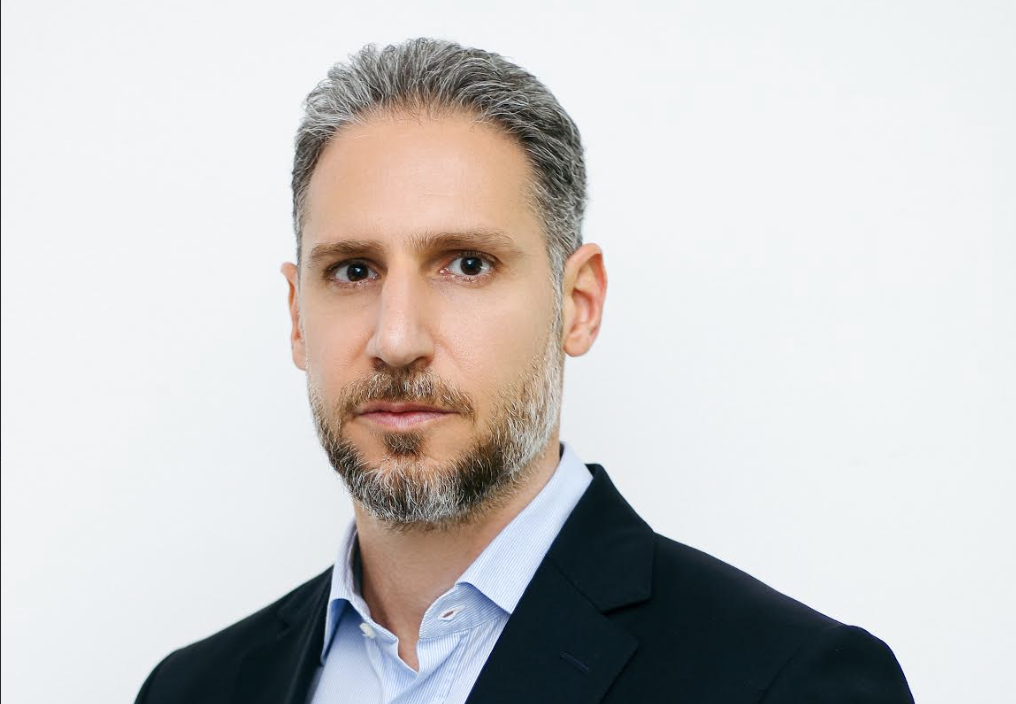
Hussein Khatoun:
Basel Angola’s journey began in November 2009, when my partner, Ali Houballah, and I came to Angola. At that time, there were only two people working in the company. Today, we are proud to employ more than 1,400 people across our operations.
We built the company from the ground up. We started by importing goods from Senegal, China, Syria and other markets. At that stage, the focus was only on detergents, but from day one the intention was to establish an industrial manufacturing unit in Angola.
It started as a commercial operation, but it was always paving the way for local manufacturing. In order to start production, we first needed to gain market share. We bought the land, acquired the equipment and worked to create demand in the market. That meant ensuring the product was available on shelves, that consumers enjoyed it, reordered it and trusted it.
We started production in 2012 as the first detergent company in Angola. We started with one brand. Today, we have four leading brands in the market: Ultra, Ama, So-Lava and Gloria.
Basel Angola has always been driven by one fundamental principle: understanding the Angolan consumer better than anyone else. Angola is a diverse market. Consumers have different purchasing power, preferences, aspirations and lifestyles. Rather than offering one product for everyone, we built a portfolio of brands where every social segment could identify with a product that reflects its needs.
The difference between us and other players is that we understand consumer behavior and we are close to the market. I personally spent several years in the market in Angola, making sure we were increasing visibility, building awareness and strengthening the connection between the brand, the product and the consumer.
Today, Basel is not simply selling detergents. We are building trusted household brands. The confidence consumers place in our products has been earned through consistent quality, affordability and reliability over many years.
This consumer-centric approach has allowed us to become Angola’s leading detergent manufacturer and an important contributor to the country’s industrial development.
Q1 follow-up: Can you mention the four brands?
Hussein Khatoun:
Ultra is our premium brand. It is designed for consumers who value exceptional quality, superior cleaning performance and sophisticated fragrances. I am sure that if you walk into many Angolan households today, you will find Ultra in the house.
The second brand is Ama, which is a younger, more dynamic brand. Ama means love. We made the sizes a bit smaller, the colors more attractive and the designs more innovative. It is aimed particularly at younger consumers and middle-income households, combining quality, affordability and contemporary branding.
The third brand is So-Lava. So-Lava is our popular value brand and one of the pillars of our portfolio. It is our fighting brand, created to serve the mass market and the informal market with strong value without compromising on quality.
The fourth brand is Gloria. Gloria has a special place in the hearts of Angolan families. It started during COVID-19, when we were among the first to begin producing hand sanitizers locally. At that time, there was panic in the country and strong demand for hygiene products. Instead of taking advantage of the situation by increasing prices, we maintained our prices and supplied government institutions, public institutions and the private sector.
Gloria then expanded into liquid hand soap, soap and personal care products. It became associated with hygiene and protection, strengthening the trust consumers continue to place in the brand today.
Together, these brands reflect our philosophy of understanding consumer behavior and ensuring that every Angolan household can identify with a Basel brand.
2. Moving now to scale and results, which figures best show the company’s reach today and its contribution to local manufacturing?
Hussein Khatoun:
Basel Angola developed section by section. We started with liquid detergent, then moved into powder detergent.
In the beginning, we were importing powder detergent and repacking it locally for around two years. By the time our production unit was ready, we were moving roughly three to four containers. Then we increased to around 10 containers, which is approximately 250 tons.
Today, we produce approximately 6,500 to 7,000 tons per month across our operations. This includes liquid detergent, bleach, soap and powder detergent.
Our combined production capacity exceeds 12,000 tons per month, which gives us significant room for expansion as demand continues to grow. Some production lines are already operating at more than 80% capacity, while others remain below 40%, giving us substantial headroom to scale efficiently without major infrastructure expansion.
Beyond production volumes, I believe one of our greatest achievements is that millions of Angolan consumers voluntarily choose our brands every day. That confidence is something no balance sheet can fully measure.
We are also proud to contribute to local employment, manufacturing capabilities and value creation inside Angola, supporting the government’s vision of strengthening domestic industry and reducing dependence on imports.
Looking ahead, we have developed a growth roadmap through 2030, with the objective of doubling our production output. This strategy is supported by investments in manufacturing excellence, digitalization, artificial intelligence, stronger distribution capabilities and regional expansion.
Our ambition is not simply to produce more. It is to build one of the most efficient, innovative and trusted FMCG manufacturing platforms in Central and Southern Africa.
3. How is Basel Angola improving its product portfolio and manufacturing processes to stay competitive?
Hussein Khatoun:
Innovation starts with listening.
We continuously study consumer behavior to understand how preferences evolve, whether in product performance, fragrance, packaging or value. Our objective is to offer products that meet international quality standards while remaining accessible to Angolan families.
To stay competitive, innovation must happen both internally and externally.
On the manufacturing side, we have implemented an IoT platform that gives our plant management team a real-time dashboard to monitor key utilities and inputs such as water, steam, electricity, diesel, gas consumption, raw materials, boilers and water pressure.
This allows us to improve efficiency, optimize resource utilization and support preventive maintenance before issues occur. By integrating artificial intelligence into this system, we gain deeper insights that help us make faster and better operational decisions.
AI does not replace people. There will always be a human factor. What AI does is give engineers and managers more information, more analysis and better visibility, so they can understand where their teams can improve.
On the commercial side, we are also using artificial intelligence to better understand the market. Our sales representatives can capture photos from retail outlets, both in the informal market and in modern trade. The AI platform then analyzes shelf presence, pricing, product availability and competitive activity.
This gives our commercial team valuable market intelligence and allows us to respond more quickly to changing market conditions. It helps with supply chain, replenishment, market visibility and market analysis.
We have also automated most of our production lines. Since we started the industrial unit in 2012, technology has advanced significantly. In the past, some packaging machines were semi-automatic and produced around 100 pouches per minute. Today, fully automated machines can produce 250 to 300 pouches per minute.
This makes us more efficient, reduces waste and reduces dependency on manual processes. More automation also ensures greater consistency. The product the consumer buys today should be the same tomorrow and one year from now. The dosage, fragrance and quality should remain consistent.
Maintaining rigorous quality control is one of the most important things we do. All of this is essential to ensure that consumers continue to have full confidence in our brands and products.
If you go into the mass market or modern trade, you immediately see our portfolio. The visibility of our brands and products reflects the strength of Basel Angola’s position as the leading detergent manufacturer in Angola.
4. Which partnerships have been most important for Basel Angola, and where do you see new opportunities to build stronger partnerships?
Hussein Khatoun:
Partnerships have played a defining role in Basel Angola’s evolution.
One of our most strategic decisions was welcoming Noble Group as a shareholder in 2023. This partnership goes far beyond capital investment. Noble Group is one of the largest companies in Angola and brings extensive expertise in retail, wholesale, cash-and-carry and supply chain operations.
Through brands such as Nosso Super, Angomart, Freshmart and others, Noble Group has strong market presence across the country. Having a partner like that gives us a solid distribution network, improves product availability on shelves and gives us the ability to analyze customer data in greater depth.
Together, we can better understand demand across the informal market, middle-income consumers and upper-income consumers. This is one of the most important partnerships we have.
Equally important are the partnerships we have built with our suppliers. We work closely with world-class suppliers of chemicals, fragrances and packaging materials. Many of them have become long-term partners rather than simply vendors. Their expertise helps us consistently deliver products that meet the quality standards our consumers expect.
When there is credibility, a long-term relationship and mutual benefit, suppliers become partners. We started with around 1,000 tons, and today we produce around 6,500 tons per month. That growth is also part of their growth.
We also value our strong relationships with customers and retailers in Angola, including major clients in the modern trade sector. These relationships have evolved over many years, and our growth has been mutual. As our retail partners have expanded, Basel has grown alongside them by adapting our portfolio, improving service levels and investing in distribution capabilities that create value for both sides.
Looking ahead, we see opportunities to strengthen partnerships throughout Southern and Central Africa, particularly through regional trade corridors, including the Democratic Republic of Congo, Namibia, São Tomé and Mozambique.
We also see significant opportunities to expand our contract manufacturing and co-packing business. Our manufacturing capacity, quality systems and operational expertise position Basel Angola as a strong manufacturing partner for both local and regional brands seeking reliable production solutions. Today, we co-pack for three local players in the market.
Ultimately, our philosophy is simple: the strongest partnerships are those where everyone grows together. Whether it is shareholders, suppliers, retailers or manufacturing partners, we aim to create relationships that generate long-term value for all stakeholders.
5. The detergent industry faces important questions around packaging, water, inputs and responsible production. What concrete actions is Basel Angola taking to manufacture more responsibly and reduce its environmental footprint?
Hussein Khatoun:
One of Basel Angola’s competitive advantages is that we understand our sector properly, including its responsibilities and repercussions.
Our vision has always been to grow both vertically and horizontally. Horizontal growth means adding more product lines and SKUs to the portfolio. Vertical growth means incorporating more of the manufacturing value chain into our own production process.
Instead of always importing raw materials, we have taken one step back in the value chain and started producing some raw materials locally. This strengthens our self-sufficiency and reduces dependence on imports where possible.
We were the first to start producing sodium hypochlorite in Angola. We produce the raw material for lixívia, or bleach, through our salt incorporation process. We also sell it to our competitors. We started this in 2019, and it was the first sodium hypochlorite plant in Angola.
We also built a soap modification plant, where we manufacture our own soaps. Today, we produce soap noodles, which are one step before becoming soap, and we also sell those noodles to competitors.
By doing this, we strengthen local production, ensure availability of raw materials and create value inside Angola.
Sustainability is becoming an increasingly important part of how we operate. We continuously work to optimize raw material usage, improve production efficiency and reduce waste throughout our manufacturing process.
We also recognize that responsible manufacturing is a journey. As Basel continues to grow, we will continue investing in more sustainable packaging solutions and environmentally responsible production practices.
Another important part of our sustainability approach is continuous improvement. We work with Kaizen principles, a Japanese methodology focused on continuous improvement. Over the past five years, Basel Angola has worked with Kaizen consultants to improve quality assurance and make our processes leaner.
Kaizen helped us streamline processes, remove inefficiencies, reduce waste, improve sorting and ensure that resources are used only where needed. It has been one of the important elements of our success.
Continuous improvement is necessary because it creates a shift in mindset from top management to the base of the organization. Once management is committed, that mindset cascades across the whole team.
Manufacturing excellence alone is not enough. Products must be available where consumers need them and when they need them. That is why Basel continues to invest heavily in its distribution infrastructure.
Today, we operate one of the most advanced distribution networks in Angola, combining broad geographic reach with smart technologies, data-driven planning and efficient route-to-market execution. This capability allows us to serve both urban and remote markets with speed, reliability and consistency.
6. How is Basel Angola creating lasting value for people and communities in Angola? Are there any CSR initiatives you would like to talk about?
Hussein Khatoun:
Basel Angola has been here for a long time. We are here as an Angolan company, and we are here to stay.
From day one, our commitment to Angola has been complete. Being close to the market allowed us to understand the culture, the language and consumer preferences.
Basel Angola’s impact extends well beyond the factory. Every product we manufacture supports local employment, develops industrial skills and contributes to improving hygiene standards for Angolan families.
Every skilled worker has a family to take care of. It is a cycle. When Basel Angola grows, consumers benefit, workers benefit, suppliers benefit, distributors benefit and the economy benefits.
One of Basel Angola’s greatest strengths is our people and the culture we have built together. We are proud to have a diverse workforce, bringing together different nationalities, cultures, backgrounds and perspectives.
Diversity is not simply something we celebrate. It is one of the reasons we continue to innovate and grow.
We have worked hard to create a workplace based on mutual respect, professionalism and inclusion, where every employee feels valued and has the opportunity to contribute.
I believe companies with strong cultures consistently outperform those that focus only on financial results. When people feel respected, they become more engaged, more innovative and more committed to the company’s success.
Beyond our internal culture, we have always contributed to the public sector and to communities. We donate hygiene products to public hospitals, police stations, the Armed Forces, firefighters and other public institutions.
During COVID-19, when raw materials for sanitizers became scarce, we made sure that a significant part of what we produced went to donations in rural and remote areas. We wanted people to understand the importance of hygiene and safety at that time.
Since then, we have continued awareness initiatives in rural and community areas across the country. Our teams speak with communities about hygiene, safety and better daily practices.
We have also supported people with disabilities, including donations of wheelchairs, and carried out activities with young people and older people.
Another initiative involved the zungueiras, or street vendors. We tried to formalize the street vending process by bringing them together and creating an association. The idea was to provide goods, allow them to sell, return the payment and then replenish again. It was a difficult initiative to sustain, but it was an important and meaningful effort.
For us, giving back to the community is part of what it means to be an Angolan company.
7. Looking ahead, what is at the top of your priorities in terms of expansion, investment and long-term value creation?
Hussein Khatoun:
We are very optimistic about the future.
Angola has made significant progress in supporting local industry through policies that encourage domestic manufacturing and investment. This creates the right environment for companies like Basel to continue expanding.
Angola is moving in the right direction. Infrastructure has improved significantly, and the country continues to strengthen the conditions for industrial growth. Over the past few years, the government has encouraged local manufacturing, and today there is also more focus on areas such as tourism and agriculture.
For Basel Angola, our priorities include increasing production capacity, expanding our product portfolio and strengthening our regional footprint.
Our growth strategy is built on two complementary pillars: vertical and horizontal expansion.
Vertically, we continue to strengthen our value chain by sourcing and manufacturing raw materials locally where possible, serving both Basel Angola and, in some cases, our competitors.
Horizontally, we are expanding our portfolio by introducing new product categories, reaching new customer segments and increasing our presence in the market.
We are growing, and more projects are coming. I would not like to disclose all of them now, in order to maintain our competitive edge, but we expect to launch six or seven new SKUs in the near future. I am personally confident about these products because there is market demand, and not many companies have entered these categories yet.
The Democratic Republic of Congo remains one of our most strategic export corridors. Its geographic proximity, growing consumer market and commercial ties with Angola present significant long-term opportunities for Basel’s regional expansion.
We want Basel Angola to become a regional FMCG champion with Angolan roots and African reach.
8. As Founder and CEO, you are leading a company in a sector that connects directly with households, businesses and public health. With this responsibility in mind, what vision guides your leadership, and what legacy would you like to build through Basel Angola?
Hussein Khatoun:
Basel Angola is family.
We started with two people, and today the company has grown to more than 1,400 people. It is like having a family, building something with a partner and then seeing future generations carry that legacy forward.
My leadership philosophy is simple: build institutions that last longer than individuals.
As founder and CEO, my role is not simply to manage a business. It is to build an organization where talented people can thrive, where innovation is encouraged and where every employee understands that they contribute to something larger than themselves.
Basel Angola is here to stay beyond any individual. We founded the company in 2009, and hopefully it will continue for another 100 or 200 years.
Success is not measured only by market share or profitability. It is measured by the trust consumers place in our brands, the opportunities we create for our employees and partners, and the positive contribution we make to Angola’s economy.
My success is knowing that in every household, consumers voluntarily choose our products. Our brands are sometimes more expensive than others in the market, but there is a premium that comes with them because people know we do not compromise on quality.
Sometimes, when raw material prices rise, we take a hit on margins. When we innovate with new fragrances or improve product performance, we also take a hit. But I am comfortable with that as long as the consumer is satisfied and comes back to us.
Creating that loyalty is a satisfaction in itself. That is when you know you have succeeded.
I also believe in systems. You always need leaders to bring teams together, motivate people and move forward. But depending on one individual is old school. A company must believe in the system, keep an open mind toward technology and innovation, and remain avant-garde.
I want Basel to be recognized not only as a successful company, but as a company that contributed to Angola’s industrial transformation.
If, years from now, Basel is remembered as one of the companies that helped strengthen local manufacturing while building brands that Angolan families genuinely trust, I will consider that my greatest professional achievement.