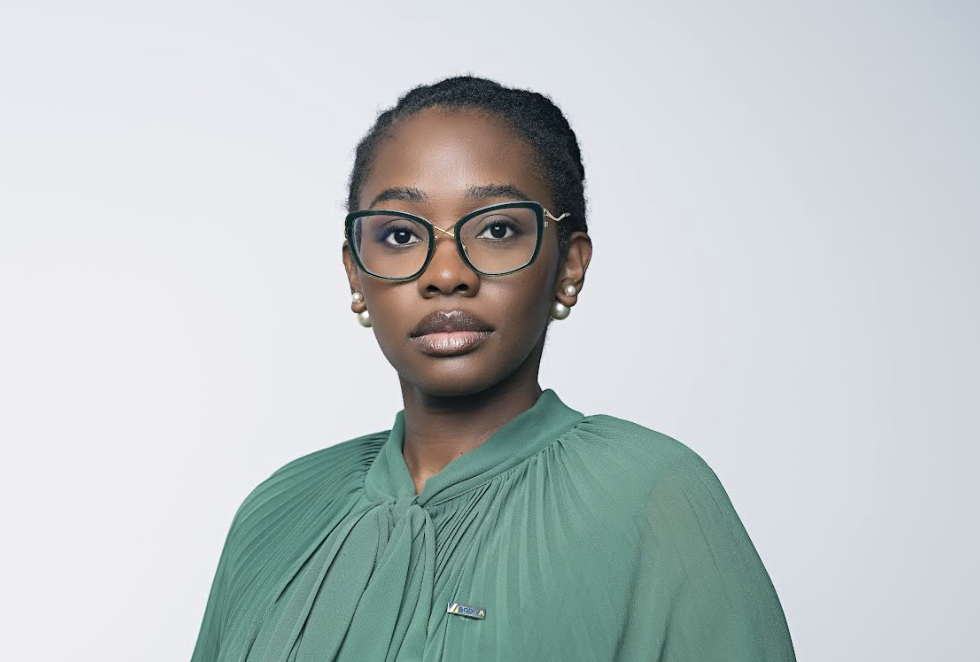
1. BODIVA has become a central platform for securities trading and market infrastructure in Angola. What have been BODIVA’s most important milestones, and how has the institution helped transform Angola’s financial landscape?
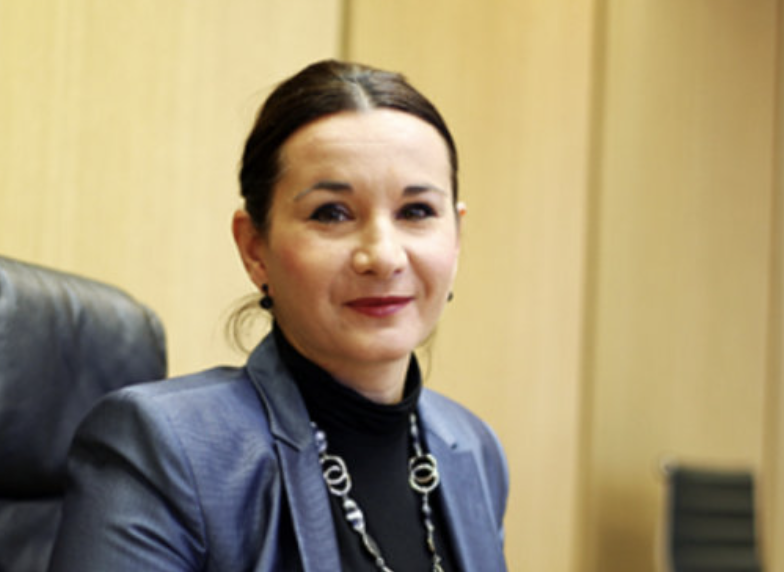
Cristina Dias Lourenço:
BODIVA has been on its mission to develop the capital market since 2014, so roughly 12 years now. It has been a steady and sustainable growth, both with regard to the company itself and the market we manage.
The company was initially founded as a fully government-owned company. In 2024, the State sold 30% of its stake in our equity, and that transaction was made here in our own market. For a stock exchange to be listed in its own market is, in itself, a milestone we are very proud of. It reflects the work that has been done over the past 10 to 12 years.
Even though BODIVA was publicly owned, we always looked forward to having in our corporate DNA the best corporate governance practices and the best financial practices, in order to be a reference for what other companies can become if they want to be listed on a stock exchange.
As a company, we have grown from reporting losses in the first years to having positive and growing profits since 2020. Last year, we reached roughly 5 million dollars in profit, which is mainly due to the market structure we have and the growth of the market.
We started trading only government bonds in 2016. It is actually a particular story for BODIVA, because most stock exchanges usually begin by selling shares or equity. We started our path in the market with a strong bond market, which is usually traded at central banks or in a primary market, not in a secondary market as we managed to build and sustain over these years.
Before 2020, our market volume was usually around 200 to 250 million dollars traded across the different market segments. In 2020, we reached what was, at the time, our biggest record: the first 1 billion dollars in traded volume.
Since then, the market has continued to grow. In 2022, we reached our peak since 2014, with 7 billion dollars traded in the markets. Between 2024 and 2025, we remained steady at around 5 to 6 billion dollars.
In 2026, as of May, in the first five months of the year, we had already reached 4 billion dollars traded in our markets.
Most of these trades still come from the bond market. However, one of our other milestones is that, even though we started with the bond market, we never stopped working toward having a vibrant equity market.
The infrastructure was already being developed. The equity segment, the SME segment and the participation units segment were already launched. But it was only in 2022 that we had our first public offering, with Banco Angolano de Investimentos, BAI, which was the first bank to be listed in our market.
It was a large issuance compared with what we were used to at the time, and it was successful, just like the other listings that followed. Most of those listings have come from the financial sector: banking, insurance and BODIVA itself, which is specifically linked to capital markets.
I would summarize these as the major milestones BODIVA has reached throughout these 12 years of existence: being able not only to create awareness of the opportunities in the capital market, but also to create opportunities for companies to finance themselves and for investors to channel their savings into real investments with real returns.
2. BODIVA has identified the continuous improvement of technological infrastructure as one of its strategic pillars. How is BODIVA using technology to make the market more efficient, transparent and accessible?
Cristina Dias Lourenço:
Technology is one of the backbones of our business. We usually say that we have mainly two resources: technology and people.
Even though people were not part of the question, we continue to focus on building capacity within our teams so that we can have the best efficiency and the best practices that the market requires.
On the technology side, this is an investment we have always made throughout the years. As I mentioned, we started mainly with the bond market, but we realized at the right time that we needed to upgrade our systems so they would become more robust, more efficient and able to give more confidence and trust to investors and to all market players.
This process started around 2019 and continued until 2021, when we rebuilt the infrastructure and launched a new trading platform. It was new and integrated in the sense that it combined the trading component, the custodian component and both the primary and secondary markets.
This is not a one-shot investment. We found a new supplier, which is one of our biggest partners at BODIVA. Since then, we have managed to guarantee that we have the specific infrastructure to support these trading systems.
We continue to focus on the pillars of improving cybersecurity, data management and the entire technological infrastructure needed to keep the systems running.
We also have a continued commitment to internalizing our services and capacity. We have a small team of developers, and one of our most important systems, which I have not mentioned yet, is Biz IPO. It is the platform through which all IPOs and offers for sale take place.
Biz IPO is the pride and joy of BODIVA because it was developed in-house and is still maintained by our IT team.
Innovation is certainly something we pursue, both in terms of technology and in the way we do business, our standards, our practices and our approach to different stakeholders.
3. A stronger capital market depends on issuers, investors, intermediaries, regulators and financial institutions working together. Which partnerships have been most important for BODIVA, and where do you see new opportunities to strengthen Angola’s market ecosystem?
Cristina Dias Lourenço:
I would say all of them are equally important.
If BODIVA has developed into the company it is today, it is because we managed to build strong relationships with the regulator, potential issuers and the public itself, including distributors, brokers and investors.
When I speak about potential issuers, I say potential because not all of them have listed securities on the stock exchange yet.
Angola’s economy is facing its own challenges in developing and growing into a more sustainable economy, one that is more dependent on local companies and less dependent on imports and oil exports.
Since BODIVA started its activity, we have carried out many roadshows across different sectors and industries. We realized there was a need to take a different approach.
In another reality, the stock exchange might simply say: “I have my system ready, I have my people, and when new companies want to list, we are ready.” But we had to take a different approach, focused on building capacity in companies, promoting financial literacy programs and raising awareness about what a stock exchange is.
We also had to show companies how they can fund their activities, without excluding the banking sector, because banks are also our partners. The point is that companies need to balance their sources of capital.
4. BODIVA’s work is closely linked to transparency, trust and long-term financing for Angola’s economy. How is BODIVA helping build a more credible and responsible investment environment?
Cristina Dias Lourenço:
We do this through our own record and our own way of doing business, by being a reference for the market.
We also do it through the requirements the stock exchange has for a company to be listed. As of now, we have only five listed companies, which could be seen as a negative sign in terms of why we cannot attract more companies. But, as I mentioned, there has been work done by BODIVA, the brokers and the regulator to create awareness and build capacity among companies.
The goal is for companies to have the highest reference of what they can grow into.
Since 2020, we have had a program called the Capital Markets Readiness Program. More than 25 companies have already gone through this program. It serves as the starting point for them to begin looking at their books, their way of doing business, their corporate governance practices and their financial audit practices.
It is what we call the pathway to the stock exchange. For some companies, this may take longer than for others, but overall, we believe it has had a positive influence.
BODIVA and the stock exchange have had an impact not only on companies, but also on investors. Investors are now more aware of what to look for in a company, what to expect from a company and what aspects they should evaluate when deciding which investment is best for them, instead of focusing only on government bonds available in the market.
For a stock exchange, we need to maintain our standards. It is a matter of building trust with investors and having a platform that provides not only technological assurance, but also regulatory assurance.
Investments made here must follow certain rules, and this gives confidence and protection to investors, especially small investors, who normally have less knowledge of how stock exchanges operate.
5. BODIVA’s plan to 2028 focuses on liquidity, market diversity, technology and institutional strengthening. What are BODIVA’s main priorities for turning the capital market into a stronger source of financing and long-term value for Angola?
Cristina Dias Lourenço:
For 2024 to 2028, we defined the four pillars you mentioned as our main priorities. But I would say the two main ones are liquidity and market diversity.
When I speak about liquidity, I mean turning our market into a market with more turnover in the trades being made. I am speaking specifically about the equity market.
For this to happen, we need not only a broader investor base, but also more active participation from our brokers. Brokers need to help create the market and create price references so that turnover can happen in the equity market.
Internally, we also understand that the absence of a central counterparty and the absence of a derivatives market are constraints to the development of market liquidity.
Our exchange rate has been stable in recent years, but we understand that launching a central counterparty would allow more risk-taking, both from brokers and investors.
Together with the development of a derivatives market, especially focused on hedging financial risk and exchange-rate risk, this could help us target and surpass these pillars.
These are among our main priorities. At the same time, we will continue our efforts to make the market more attractive for companies, so that they trust the stock market as part of their financing mix.
6. How is BODIVA approaching ESG, financial inclusion and community impact within Angola’s capital market?
Cristina Dias Lourenço:
We look very closely at the ESG agenda in how we do business at BODIVA, both towards the market and within the institution itself.
Gender equality is an important topic for us. This is not because I am now a woman in a leadership position. Even before my appointment, gender equality was already on the agenda with our previous CEOs, who were men. As a team, we understood that it is important to empower women for leadership positions.
In that regard, we have an initiative with the World Federation of Exchanges and the United Nations called Ring the Bell for Gender Equality. The purpose is to raise awareness, not to raise funds, but to highlight the gap between women and men.
In Angola’s cultural and economic context, there are still limitations, and we believe it is important to invest more in the education of women.
This year, for this edition, we carried out a crowdfunding campaign to raise awareness and support women who are, in practice, being pushed out of the education system. They may not be formally outside the system, but when a girl or young woman does not have access to something as basic as menstrual pads, she misses school days. That absence already places her behind in the race for education and for a better future.
It was a campaign that received very strong support, and we managed to raise the funds needed to create impact in some of the most affected areas. One might expect this reality to exist only in rural areas, but unfortunately it also exists in urban settings.
Beyond that, we raise the ESG banner so that companies can also implement these practices within their own organizations.
We are also looking forward to the issuance of sustainable bonds, whether environmental bonds, blue or green bonds, or social bonds. These instruments can channel funds into capacity building and into initiatives that have a real impact on communities.
When we speak about capacity building, we are not speaking only about women. We are speaking about building capacity more broadly and creating impact in the communities where businesses are growing.
We also understand that, in Angola, many companies are already doing meaningful work in terms of governance and social impact. However, many of them do not yet know how to structure, report or communicate that work properly.
For that reason, we are issuing sustainability guidelines to help companies that are interested in issuing sustainable bonds understand how they can report their progress on sustainability.
Beyond the report itself, we are also working closely with the United Nations to build capacity with companies that have shown interest in potentially issuing blue and green bonds.
7. You are leading BODIVA at a decisive stage for Angola’s capital market, as the institution works to deepen liquidity, broaden participation and strengthen trust. What vision guides your leadership, and what legacy would you like to build for Angola’s financial market?
Cristina Dias Lourenço:
Maybe I can say that I was born with BODIVA, because BODIVA was born in 2014.
My vision for my leadership and for BODIVA is closely aligned with BODIVA’s own vision, which is to finance the development of our economy.
We do have companies already listed in the market, but they have been listed through the privatization program. So there was no actual funding of those companies; it was a sale from the Government to public shareholders. This is a great achievement as well, and it is also a good test of the market and of how ready investors are to take in new listings.
But my vision, and this is something I ask my team many times, is: what do we want to do from here?
We want to be remembered as the team that managed to bring the first private company to be listed on BODIVA.