Trading to Transformation: The Noble Group success story in Angola
Angola’s consumer economy has long presented a familiar paradox: demand is substantial, yet the domestic capacity to meet that demand has historically remained limited. For businesses prepared to take a long-term view, this gap represents more than a trading opportunity. It represents an opportunity to build industries, strengthen supply chains, create employment and retain greater economic value within the country.
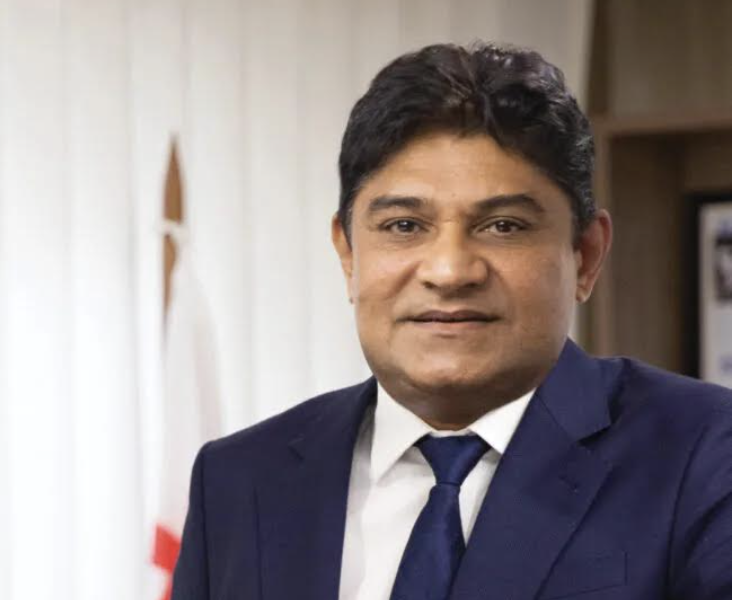
For Nazim Charania, Founder and Chairman of Noble Group, the vision was never simply to import products into Angola and sell them. His approach was to understand the market, identify gaps across the value chain and progressively build the ecosystem required to address those gaps locally.
That philosophy has shaped Noble Group’s journey for more than two decades—from a trading company into an integrated consumer and industrial enterprise with interests spanning manufacturing, wholesale, distribution, retail, agriculture, real estate and construction.
From Understanding the Market to Building for It
Nazim Charania arrived in Angola in 2002, after beginning his African business journey in the Democratic Republic of Congo in 1993.
When he established Noble Group in Angola, the company began as a trading business. The objective was practical, but the thinking behind it was long term: understand the market first, identify what consumers need, recognise where the gaps exist and determine which products could eventually be manufactured, processed or packaged locally.
Trading gave Noble Group its first deep understanding of Angolan consumer demand. Distribution brought the company closer to the market. Retail created a direct relationship with consumers. Manufacturing then allowed the Group to respond to demand locally while reducing its dependence on imported finished goods.
Each stage built upon the previous one.
After more than a decade of developing market knowledge and operating capabilities, Noble Group entered the retail sector in 2014 and launched its first manufacturing operation the following year.
This represented an important strategic transition—from participating in the market primarily through commerce to investing directly in Angola’s productive capacity.
Through retail and distribution, Noble Group strengthened its understanding of consumer behaviour and market requirements. Through manufacturing, it began creating greater value within Angola itself.
The strategy also contributed to import substitution, helping reduce the requirement for finished-product imports and conserving valuable foreign exchange for the country.
Building Local Manufacturing Capacity
Over the following years, Noble Group progressively expanded its manufacturing footprint.
By 2025, its industrial activities covered categories including beverages, biscuits, milk, toothpaste, personal hygiene products, detergents, agro-processing, motorbikes, packaging and other consumer goods.
In an interview with the media, Charania explained how Noble Group had gradually shifted from importing finished products towards manufacturing an increasing number of those products locally. By then, the Group was operating twelve industrial facilities across multiple sectors.
The significance of this transition extends beyond Noble Group itself.
For decades, many African economies have depended heavily on imported finished goods to satisfy growing consumer demand. While imports play an important role in any economy, excessive dependence on them can result in much of the manufacturing value, employment generation, technical capability and supply-chain development remaining outside the country.
Local production changes that equation.
Investment in manufacturing enables more value to remain within the economy. It creates direct and indirect employment, develops technical skills, strengthens domestic suppliers, encourages supporting industries and creates opportunities for future exports.
Noble Group’s journey therefore became one example of how businesses can evolve from identifying market demand to building the capacity required to meet that demand locally.
Creating an Integrated Value Chain
As Noble Group expanded, it built an increasingly integrated business model connecting manufacturing, wholesale, distribution and retail.
Products manufactured locally could move through the Group’s wholesale and distribution network and ultimately reach retailers and consumers across Angola.
This integration gave the company greater visibility across the value chain—from production and logistics to the point of sale.
It also created an important competitive advantage.
Rather than operating as separate businesses, manufacturing, distribution, wholesale and retail increasingly became interconnected parts of the same ecosystem.
The result was a stronger supply chain, greater market access and a more efficient route from factory to consumer.
Over time, Noble Group evolved from a conventional trading company into a diversified consumer and industrial enterprise.
Today, the Group’s portfolio includes more than 125 brands and over 150 points of sale, reaching more than 12 million retail customers annually.
Its economic footprint extends beyond consumers. Noble Group directly employs more than 9,500 people, while the livelihoods of more than 20,000 family members are supported through that employment.
Behind these numbers lies the central idea that has guided the Group’s development: create value locally wherever possible.
Resilience Through Angola’s Changing Business Environment
Noble Group’s growth story is also a story of resilience.
Over the decades, Angola has experienced significant economic and structural transitions. Businesses operating in the country have had to navigate changing economic cycles, infrastructure limitations, foreign-exchange constraints and the practical realities of operating in a developing market.
For international investors, there were additional challenges.
Language barriers, unfamiliar business environments, infrastructure constraints and the difficulty of balancing professional commitments between countries made building a long-term enterprise in Angola demanding.
Over the years, a number of entrepreneurs and investors from India explored opportunities in Angola. Some established businesses, while others eventually reduced their exposure or returned home as operating conditions became difficult.
Nazim Charania chose a different path.
He remained committed to Angola.
Rather than allowing difficult periods to reduce his conviction, he continued investing, adapting and expanding.
That resilience became particularly visible during periods of economic uncertainty. Even during the COVID-19 pandemic, when many businesses around the world were protecting capital and reducing expansion plans, Noble Group continued investing, particularly in manufacturing and real estate.
Charania’s philosophy was that difficult economic periods could also create opportunities for companies capable of managing costs, adapting quickly and maintaining a long-term perspective.
It is this combination of resilience, grit and conviction that distinguishes his investment journey.
Angola gradually became more than a business destination for him. It became a second home.
Yet his connection to India remained equally important.
Rather than seeing India and Africa as separate economic worlds, Charania’s journey demonstrates how investment can connect the two.
Capital, entrepreneurship, expertise, technology, products and supply chains can move between both regions, creating economic activity on multiple continents.
Noble Group’s investments create employment and economic opportunities in Africa while simultaneously generating demand across supply chains extending into India and other parts of Asia.
The multiplier effect therefore reaches far beyond the companies directly owned by the Group.
Suppliers, manufacturers, logistics companies, technology providers, professional services firms and countless other businesses participate in the wider ecosystem created by these investments.
In this sense, Charania represents an important evolution in the story of the Indian entrepreneur in Africa—from trader to long-term investor, industrialist and institution builder.
He did not simply come to Angola to participate in its market.
He stayed to build within it.
From Trade to Long-Term Investment
Charania’s journey also reflects the wider transformation taking place in the India–Africa economic relationship.
Historically, Indian businesses have maintained deep commercial ties with Africa, built around trade, entrepreneurship and family businesses.
Increasingly, however, the relationship is developing beyond commerce.
The next stage is about investment, manufacturing, employment creation, technology transfer, supply-chain development and long-term economic partnership.
Noble Group’s evolution mirrors this transition.
What began with importing and trading progressively developed into manufacturing facilities, retail networks, distribution infrastructure and investments across several sectors of the Angolan economy.
This is the distinction between simply participating in a market and becoming part of its economic fabric.
For Charania, investment was never limited to moving goods between countries. It became about building businesses capable of creating sustainable economic value.
That mindset is perhaps what defines the true long-term Indian investor in Africa: someone willing not only to identify opportunity, but to remain committed through economic cycles, overcome structural challenges and invest in the country’s productive future.
Recognition of a Three-Decade Journey
In 2025, Nazim Charania received Angola’s Presidential Medal for Peace and Development, recognising his contribution to the country and a business journey in Africa spanning more than three decades.
The recognition reflected more than the growth of one company.
It represented years of investment, employment creation, industrial development and commitment to Angola.
Charania’s impact can perhaps be understood most clearly through the way Noble Group itself was built.
Instead of remaining focused exclusively on importing and selling products, he progressively developed a business model centred around local manufacturing, distribution, wholesale and retail.
The result is an ecosystem that enables an increasing share of what Angola consumes to be produced, distributed and sold within Angola.
Angola as a Platform for Regional Growth
The next chapter of Noble Group’s story extends beyond Angola’s domestic market.
The Group’s ambition is to position Angola as a strategic base for regional growth and develop the country into an increasingly important distribution and manufacturing hub serving Central and Sub-Saharan Africa.
Angola’s geographic position, Atlantic coastline, natural resources and access to neighbouring markets provide significant long-term potential.
For Noble Group, the opportunity is to build on the capabilities developed during more than two decades in the country—manufacturing expertise, distribution infrastructure, consumer knowledge and market access—and use those capabilities to participate in regional trade.
The strategy remains consistent with the philosophy that guided the company from its earliest years:
Identify gaps. Build capabilities. Produce locally. Strengthen distribution. Create market access. And reinvest for the long term.
From arriving in Angola as an entrepreneur in 2002 to building one of the country’s diversified consumer and industrial groups, Nazim Charania’s journey demonstrates what patient capital, resilience and conviction can achieve.
Many investors can enter a promising market during favourable periods.
The greater test is whether they remain when conditions become difficult.
Charania remained.
Through language barriers, infrastructure challenges, economic cycles, changing business conditions and the personal demands of building a life between India and Africa, he continued investing.
Angola became his second home without diminishing his connection to India. Instead, his journey created a bridge between the two—one in which investment generates employment in Africa while creating economic opportunities throughout supply chains across Asia.
That is ultimately the Noble Group story.
It is the transition from trading in Angola to manufacturing in Angola; from selling into the market to investing in the market; and from identifying opportunity to building the ecosystem required to sustain it.
It is a story of entrepreneurship, resilience and long-term commitment.
And above all, it is a story built around one enduring principle:
Together We Create Value.