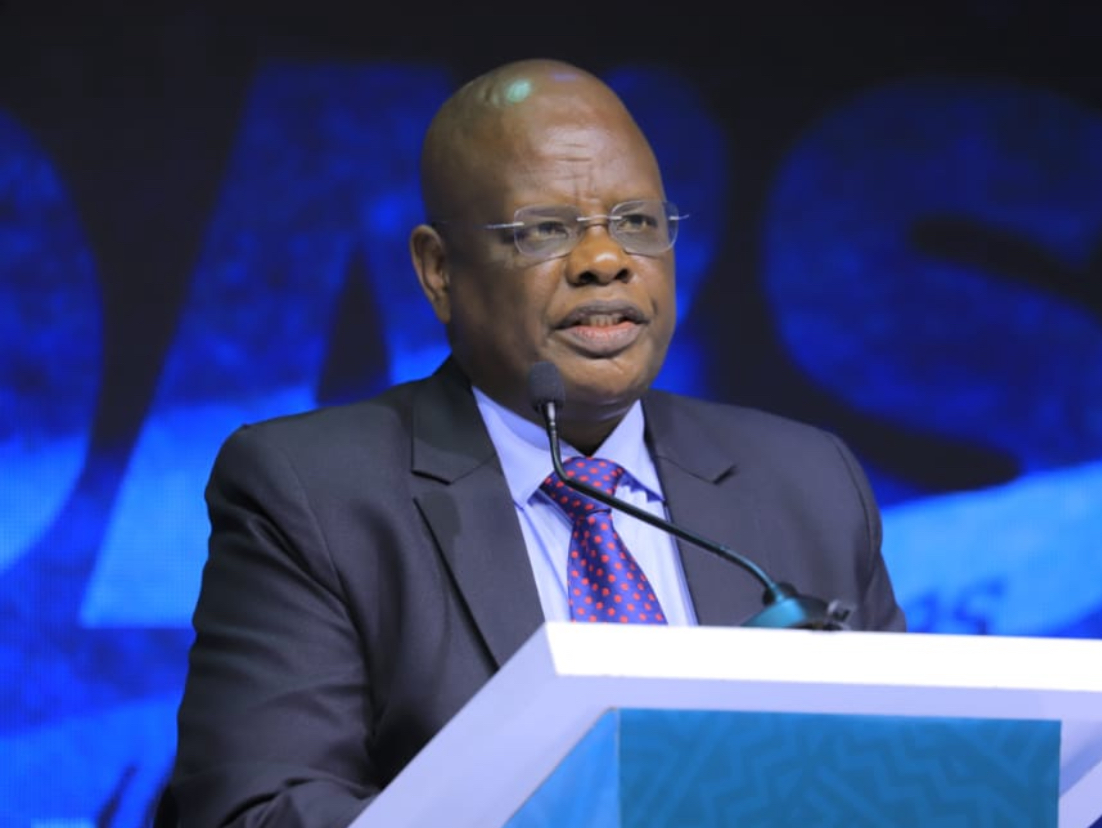
As the custodian of Uganda’s wildlife resources, the Uganda Wildlife Authority plays a central role in both conservation and tourism development. Could you outline your core mandate and the strategic priorities currently guiding the institution?
The Uganda Wildlife Authority is a statutory body established underthe Uganda Wildlife Act Cap. 315, with the mandate to conserve and sustainably manage wildlife within and outside protected areas. This includes all wild animals and plants in protected areas -that is national parks, wildlife reserves, wildlife sanctuaries, community wildlifemanagement areas-,as well as wildlife occurring outside protected areas. Even if wildlife is on private land, Uganda Wildlife Authority has the responsibility to ensure that it is protected and managed sustainably.
We work with the private sector to cregate an enabling investment environment for wildlife-related enterprises in order to promote the wildlife economy. We manage wildlife, but we also enable private sector investment in wildlife enterprises to create an enabling environment for a sustainable wildlife economy in the country.
Within this mandate, we undertake a wide range of responsibilities. We do wildlife research, to support evidence-based decision-making, collect the data, and generate information to guide conservation and management interventions. We also undertake wildlife protection and conservation. We carry out ecosystem management to make sure that the habitats are intact. We implement anti-poaching measures to make sure that the animals are not poached. We also work on biodiversity conservation and restoration to ensure that species recover and increase in population and are well distributed across conservationareas because wildlife forms the foundation of Uganda’s tourismsector where visitors come specifically to experience the country’s rich wildlife heritage.
We place significant emphasis on community involvement in wildlife conservation and management. If we are to manage wildlife, communities must be at the center of our efforts, because they livenear and adjacent to the conservation areas. Therefore, it is essentialthat they derive livelihoods from conservation. Communities around the parks are employed and supported to benefit directly from the conservation areas. We support the children through scholarships. We allow multiple uses of natural resources and harvesting of non-timber forest products from the national parks under regulated arrangements. We have a revenue sharing program though which 20% of the gatecollections from national parks is returned to neighboringcommunities and they decide how to use these funds. They may choose to construct a health centre, a road, a maternity ward or any other priority development project. We support them in identifyingand implementing projects that respond to their development needs. This approach strengthens partnerships between protected area management and communities.
In terms of employment, we give due consideration to communities around the protected areas. When recruiting staff for protected areas, qualified applicants from neighboring communities re given priority and that, helped to strengthen the relationship between protected area management and these communities. For us, the communities are central to effective wildlife conservation.
That’s the mandate, and there are so many activities under that mandate that we provide. That is our core mandate, supported by a wide range of conservation, research, tourism and community programs. We are guided by the wildlife policy (2014) as well as the institution’s strategic plan. The strategic plan is implemented through annual operations plans which guide our day-to-day work. All theseefforts are aligned with the National Development Plan to ensure that wildlife conservation contributes to Uganda’s broader socio-economic development.
Recent national wildlife census findings point to an overall increase in wildlife populations, even as certain key species continue to decline due to habitat pressure and other threats. How does UWA interpret these mixed trends, and which species or ecosystems are currently your top conservation priorities?
Research is critical because it provides the evidence needed for informed decision making. It enables us to understand the trends in wildlife populations, identify key species that require targeted interventions to be restored to healthy and sustainable population levels.
We attach equal importance on all wildlife species, including fungi, plants and of course the animals. Our responsibility is to conserve all species. However, the big 5 remain a major conservation priority because of their ecological and tourism significance.
We have worked diligently to restore rhino populations to restore the rhino population. Rhinos became extinct in Uganda in 1983 but today, we have restored a population of 61 rhinos in total. We’ve been to reestablish the species through a successful breeding program at Ziwa Rhino Sanctuary. This has enabled us to reintroduce 20 rhinos to Ajai Wildlife Reserve, and 8 rhinos to Kidepo Valley National Park. These reintroductions mark an important milestone in restoring rhinos to their natural habitats while strengthening Uganda’s tourism offering.
Visitors can go to a national park like Kidepo, where they can experience. In addition, Uganda is home to chimpanzees and themountain gorillas. Together, these position Uganda is home of the Big Seven. The traditional Big Five are complemented by gorillas and chimpanzees, meaning that visitors have the opportunity to experience the Big Seven.
We are committed to conserving all wildlife species., our conservation approach recognizes the importance of plant and the animal life alike, adopting an ecosystem based approach tobiodiversity conservation. This also strengthens tourism, because tourism has been identified by the Ugandan Government as one of the key sectors under the tenfold growth strategy through which the country aims to grow a US$50 billion economy to a US$500 billion by 2040, and tourism has been identified as a key driver of that transformation.
Wildlife Authority plays a big role, because at the moment most of our tourism is largely wildlife-based, although and we are working hard to diversify the tourism products and services to respond to increasing tourist demands.
How is UWA balancing conservation imperatives with the need to expand and diversify tourism offerings?
Balancing conservation and tourism is essential, because conservation underpins tourism. For example, as illustrated by the rhino restoration program, we have successfully increased the rhino population thereby enhancing our tourism proposition. As a result, we now have the traditional Big Five animals in one national park. This demonstrates that effective conservation directly strengthens tourism by givingtourists a variety and they to come to see wildlife.
We now have initiatives aimed at increasing the lion population.. We are undertaking translocations, moving giraffes from one national park to another as well as moving zebras and lions. These interventions help us to ensure that we have healthy wildlife populations that are well distributed across protected landscapes. At the same time, they enhance tourism by providing visitors with opportunities to experience a greater diversity of wildlife.
We are also promoting wildlife corridors, where our animals can have adequate space to roam while supporting both conservation and tourism. As part of strengthening our institutional capacity, we have started to put in place research and monitoring officers with a role of collecting data among others, on weather from various protected areas This enables us to provide visitors with information on weather conditions and air quality in some of the parks like Bwindi and Murchison Falls. In doing so, we are promoting sustainability. Today’s travellers increasingly want to understand their environmental footprint. They are interested in destinations with good air quality and strong environmental stewardship. By providing this information, we are promoting sustainable tourism. It is therefore possible to conserve wildlife while promoting tourism. It’s a delicate balance, but it is possible. Achieving it requires deliberate planning, sound science and responsible management.
As you pointed out, tourism promotion and conservation management are closely linked. How does UWA work alongside the Uganda Tourism Board to promote opportunities in the tourism sector while maintaining high conservation standards?
Uganda Tourism Board (UTB) is our strategic partner. It is the government agency responsible for promoting tourism, we have established a close working relationship to promote the country. We have the attraction while they lead destination marketing and promotion. In promoting these attractions, we work with them to ensure that all marketing is informed by sound conservation knowledge and reflects the unique characteristics of each destination.
For example, in promoting domestic and international tourism, there are distinct products tailored mainly for the local market, domestic visitors and international travelers. So, we sit down with UTB and segment these markets. We have tourism promotion officers who work with those from the Uganda Tourism Board to provide technicalinformation about the various products available in our national parks and tother, identify target audiences for different products and services.
As Uganda Wildlife Authority, we make sure that our products are well developed and our protected areas safe, well managed and readyto receive visitors. Our products are developed, we share them with UTB for promotion. We also implement joint campaigns such as one on waste management because we want our parks to be litter free. We developed waste management guidelines and shared them with UTB to ensure that visitors are encouraged not to litter in the protected areas. We are promoting clean, healthy, and environmentally responsible protected areas. We want our wildlife to be healthy, our staff to be healthy and our visitors to enjoy a safe and healthy environment.
How has UWA performed recently in terms of visitor numbers, park revenues and overall sector growth?
We’re talking about approximately 450,000 during the last financial year comprising domestic and international visitors. The trend is encouraging and visitor numbers continue to grow. One of the key rivers for this growth is product diversification; we are identifying and developing new tourism products and services within our parks. For example, in Bwindi, visitors can enjoy more than gorillas tracking; they can explore archeological sites paleontological attractions, botanical trails and specialized birdwatching experiences. Other visitors are attracted by waterfalls, caves and a wide range of unique natural features found across our protected areas. Through innovation and product diversification, we are trying to ensure that visitors not only come but also stay longer and enjoy richer experiences, because we are selling experiences, and those experiences must be memorable. Therefore, longerstays translate into increased visitor expenditure, greater employment opportunities and stronger contributions to the economy.
We know that satisfied visitors are more likely to recommend Uganda to others and to return in the future. We are trying todeliver a high standard of customer care that encourages visitors to return and become ambassadors for Uganda’s tourism sector. Positive word-of-mouth remains one of the most effective forms of destination marketing. Product diversification continues to drive growth, as reflected in the increasing visitor numbers. So, we are introducing more products, such as community interactions. Many tourists are now interested in understanding the lifestyles, traditions and cultural heritage of local communities. These experiences enrich visitors’ appreciation of Uganda’s diverse heritage while generating additional benefits for local communities. Ugandans are renowned for their hospitality, which is one ofour greatest attractions. Our welcoming culture enhances the visitor experience and remains one of Uganda’s strongest competitive advantages as a tourism destination.
Conservation is increasingly a collaborative effort. What key partnerships—regional or international—are currently strengthening UWA’s capacity and impact?
Conservation cannot be achieved in isolation; it requires strong collaboration. Therefore, partnerships are fundamental to successful conservation. We have local, regional and international partners. We work with a number of international organizations that include African Wildlife Foundation, Wildlife Conservation Society(AWF), World Wide Fund for Nature (WWF) and International Fund for Animal Welfare (IFAW), among others, which support us across a wide range of conservation programs including anti–poaching, invasive species management, ecosystem restoration and biodiversity conservation. So, partnerships are a big component of our work.
We are now increasingly investing in technology to strengthen wildlife management and, through partnerships, we have been able to introduce innovations such as Earth Ranger, a digital platform that enables us to track animals. We have fitted tracking collars on animals, especially those that move beyond the protected areas. When an animal is tagged, we can monitor its movement in real time. I’m here watching on my phone and I am able to see the behaviour of the elephants in Queen Elizabeth or the gorillas in Bwindi. So, we can make sure that at the end of the day these animals don’t stray out of the park to disturb the communities. Once we see them going out, we mobilise the rangers to bring them back. So, real time wildlife monitoring is one of the technologies that we are using.
We are also using drones for surveillance, patrolling, and law enforcement. We are able to fly drones in the air and scan over protected areas, to see where there are bad elements or wrong activities, and swiftly deploy ground troops to intervene. So, technology has been a game changer. We have ranger forces in place, but you can never have a ranger guarding everywhere. You need to augment the ground forces with aerial surveillance using drones. Very soon we will be acquiring helicopters, to enhance our surveillancecapability, patrolling, and real time action in terms of veterinary interventions, or putting out fire outbreaks.
Do you have specific initiatives or specific measures to deal with poaching as well?
Yes, we have intelligence units, investigation units, and prosecution. We can arrest you, using intelligence information. We have that capacity as an institution. And now we have just established a DNA forensic laboratory for wildlife products, animals and timber. So, we are able to get evidence. We cannot get you with wild meat, buffalo meat and you tell us it’s cow meat, because we are going to run a DNA sequencing and we are going to find out that this is wild meat. Then, we shall prosecute you successfully in court.
For anti-poaching efforts, we are also putting in place canine units. They sniff illegal wildlife products, so you cannot go out of the airport with a rhino horn or ivory. We have put some at the international airport but also in various borders.
So, those are some of the activities we do in terms of anti-poaching and intelligence. We have wildlife scouts who help us fight human-wildlife conflict. They send the animals back into the park. But also, they look at the bad elements and report them, so we are able to arrest them.
We are also building a number of ranger posts in the very remotest areas of the park. At the moment we have 1,800 rangers on the ground, but we are recruiting another 1,300. Our aim is to have about 3,000 rangers.
Other than conservation management, UWA highlights investment opportunities in conservation and tourism through various channels. Could you elaborate on these opportunities and how they are promoted?
Each national park has been earmarked a communication officer, to get information from this park on a daily basis. And we have concessions where any investor can come and build a lodge or a hotel in the park. We don’t sell them the land; we just agree and give them a piece of land for 20 years, or 25 years, or 30 years. We lease the land. And then the investor is able to build this beautiful lodge, which is able to attract more investors and tourists.
Now, we have the staff that disseminates this information. We have a website and social media. We are on X, TikTok, Instagram, everywhere. So, we are able to disseminate this information through our socials, through website, through print media. And of course, word of mouth.
We also work very closely with the Uganda Investment Authority, which is a government arm responsible for attracting investments in the country. So, we share with them our investment opportunities and we also publicize them. We are working closely with the embassies as well. We have all these missions, because when it comes to attracting investments, it’s a national effort, a national imperative. It’s not only about UWA. And the good thing is that the Ugandan Investment Authority covers the whole country, so it will promote the investment opportunities in the parks.
Looking ahead, what is your outlook for Uganda’s wildlife and tourism sector, and what message of confidence would you share with international travellers and/or investors considering the country as a destination?
Uganda is a very peaceful country. We are a country of hospitable people. We are a welcoming country. Border to border, it’s one of the few countries where you travel from the north to the southern border without any security issue. So, in terms of security, we are doing very fine.
Government gives incentives to investors. They can apply for tax holidays, for start-up for a certain period of time, and they are given that opportunity so that they are able to invest and also provide employment opportunities for the citizens. And quality labour is available. We have abundant labour potential here.
We have raw materials to use. And we are a country that is gifted by nature. There’s nothing we don’t get in Uganda, and the weather it’s very conducive.
All the previous, complemented by delivering the government policy to protect our investors. These people could have gone in any other country, but they have decided to come to Uganda. So, we give them that recognition and give them a conducive environment to enable them to do business, because they are not here to do charity. They are here to do business, and it must be a national imperative to ensure that these people are given an opportunity to invest and also to keep their money. So, those opportunities are there. And the one thing I can assure you, anybody who wants to invest in any of our parks will find us more than ready, more than willing. We will support them.
As I rally towards investors, I want to invite them to Uganda to come and see, enjoy, but also make money from Uganda. You come and invest your money, you’ll be given a tax holiday, you’re able to repatriate all your money back, you’re able to make money here, you have enough labour force here, you have enough educated Ugandans willing to work, you have local raw materials here.
So, I want to invite investors to come and invest in Uganda. It’s a great destination and investment environment here. And of course, when it comes to tourism, come and enjoy Uganda’s variety of tourism products and services. Wildlife, nature, culture, the plants, the animals, endemic species that are in this region, the gorillas are endemic here, you have 300 chameleons that are endemic here, you have butterflies that are endemic here. You have a lot of paintings and rocks and religious tourism. There is all sorts of tourism products and services, not only the animals, but the plants, and other attractions, especially the very great diverse culture that you will be able to enjoy and even participate in.
Come and see how the communities live, come and see how we are able to emancipate the communities, how you can support sustainability efforts, where we are measuring the air quality, we are taking parameters of the environment in our national parks, to be able to ensure that you are going to have very clean air as you are in our protected area. So, I invite everybody.