1. Established to consolidate Sierra Leone’s investment institutions, the National Investment Board has strengthened its role as a central point for investors. To begin, which milestones best reflect NIB’s transformation and its contribution to improving the country’s investment climate?
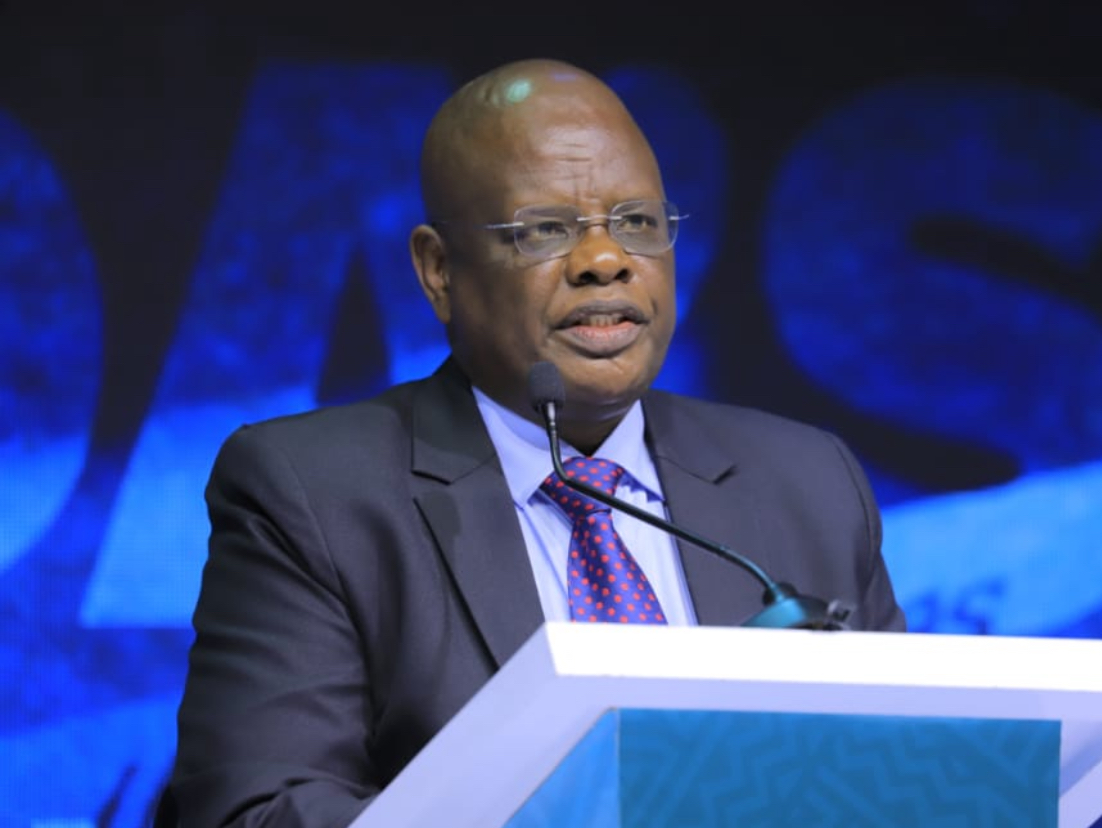
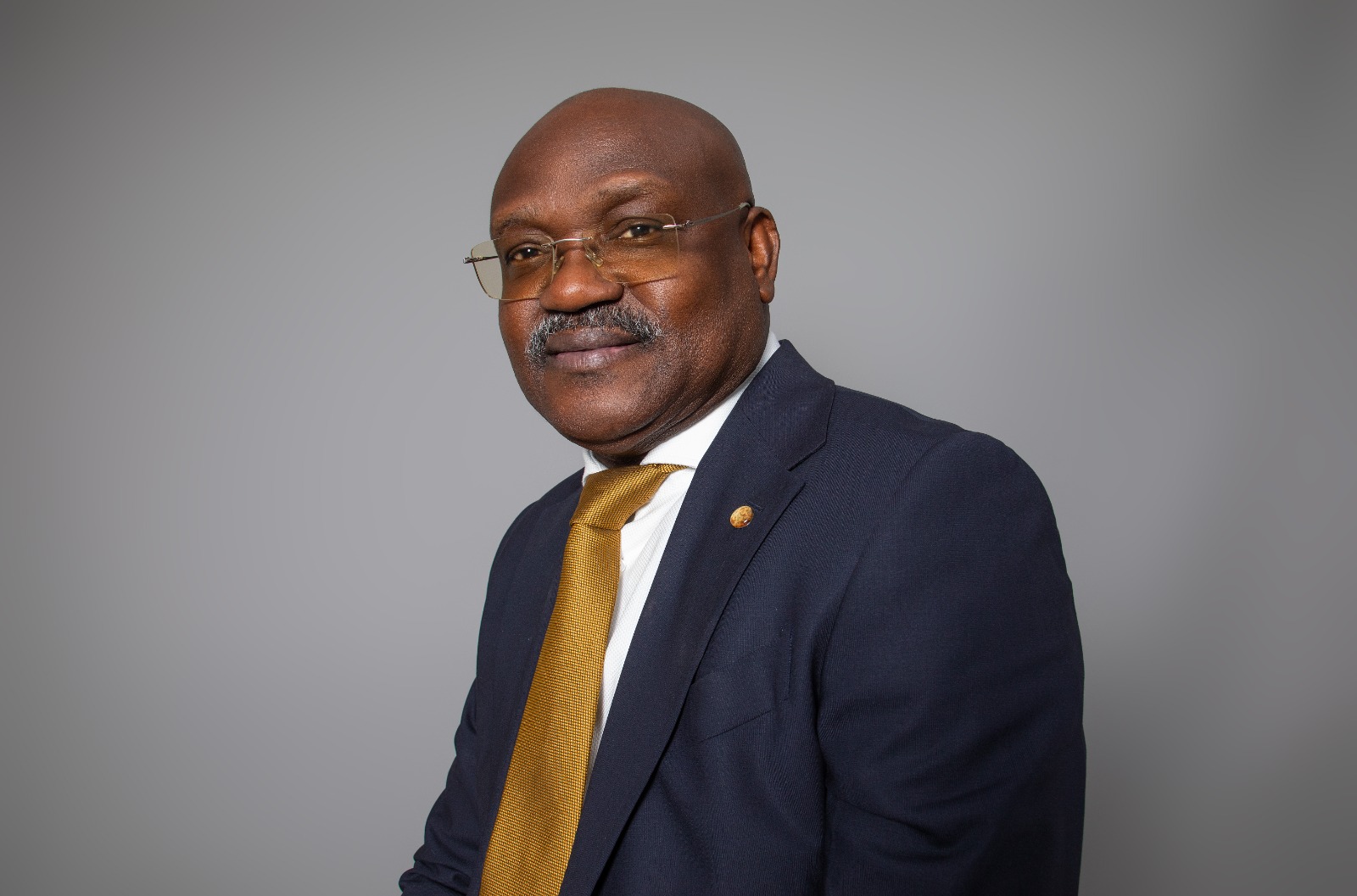
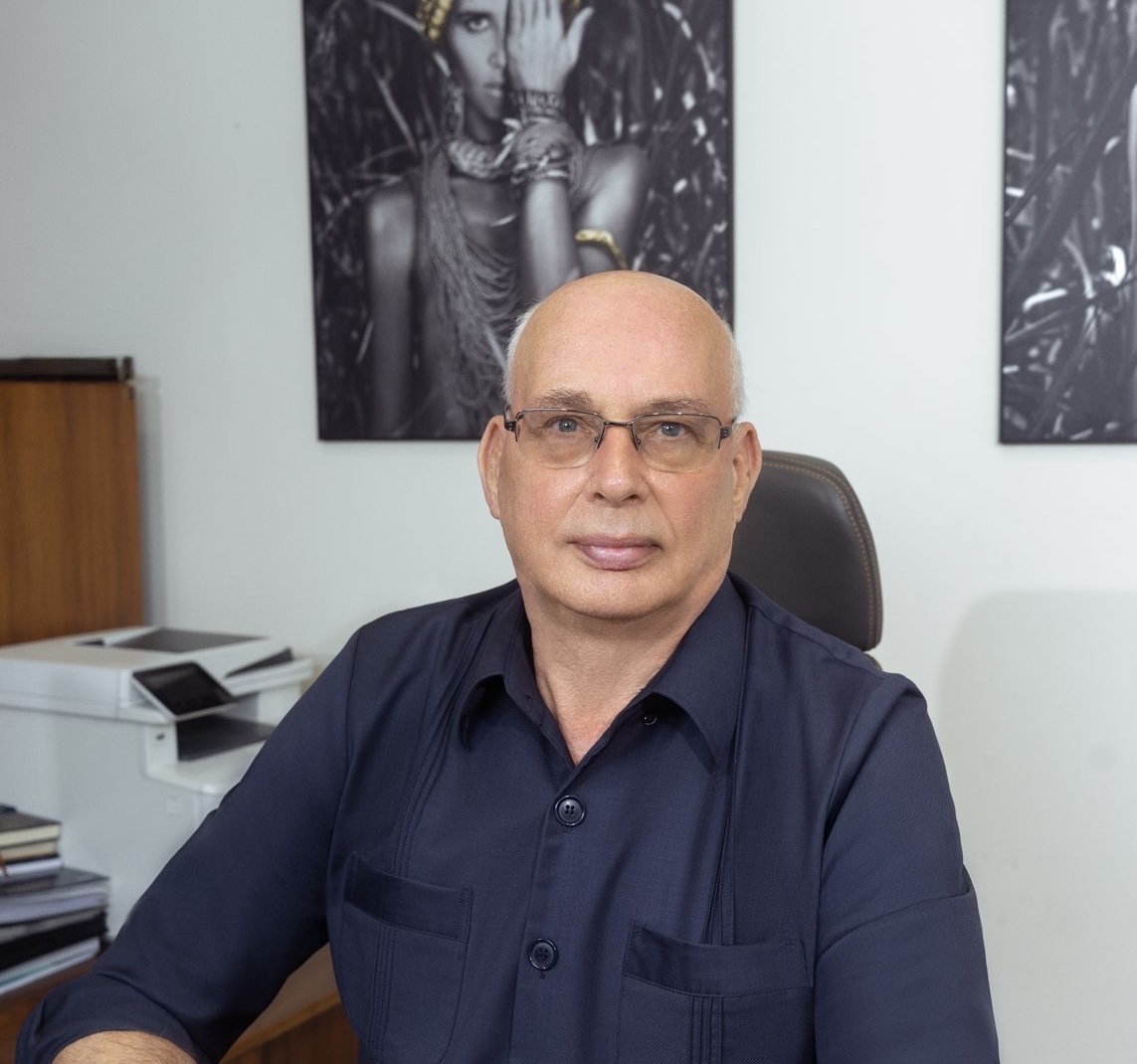
Dr. Edward Hinga Sandy: A great deal has happened. The National Investment Board was established in 2022 by an Act of Parliament, the National Investment Board Act. His Excellency the President, wanting to expand foreign direct investment inflows, decided to set up the Board, and under its current structure he sits as Board Chair. We modelled NIB on the Rwanda Development Board, one of the institutions that has done very well in attracting investment, and we also studied what countries such as Malaysia and Mauritius have done.
The bottom line is that, with today’s geopolitics, government financing and the traditional sources of development finance are under real pressure. At the Financing for Development conference in Seville, Spain, speaker after speaker made the point that donor funding is declining, and we see the same shift in our engagement with development partners at home. So the clear way to deliver our national development goals is to improve the investment climate, attract more FDI, support our local investors and bring in private capital alongside what Government provides. That is the basis for the National Investment Board.
Before NIB, investment functions were spread across several institutions, with different bodies playing different roles, and too often investors came, became frustrated and left without doing business in Sierra Leone. NIB was created to consolidate those functions. Government brought together what used to be the Sierra Leone Investment and Export Promotion Agency; the Public-Private Partnership Unit, formerly in the Office of the Vice President; and Corporate Affairs, which registers companies under the Companies Act.
The aim is to cover the entire investment lifecycle. We register businesses, coordinate licensing, promote investment and prepare projects that investors can turn from intentions into transactions, because that is really where capital comes from. Once an investor is here, we continue to support them. Our Aftercare Framework visits investors, reviews their challenges and the incentives Government has given them, and keeps engaging them on solutions that make life easier for them. We also convene public-private dialogues, bringing Government and the private sector together to discuss the challenges investors face and agree on solutions.
NIB really began to gain strong standing in 2023 and 2024, and we have been building on that since. We started with investment promotion: inward and outward investment events, and close coordination with our foreign missions, which many investors approach first for information. We equip the missions with substantial information for prospective investors, and they in turn assess their host markets and advise us, so that we can organise outward missions that engage investors sector by sector and give them what they need to decide to come to Sierra Leone.
Whenever the President travels, one question always comes up: where are the bankable projects? In the past, much of what we had to offer was at concept-note stage. With NIB, we have worked with Ministries, Departments and Agencies and with the private sector to identify opportunities across sectors and structure them into projects that are moving towards bankability. Some are still at preliminary concept level. Others have reached a degree of bankability because pre-feasibility or feasibility studies have established their economic outlook and potential viability. Investors are now looking at them and can see that Sierra Leone is ready for more investment.
2. NIB is working to attract private capital and develop investment-ready projects aligned with national priorities. With this progress in mind, which figures best demonstrate its performance in capital attracted, projects facilitated and jobs created?
Dr. Edward Hinga Sandy: We have seen strong interest, particularly in agro-processing, one of our key priority areas, because we want to add value to our agricultural produce. For a long time we exported cocoa beans and other produce in raw form, and that did not deliver enough impact for our producers or the economy. Today, companies are coming not only to cultivate but to add value, and that is gaining real traction.
Let me give you some examples. One agricultural investment has cultivated almost 14,000 hectares of oil palm and is now processing the fruit into palm oil, some of which is exported to Europe. We also have two major processors, Kisi Oil and Jolaks, turning palm oil into vegetable oil, margarine, stearin and palm fatty acid distillate, which is used to make soap. Stearin goes into spreads and a range of confectionery products. So we are not only producing the soap we consume; we are also supplying soap noodles to Mali, Senegal and other parts of West Africa, where much of the climate does not suit oil palm. Here, oil palm grows almost everywhere. That is our niche, and we intend to make the most of it by becoming a major exporter of palm products, if not to the United States or Europe, then to the rest of Africa.
This goes to the heart of how African countries trade with each other. When I served as Minister of Trade and Industry, I led the development of our national trade strategy to position Sierra Leone for the African Continental Free Trade Area, whose purpose is to increase intra-African trade. Every country now needs to identify what it does well enough to sell to the rest of the continent, and palm oil is one niche we have really been able to optimise. Alongside crude palm oil, we produce organic palm oil, a speciality product with a strong market in Europe. Because volumes are limited, niche buyers are willing to pay a premium for it.
These companies are helping us cut imports and grow our export earnings, and every time one of these factories opens, the jobs it creates and the taxes it pays add up to exactly what we want for the economy.
Another foreign direct investment, Sunbird Bioenergy, grows sugarcane and high-starch cassava and processes them into ethanol. It initially planned bioethanol but found more opportunity in edible ethanol, which our beverage manufacturers now source directly from Sunbird, with exports to neighbouring countries. The project also generates energy from biomass and supplies it to the national grid.
Sierra Tropical, an investment backed by Dole Asia Holdings, has developed a large pineapple farm in Bo District. It processes the fruit into juice concentrate and pineapple pieces that are supplied to international food-service chains, including in the United States, so Sierra Leonean pineapple may well already be reaching American consumers.
Miro Forestry cultivates fast-growing trees on about 15,000 hectares, partly for the carbon market and partly for timber; the timber you see around this office was produced by Miro. When I served as Minister of Trade and Industry, I worked on an agreement that enabled them to establish their plywood factory, which has helped us cut plywood imports by almost 40 percent. Reducing imports reduces demand for foreign exchange, and that has been one of the factors behind the stability of the leone over the last three years.
Onions are another important value chain. During COVID we faced a real crisis, and at one point our food imports alone exceeded US$400 million a year. Trade matters, but a strong economy must also produce more of what it consumes. So we encouraged one of the companies importing onions to start growing them. The first year was difficult, but they learned, and today Pee Cee Agriculture, in Lungi, has cut onion imports by almost 60 percent, and is building a 500-hectare irrigated farm designed to produce more than 40,000 tonnes of onions a year. Since then, we have not had onion shortages in the market.
We also work very closely with development finance institutions, bringing them in to assess our businesses and finance them. Proparco, the French DFI, is a good example: it has provided US$23 million to Sonoco, which is building the country’s first wheat flour mill, and US$20 million to Jolaks for palm oil processing, while IFC has provided US$12 million to Pee Cee for its onion farm.
3. In October 2026, NIB presented its nearly completed One-Stop Digital Business Service Platform, alongside reforms introduced under the Companies and Allied Matters Act 2026. Turning to innovation, how will these reforms simplify business registration and improve the investor experience?
Dr. Edward Hinga Sandy: It is huge. NIB was the President’s idea, and after I had served as Minister of Trade and Industry, he asked me to lead it.
The purpose of the One-Stop Shop is to facilitate investment so that, when investors come here, they can access all Government services seamlessly. We are not taking over the functions of other Government institutions; we are coordinating the registration of businesses and the issuance of licences. That is why the relevant services have been brought here, with corporate affairs now a directorate of the National Investment Board.
On 10 November we launched the Online Business Registration System, at www.obrsnib.org, a digital platform where you can register your business online. Our service standard is to register a business within eight working hours, and where a client needs instant registration, we offer an expedited service for a fee: present your complete documents and we aim to register your business on the spot. When I took over, registration took seven days. I said, ‘Not under my watch,’ and we brought it down to 24 hours. Eight working hours is the next milestone, and I think it is an amazing one.
And it is not only about speed. Whether you are in a rural village or outside Sierra Leone, you can use the portal and have your business registered within our eight-working-hour standard. That expands inclusion. We register businesses of every category, small, medium and large, and we do not want to leave small businesses out. Much of the informality in our economy is really a question of access: people want to register, but for someone living in a remote area, travelling here can cost more than the registration itself. Now you can do it online, or on your mobile phone through our app, simply photographing your documents and sending them to us. Other corporate services, such as status reports and certificates of good standing, will also be delivered through the portal. It is an inflection point, and one of the milestones we are proudest of.
Under the One-Stop Shop model, all licensing will be coordinated here. We cannot promise that everything will be instant, because applicants must meet each licence’s requirements, but we will make sure the processes are streamlined, and we will track the performance of the institutions that issue licences. If an institution tells us that a licence for, let us say, fertiliser importation takes one week, then after one week an outstanding application goes into the red. That dashboard sits with His Excellency, so performance across Government is visible at the highest level. These reforms are strengthening the investment climate.
4. In August 2026, NIB highlighted its collaboration with UNDP on investment facilitation and nationwide public-private dialogues. In this context, how are strategic partnerships helping develop bankable projects and strengthen Sierra Leone’s competitiveness in international markets?
Dr. Edward Hinga Sandy: We are not doing it alone. Development partners once came mainly with development finance; now we also draw on their expertise to help our businesses attract financing from a variety of sources. Many DFIs also bring market linkages: if they finance you, they want what you produce to reach the market. It is a multiplier effect; one achievement opens many other doors.
British International Investment and the U.S. International Development Finance Corporation are coming in, IFC has also come in, and I am confident that all of this support will strengthen our businesses. Attracting these major DFIs also makes our businesses creditworthy. To obtain financing from IFC, for example, a company goes through a very rigorous process, and IFC scrutinises it thoroughly, including its performance on environmental, social and governance standards. But once you have been through that and qualified, you are in a strong position to secure finance from other sources. That is improving the way our businesses are structured.
We are also engaging business development organisations and chambers of commerce, including the European Chamber of Commerce. When its representatives came here for a meeting, they told me they wanted to register their organisation as a company limited by guarantee. They sat here while we prepared their certificate, and they were amazed: they had expected the process to take five months, and they received their certificate there and then. Stories like that reassure investors. We are working with the Chamber not only to support its members but to attract more investment. European investors are now showing a great deal of interest in Sierra Leone, and so are investors from the United States, where we held a special investment dinner in New York.
We have also worked on the image of the country. For many people, Sierra Leone is still associated with the civil war, even though it ended more than two decades ago, in 2002. That is nearly a generation, and your stories can help people understand that. In June 2023, as a small country, we were elected to a non-permanent seat on the UN Security Council with the votes of 188 member states, and we served on the Council in 2024 and 2025, taking part in deliberations on Ukraine and other global issues. That has helped improve our image. His Excellency also recently completed his term as Chairman of the ECOWAS Authority of Heads of State and Government, and building on that regional leadership, we hosted the West Africa Integration and Investment Summit here in Freetown this November. Our countries are small, but together we can create opportunities for investment and collaboration.
5. In March 2026, NIB and the Local Content Agency discussed stronger monitoring of local-content policies and corporate responsibilities. Beyond attracting capital, how is NIB promoting Environmental, Social and Governance (ESG) principles and Corporate Social Responsibility (CSR) to ensure investments benefit local communities?
Dr. Edward Hinga Sandy: Environmental, social and governance standards are very important to us and are part of our Aftercare Programme. When we visit investors, we do not only ask about their challenges; we also check their ESG performance. We know it is demanding and, for many, new, and some businesses still say, ‘Why should I care about sustainability? I just want to produce.’ We are shaping that conversation so that they meet those standards and, as a result, can access more financing. As I said, institutions such as IFC examine ESG performance closely, and businesses that meet their standards find other sources of finance opening up. Our SMEs are following those good examples.
We are also looking at the opportunities these investments create for young people and particularly for women. It may surprise you that some of the companies that have come in have trained women employees in technical skills that did not exist here before. If you visit Socfin Agricultural Company today, you will see women operating tractors and other farm machinery and moving heavy equipment, work we once thought could only be done by men. This is about lifting women out of economic hardship, and it is about recognising that we cannot leave behind such a large part of our population.
That is why Government passed the Gender Equality and Women’s Empowerment Act 2022, which provides for at least 30 percent representation of women across all ranks, in both the public and the private sector. In some areas, women are doing even better than men. We have been deliberate about this, because you cannot make it real until a law tells every actor, Government and private sector alike, that there must be space for women at every level of employment. You can see it working in our Parliament and in our Cabinet. Even here at NIB, my deputy is a woman, and many of our directors are women. We cannot do without them. Empowering women means empowering families, the country and the economy, and that is why we all strongly support this initiative led by His Excellency the President.
6. At Sierra Leone Mining Week 2026, NIB advocated greater investment in mineral processing and industrial value addition. Looking ahead, what are NIB’s priorities for the next five years, and how could they accelerate industrial diversification and economic growth?
Dr. Edward Hinga Sandy: Beyond agro-processing, we have other sectors. In energy, there are big projects under way. Nant Power’s 108.4-megawatt gas-fired plant at Kissy will, on its own, produce power on a scale Sierra Leone has never had, and first power is expected in the second quarter of 2027. Nant is also exploring the development of an LNG facility in Freetown that would aggregate gas demand from Guinea and Liberia. That would position Sierra Leone as a regional energy hub, which is exactly the kind of integration West Africa needs. All of this is a door opener, because energy has been one of our major bottlenecks. Imagine telling investors, ‘You will have to build your own power plant and find your own water.’ That limits them, because they cannot focus on their core business.
I was appointed Minister of Trade and Industry just as COVID struck, and I saw all the vulnerabilities and pressures it exposed. We could not wait; we had to build the resilience of our economy. One of the things I worked on was the Special Economic Zone Policy, and we did it at no cost to Government. Through our international partnerships, we worked with the UN Economic Commission for Africa. I told them, ‘We have an industrial policy that is older than I am, and it no longer responds to our industry’s needs. Let us review it, and let us also develop a Special Economic Zone Policy.’ They agreed and provided the funding and external expertise, and together we reviewed the industrial policy and developed the Special Economic Zone Policy. That is why we have started with the Sierra Leone Industrial Zone at Koya, along the Masiaka highway, where we attracted a very experienced developer that has built special economic zones in other parts of the continent.
All of this follows His Excellency the President’s vision of a resilient economy that is not shaken by every global shock. Everything we do responds to one critical question: what are we doing to make the economy less vulnerable?
We are also thinking regionally. A data centre for Sierra Leone alone might be small; a regional data centre is a much bigger proposition. We want to improve infrastructure, including roads and ports, so that markets can connect. Why should we source petroleum products from Europe rather than from Nigeria? Moving between our countries is still difficult, so we are asking what we can do at the regional level to ease the movement of goods and services.
When you came from Lungi, you crossed by boat. We are now working towards a bridge linking Freetown and Lungi. A U.S.-based company recognised globally as a bridge builder has expressed interest, and through our engagement with them, the U.S. Trade and Development Agency has provided a grant of approximately US$1.35 million for the feasibility study that will take the project towards financial close. I signed the grant agreement on behalf of Government in September. NIB is coordinating the work, the feasibility study has now started, and we hope it will be completed in about six months. Once we reach financial close, construction can begin.
In mining, more critical minerals are being discovered in Sierra Leone, including lithium, alongside our established iron ore sector. We have attracted a major gold-mining company, FG Gold, which in December 2025 reached financial close on US$330 million of senior debt financing for the Baomahun gold project, and more companies are coming. We are looking at a regional approach to mineral value addition. We do not just want to export iron ore and import steel; we should be able to make steel for ourselves.
We have also done a great deal on investor protection. The Arbitration Act 2022 gives investors assurance that disputes, including disputes with Government, can be resolved through arbitration, here in Sierra Leone and, where agreed, internationally. These are deliberate steps to give investors comfort and confidence. We are not being overly ambitious. We are simply saying that Sierra Leone is a favourable destination for investment in West Africa.