
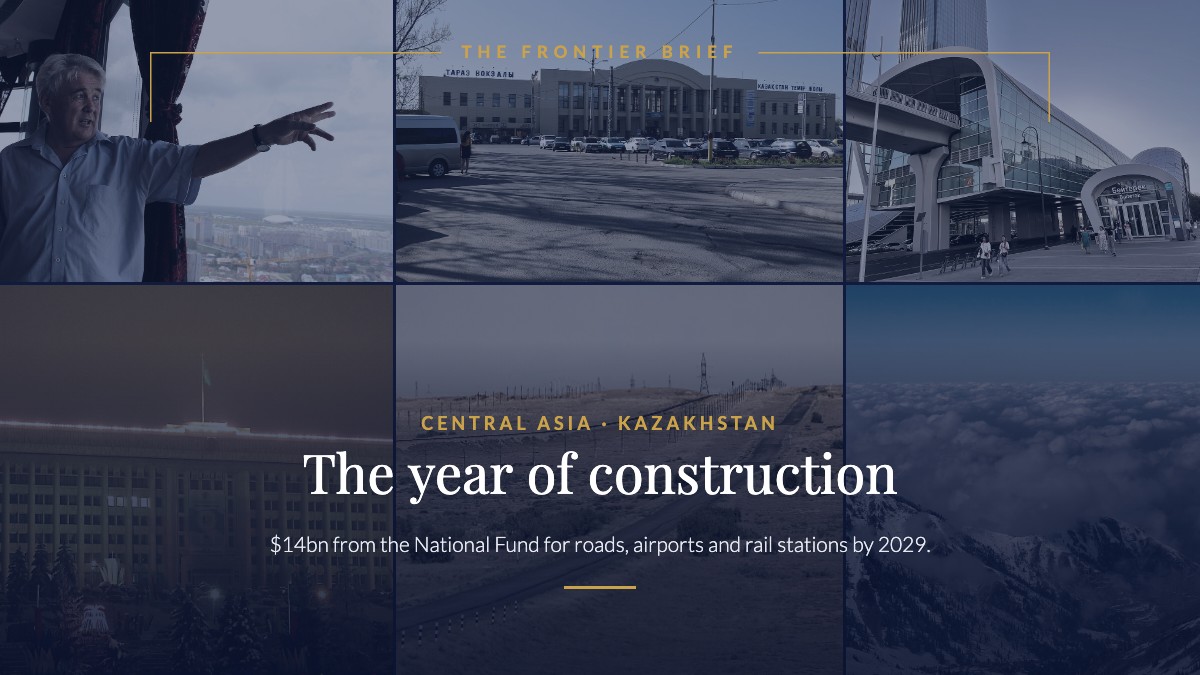
Kazakhstan is changing what it does with its oil savings: $14bn from the National Fund will go into roads, airports and rail stations by 2029.
For years, Kazakh fiscal prudence meant saving oil revenue for future generations. President Kassym-Jomart Tokayev’s state of the nation address on 28 October tilts the balance toward the present. The government will draw up an Infrastructure Modernisation Plan financed with about 6.5 trillion tenge from the National Fund, around $14.3 billion, through the end of 2029. Of that, 1.5 trillion will go to social projects between 2026 and the first two months of 2027.
Tokayev proposed declaring 2027 a year of large-scale construction, with a nationwide programme of roads, airports, railway stations and public facilities. He insisted that public money should leverage private capital rather than replace it, and openly acknowledged that investment attraction suffers from poor coordination between agencies. In response, he proposed a separate court system for investors in Alatau, the new city near Almaty that already operates under a special legal regime.
Why it matters
This is a shift in doctrine: Astana moves from saving oil rent to investing it in domestic connectivity, just as the Middle Corridor gains traffic. For builders, engineering firms and equipment suppliers it opens a four-year tender cycle. The domestic debate over how much of the National Fund should be spent will remain open.
The speech also included speeding up construction of the nuclear plant and expanding transport routes between China and Europe. And on 2 November, the Atomic Energy Agency announced a strategic uranium reserve to be created by the end of 2027, which may include undeveloped deposits, physical stocks and manufactured fuel. According to IMF projections cited by the president, the country’s GDP will approach $400 billion this year.
Sources: The Times of Central Asia (28 Oct and 2 Nov) · Trend News Agency (28 Oct) · Bernama (29 Oct) · Devdiscourse