Beyond the Chip Giants
South Korea’s leadership in advanced semiconductors is creating a new generation of investment opportunities across the specialized testing, inspection and equipment technologies powering the global AI chip race.
The New AI Cycle
Artificial intelligence is redrawing the semiconductor value chain. Korea enters this cycle with an advantage accumulated over decades: not simply manufacturing capacity, but a dense ecosystem of engineers, equipment makers, testing specialists and inspection technologies capable of responding as chips become more difficult to produce.
The economic impact is already considerable. The OECD expects Korean GDP growth to strengthen to 2.6% in 2026, with semiconductor exports continuing to drive both growth and private investment. Stronger-than-expected demand for advanced semiconductors is also identified as a potential upside to that forecast.
Export figures illustrate the momentum. Korean semiconductor exports reached a record $46.65 billion in August 2026, according to government data, rising 209% from a year earlier as demand connected to AI infrastructure continued to accelerate. Total exports reached $98.25 billion during the month, generating a trade surplus of $34.75 billion.
Those figures reveal more than an export boom. AI is increasing the strategic importance of the entire semiconductor production chain. The investment opportunity is consequently moving outward from the chip itself toward the technologies required to manufacture, test and inspect increasingly sophisticated devices.
Complexity Creates Value
At the center of this transition is high-bandwidth memory. HBM has become an essential component of advanced AI computing because enormous quantities of information must move quickly between processors and memory. The expansion of AI infrastructure is therefore driving demand for increasingly sophisticated memory architectures alongside the technologies needed to manufacture them reliably.
Greater performance, however, introduces greater complexity. Advanced chips generate considerable heat, require tighter production tolerances and increasingly depend on three-dimensional architectures. HBM adds another challenge because multiple memory dies are stacked together. The value of identifying a defective component before it becomes part of a more expensive assembly consequently increases.
This changes the economics of semiconductor manufacturing. Testing and inspection are no longer peripheral processes undertaken after the principal technological work has been completed. They are increasingly central to yield, reliability, throughput and ultimately profitability.
For Korea, that evolution expands the opportunity beyond semiconductor production. Decades spent developing one of the world’s most sophisticated chip ecosystems have created layers of engineering expertise around the manufacturing process. As technical complexity rises, companies capable of solving specialized problems within that ecosystem can capture a greater share of the value created by the AI investment cycle.
Testing the AI Era
AI chips are placing particularly demanding requirements on testing. Higher performance brings heat, power consumption and increasingly complicated production processes, while expensive fabrication capacity places a premium on using factory space efficiently.
The resulting opportunity is not simply to sell more testing equipment. It is to rethink how testing is performed as the physical characteristics of chips change.
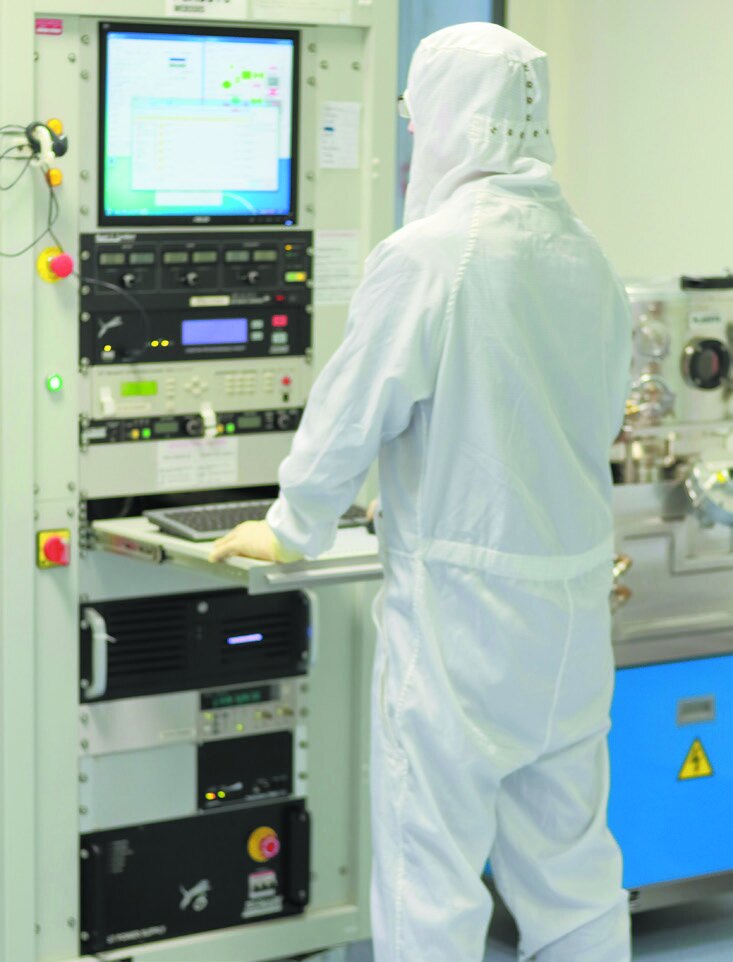
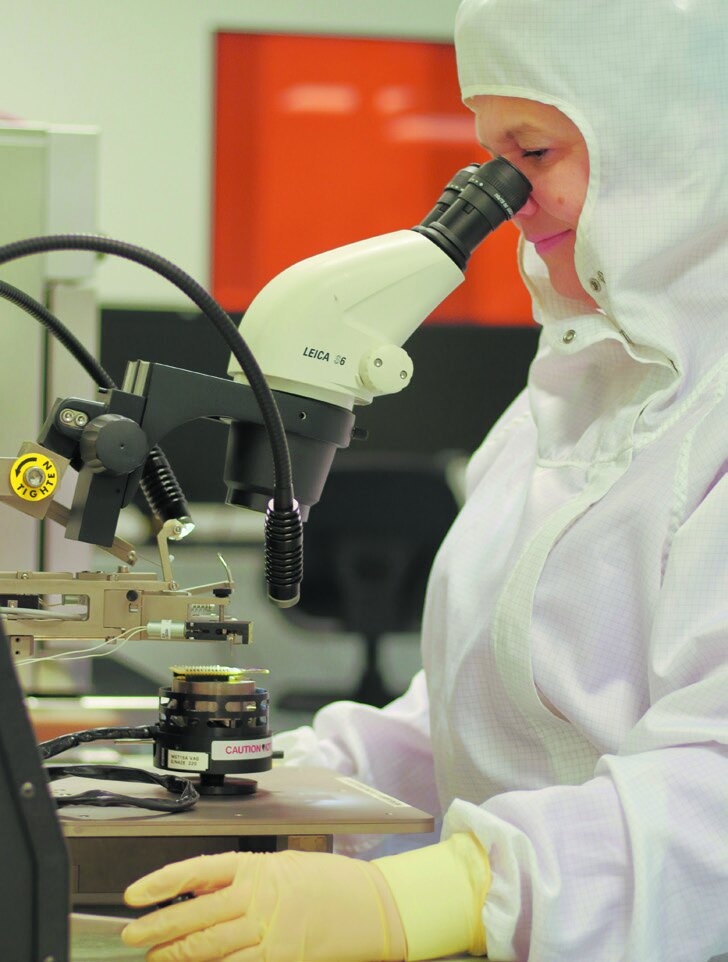
SEMICS represents this specialized layer of Korea’s semiconductor ecosystem, developing wafer-probing and testing technologies as AI scaling creates new performance, thermal and efficiency requirements. The evolution of the sector is also encouraging closer relationships between equipment developers and customers, with technological collaboration becoming increasingly important as testing requirements change.
“If we have an opportunity to test new AI chips, then we can develop a better way to test them,” said founder Shoun Yu. “Technology-wise, I want partnerships, and business-wise, I need partnerships.”
That distinction is important for international investors and industrial partners. Korea’s semiconductor ecosystem has matured to a point where partnership can increasingly mean co-development: combining manufacturing experience, customer requirements and specialist engineering to solve problems created by technologies that are still evolving.
It also creates opportunities for Korean specialists to become embedded more deeply in international semiconductor ecosystems. Suppliers capable of developing alongside customers can capture value not only from higher semiconductor volumes, but from the increasing technical difficulty of producing each new generation.
The 3D Transition
Inspection faces a similar transformation.
For decades, semiconductor progress was dominated by shrinking features and increasing density within largely two-dimensional architectures. The industry is now moving further into three-dimensional structures, advanced packaging and stacked components. That transition changes what manufacturers need to see, measure and identify during production.
It can also alter competitive positions. Technologies optimized for one manufacturing architecture do not necessarily retain the same advantages when the architecture itself changes. Periods of technological transition can therefore create openings for specialized suppliers capable of addressing requirements that previously did not exist.
NEXTIN is pursuing that opportunity through optical wafer-inspection technology designed to identify microscopic defects during increasingly complex manufacturing processes. The move toward 3D architectures is particularly significant because it can change the relative advantages of different inspection approaches.
“Our competitors use one-dimensional scanning technology. We use two-dimensional image stacking,” said CEO and President Chris Park. “It was very hard for us to compete, but when it comes to 3D stacking, we are much more advantaged.”
The comment points to a broader investment principle. Technological transitions can reset competitive positions. Companies that entered established markets later can gain opportunities when customers confront requirements that incumbent technologies were not originally designed to solve.
For Korea, AI, HBM and 3D architectures could therefore provide specialized equipment developers with opportunities to apply accumulated engineering expertise to new bottlenecks rather than competing exclusively within mature product categories.
From Manufacturing to Ecosystem
Korea’s semiconductor achievement should be understood as more than production volume. Decades of industrial development have created layers of knowledge around manufacturing: process engineering, equipment, materials, testing, inspection and the ability to commercialize improvements rapidly.
This depth is becoming increasingly valuable as semiconductor investment expands internationally. Governments are placing greater emphasis on resilient supply chains and strategic manufacturing capacity. At the same time, global AI investment is generating demand for advanced chips on a scale that is reshaping capital expenditure throughout the technology industry. New production capacity must consequently be accompanied by increasingly specialized supporting technologies.
Korean businesses can participate in that expansion without manufacturing the final chip themselves. Equipment, inspection systems, testing platforms and engineering knowledge are all exportable capabilities.
The OECD’s 2026 assessment reinforces the importance of the sector to the wider economy. It notes that Korean exports have surged, with particularly strong increases in technology products, while private investment is initially being driven by global semiconductor demand before broadening into other areas.
The momentum continued through the summer. Semiconductor exports rose sharply year-on-year in July before reaching a new record in August, demonstrating the intensity of the current technology cycle. More importantly, that demand is strengthening the ecosystem around production and encouraging further investment in the technologies needed to support increasingly sophisticated chips.
An Exportable Advantage
The next question is how much of this momentum Korea can convert into lasting international positioning. Global semiconductor investment is becoming geographically more distributed. Supply-chain resilience, industrial policy and the strategic importance of computing capacity are encouraging countries to develop manufacturing ecosystems closer to their own markets.
That creates competition for Korea, but it also creates opportunity. New semiconductor facilities need much more than production capital. They require equipment, testing, inspection, engineering expertise and relationships with technology providers capable of solving manufacturing problems as they emerge. Korea’s accumulated industrial knowledge can therefore travel with the international expansion of semiconductor capacity.
For specialized businesses, internationalization also reduces dependence on a narrow domestic customer base. It provides access to different semiconductor ecosystems, new applications and partnerships capable of accelerating technology development.
This outward orientation is becoming increasingly important to Korea’s investment proposition. The opportunity lies partly in businesses whose technologies may remain invisible to the final consumer but are increasingly indispensable to the production process.
Beyond the Chip
The first chapter of Korea’s semiconductor success established manufacturing scale and international competitiveness. The AI era creates the possibility of capturing more value from the technologies surrounding production itself.
Testing becomes more valuable when chips become hotter and more complex. Inspection becomes more valuable when stacked architectures make defects costlier. Equipment becomes more valuable when manufacturers must simultaneously improve throughput, precision and yield. Engineering knowledge becomes more exportable as new semiconductor capacity is built across multiple markets.
There are risks. Semiconductor demand remains cyclical, technological transitions can move rapidly and international supply chains are increasingly influenced by trade and geopolitical considerations. Korea’s exposure to global technology demand means exceptional export growth cannot simply be extrapolated indefinitely.
Yet the structural opportunity extends beyond a single cycle. AI is increasing the technical demands placed on semiconductor manufacturing, while the transition toward advanced memory, 3D structures and more complex integration creates problems that require new solutions.
For investors, that broadens the Korean opportunity considerably. The question is no longer simply how many advanced chips Korea can produce. It is how much intellectual property, specialized equipment and engineering expertise the country can contribute to every stage required to produce them.