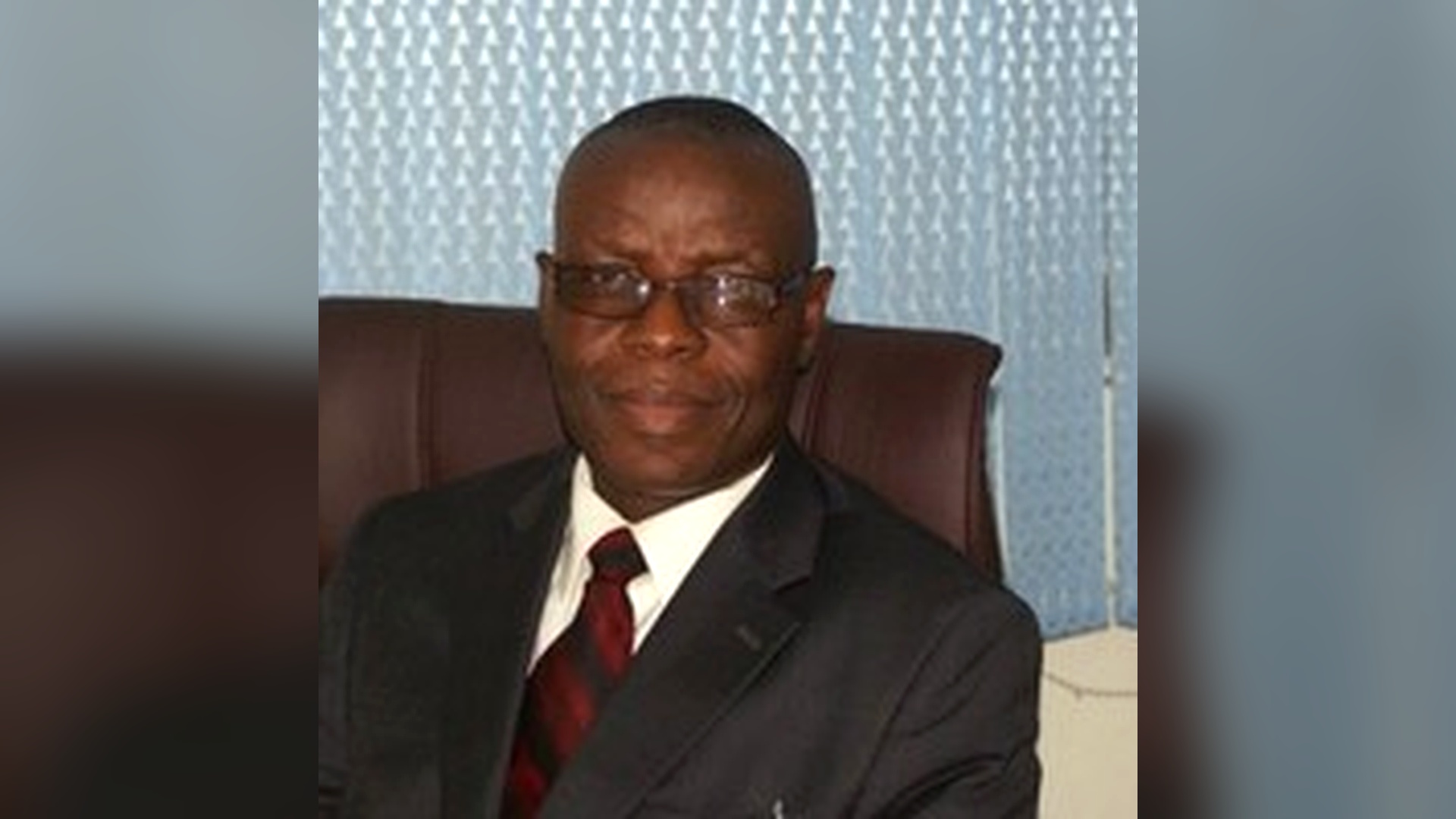
1. Since International Insurance Company began operations in 2003, the company has expanded its presence in Sierra Leone, most recently commissioning the IIC Tower and launching two new companies in June 2025. In this regard, which milestones best reflect the company’s transformation and its contribution to Sierra Leone’s insurance industry?
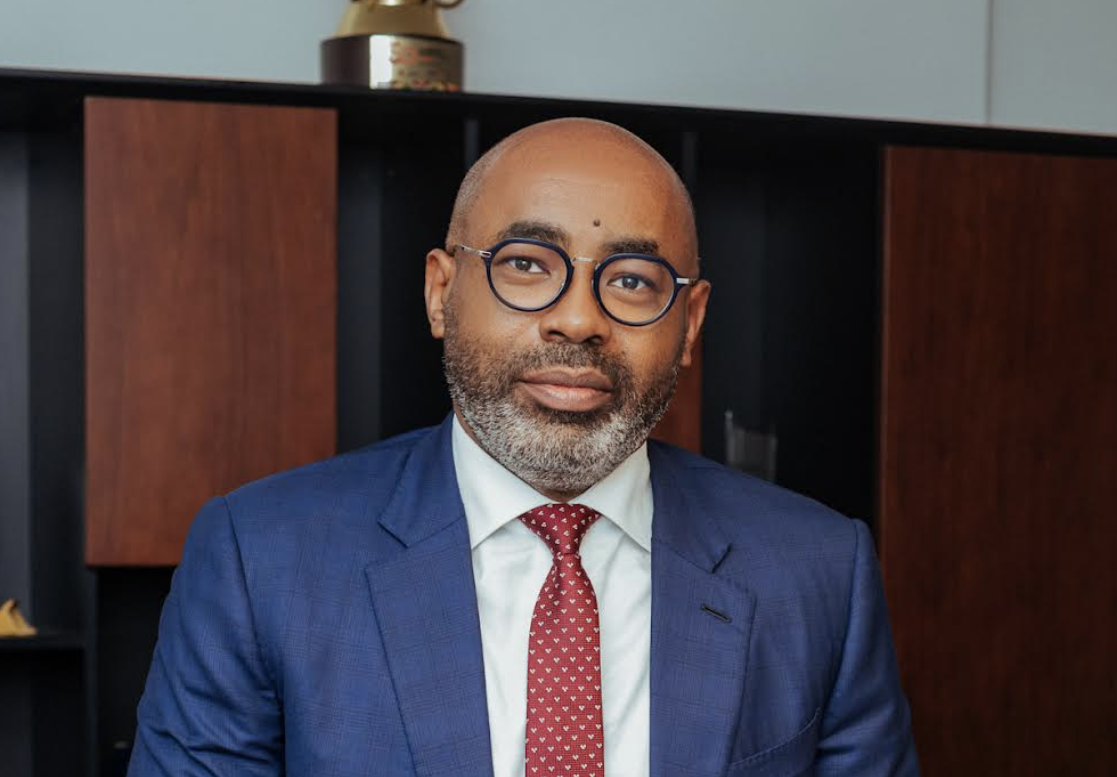
Dr. Nduka O. Anyaso: Thank you so much for having us here. Let me start this way.
When we started operations in 2003, the civil war had ended in 2001. The company was actually incorporated in 2002, but we opened in 2003.
Our primary objective was to support the Government in the socioeconomic development of Sierra Leone.
We also found out that, prior to that time, one of the complaints in Sierra Leone was the non-payment of claims by insurance companies. We were mindful of that as part of our objective, to demonstrate that in insurance we can pay claims promptly.
So, having that in mind, we started first with non-life operations.
We continued with non-life operations until 2010, when we found out that there was virtually no life insurance business in Sierra Leone. So we needed to find out what had happened and why we did not have life insurance.
They told us two things. One was the high inflation rate. When you take out a life policy or fover ten or fifteen years, the amount would amount to almost nothing at maturity. Secondly, the income level was low. Many people could not afford the premium for life insurance.
For that reason, we decided to design a policy that was suitable for this market. We called it an investment-linked life policy, in the sense that part of the premium goes to life cover. If the person dies before maturity, the beneficiaries are compensated.
Another part also attracts interest income. The essence is that the interest helps cushion the effect of inflation. So, at maturity, you may discover that you are able to get more tan the total premium paid and more than even the sum assured because of the interest element.
We also included some riders in the life policies because we discovered that workers here, particularly in the government sector, apart from the fact that their income was low, did not have a very good welfare scheme. May be because, they had just came out of the war.
So we decided to include some riders in life policies and marketed them as part of a welfare package.
For instance, we found some brilliant people and asked them why they did not further their education. They said their parents did not have the money to pay for their school fees.
So we included in our education life policy a child maintenance benefit. What that policy does is that if the life assured, perhaps the mother or the father, dies before the child reaches the age of going to college, we pay a child maintenance benefit annually until the maturity of the policy.
The policy is usually designed to mature at the time the child is about to enter college or university. At maturity, you can have a lump sum to pay the child’s college fees. Usually, the most important thing is the ability to pay when they first enter.
We also included a rider such as a policy loan. In essence, if your policy has attained a surrender value, you can bring it to us as colateral and we can then give you a loan of up to 90 to 97% of the surrender value. This enable the policyholder to meet such immediate needs like house rent, school fees or cover other essential needs.
When we did this, we thought perhaps only a few people would be interested, but we were amazed that so many people were interested. As a result, our company became number one in life insurance policies.
We were tested during Ebola, which occurred around 2013, 2014 and 2015. Many health workers died, many teachers died, and many others.
Some of our colleagues in the market said they were not going to pay those claims because Ebola was an epidemic. But we said no. We did not have such an exclusion in our policy.
Ebola would not last forever. We would suffer a short setback, but we would recover later.
So we paid the beneficiaries of those policyholders who died as a result of Ebola.
That also opened the door for many others to join the scheme, which helped us to become number one in life insurance.
Interestingly, they often say that the best form of commendation is emulation.
We discovered that many other companies started copying our policies, poached our staff and agents whom we had trained. So that is one area where we have contributed to the market.
Interestingly, the President at that time, Ernest Koroma, called me and said to me, “Since you came to this country, I have watched you with keen interest.” He said he was pleased with our development, and that if there was anything we could do to help the economy, we should go ahead and do it. If we needed his support, we should let him know.
I was encouraged.
I had wanted to stay not more than ten years in Sierra Leone, but because of that acknowledgement, I felt that if the number one citizen of the country could acknowledge the little contribution we had made, why not stay back and do more?
That is why I decided to stay and do more.
As a result the idea of building IIC Tower came from that. The idea of opening Citadel Asset Management also came, as well as the idea of going into agricultural insurance and the idea of going into Citadel Properties.
First, we built IIC Tower because, perhaps because of past experiences, people often see companies that are not locally owned as fly-by-night companies. We felt that having a tower like this would strengthen their confidence, knowing that if we wanted to leave, we could not carry the building with us.
So that would strengthen their confidence to do business with us. That is why we did it, and it is achieving that purpose.
It also provides office space for what we want to do because the other subsidiaries will need office spaces.
For us, what we are doing is not just building an insurance company. We are building what we call a financial supermarket. That is our objective.
Citadel Asset Management came about because we found that there was no asset management in Sierra Leone.
We felt that society needed this to support SMEs and other corporate institutions and to encourage a savings culture, because there is no savings culture here. People do not always plan for tomorrow.
One of the reasons was to encourage people to have a savings culture because any individual, any family or any nation that does not save will always be poor.
As you save, you are going funds for investment, multiply it over time, one eventually becomes wealthy. So we decided to encourage a savings culture. That is why we went into fund management.
Another reason was that I often found myself in the UK and the U.S., where I met Sierra Leoneans. When I asked why they did not come back to Sierra Leone, some said there was nothing to come back to. Others would say they gave family members money to build houses and the money was gone.
So we also felt that this company could help those in the diaspora to save here and, when they accumulated enough savings, they could invest them here. That is also why we went into asset management.
We went through the Bank of Sierra Leone (BSL) and all their procedures, and then they gave us a licence. That was one of the things we launched in June 2025.
Then there is agricultural insurance. We have branches across the country, in every part of Sierra Leone. In the course of travelling around the country, I discovered that there is huge potential for agricultural business here. This country has the potential to be a net exporter of food and agricultural products. There is very significant potential. But the farmers do not have insurance.
Oftentimes, when there is such climatic shocks like heavy rainfall, flooding or drought, and other perils like uncontrollable pests diseases, you see them losing their businesses. So we felt there was a need for us to introduce agricultural insurance.
That is why we partnered with our partners abroad to introduce parametric index agricultural insurance to support the farmers and also support the economy.
Interestingly, it coincided with the time the Government was launching the Feed Salon programme.
We spoke with the Minister of Agriculture and explained that this was our own way of supporting the country and helping to make the Feed Salon programme a success.
That is why we went into it.
We are not done yet. We are still working on other things.
One of the things I also discovered here is that there is a big gap in people’s housing needs.
We also want to play a role there. That is why we launched Citadel Properties.
That has not fully taken off yet. We hope that next year, once the other initiatives have stabilised, we can start that one. The idea is to provide an affordable housing scheme for people, particularly the working population.
That is what we are doing to help support the socioeconomic development of the country.
2. Turning to technology, how is the company using technology to improve operational efficiency and customer experience, and what measurable improvements have these systems delivered?
Dr. Nduka O. Anyaso: In the area of innovation, some of the things I mentioned to you are already innovative here.
It will also interest you to know that we were the first to computerise operations in Sierra Leone.
We were also the first to introduce the use of software insurance underwriting, reinsurance and claims management in Sierra Leone. Those are also innovations and examples of using technology.
We also have our website. I am sure you probably got some of your information from our website.
But we are not done yet.
We still want to develop that website so that people can conveniently do business with us through it.
We recognise the need for that.
We also recognise the role AI plays because we know that AI plays a role even in people deciding which insurance company to deal with.
That is why we want to have a very active and interactive website.
The challenge is that sometimes you do not have adequate skilled manpower to run these things.
That is where we are struggling a little bit, but we are not relenting. We will keep going until we get to where we want to be.
We want a situation where people can do business with us without coming to the office, wherever they are in the world.
That is our desire.
We are also on social media, including Facebook Insstagram, Tiktok and Twitter, to make ourselves known to the public and to the outside world.
Interviewer: To be more connected with your clients.
Dr. Nduka O. Anyaso: Absolutely. To be more connected with both our clients and prospective clients.
Interviewer: You were talking about agricultural insurance. I do not know if you would like to talk more about the partnership you have.
2. What role can agricultural insurance play in supporting investment and economic resilience, and are there any other partnerships you would like to discuss?
Dr. Nduka O. Anyaso: When we started agricultural insurance, there were two forms of agricultural insurance.
There is the indemnity agricultural insurance, which is the traditional form of agricultural insurance, and there is also parametric index agricultural insurance.
We did not want to do indemnity because it has a whole lot of problems.
We decided to do parametric index agricultural insurance, but we do not have the technology here.
The weather stations here are not well developed. The satellite system is also not well developed or not existing.
So we had to look for partners outside.
We were particularly able to find one in East Africa that is quite experienced in both climate-change management and parametric index agricultural insurance.
They have been doing it for many years. They have worked with farmers in East Africa, Southern Africa, Southern Nigeria and Senegal.
So we partnered with them to take advantage of their knowledge in parametric index agricultural insurance.
We collaborate with them in the technology of parametric index agricultural insurance.
On how it can help develop the economy, as I said, we see potential in agriculture here.
It may interest you to know that agriculture provides employment for about 75% of the workforce here, but it is more or less peasant farming.
Not many people are involved in commercial farming, although a few are now entering that space.
We believe that if we support those peasant farmers, we can make a difference.
What we are doing is aggregating them together to provide insurance for them.
We are not only providing insurance; we are also providing training on modern agricultural practices to help them grow.
We believe that we can do that—if Morocco, which is a desert, can export food, what about Sierra Leone?
We have abundant rainfall here and very fertile and arable land.
Interviewer: You have a lot of land. You have all the resources they need.
Dr. Nduka O. Anyaso: Yes, we do.
That is why we are supporting the farmers and supporting the Government to ensure that this potential is actualised.
4. Beyond your commercial activities, how does IIC integrate ESG and CSR into its strategy, and what impact have these initiatives had on local communities?
Dr. Nduka O. Anyaso: Corporate social responsibility and environmental, social and governance practices.
As much as we can, depending on the availability of funds, we support society.
At one point, we supported the School for the Blind and the old people’s home.
At another point, we also supported the Boxing Association here.
We also support young people who desire to play golf here.
Those are areas where we play a role from time to time when the need arises.
We also have people coming here to request one form of support or another in society, and we contribute our own fair share.
Of course, we are also mindful of the environment.
We do not want to do things that will harm the environment.
Even in the workplace, as you can see, we have plants here. We also have plants on all the floors.
Interviewer: It is so important. Most offices never have that.
Dr. Nduka O. Anyaso: We are quite conscious of that.
We do our best to make sure that we do not harm the environment.
For instance, one of the things we are currently doing is introducing solar energy to reduce the use of fossil fuels.
Interviewer: So the entire building will use solar power?
Dr. Nduka O. Anyaso: Not yet, but as I said, it is an ongoing project.
Hopefully, by January we will have fully implemented it.
5. Looking ahead, what are your main priorities for the future, and what role do you see the company playing in the development of the country?
Dr. Nduka O. Anyaso: I said to you when we were starting that our desire is not just to build a strong insurance company.
Let me capture it this way: we want to be one of the leading insurance companies in Sierra Leone.
I also said earlier that we are not just building an insurance company; we are building a financial supermarket.
We are trying to build an institution that will succeed our generation and future generations, where people can come and access most insurance and other financial services under one roof.
In that way, we believe we are going to contribute to the socioeconomic development of the country.
We will also increase financial inclusion because there are so many informal people who are not in the financial system.
Through asset management and by encouraging them, we are bringing them into the system.
We also do that through insurance because we go everywhere.
As I speak to you, our marketers are on tour in the provinces.
Once people enrol in our life policies, the premiums they pay go into the banking system and are also used to support businesses in the country, stimulating the economy.
Those are some of the areas where we are playing a role.
Of course, by Sierra Leone standard, we are also one of the heavy taxpayers in this country.
In that way, we also support the Government.
Interviewer: I would now like to shift the focus to your personal journey.
Your career spans more than two decades in insurance, supported by your academic qualifications in insurance and finance, Fellowship of the Chartered Insurance Institute in London, and experience as an author.
6. Reflecting on your professional journey, how have these experiences shaped your leadership, which achievements are you most proud of, and what legacy would you like to leave in Sierra Leone’s insurance industry?
Dr. Nduka O. Anyaso: Good question.
I do not even know whether to say this or that is an achievement or something I am most proud of, but what I will tell you is that I am grateful to God for the privilege and opportunity He has given me.
Over the years, my journey has been entirely in insurance. All my life, I have not done anything else other than insurance.
I would not like to say it was accidental, but when I came into the insurance industry, those who were senior to me saw potential that I did not even realise I had.
My manager told me, “Go and study insurance. You will do well in insurance.”
I wanted to study accountancy. They said, “No, go and study insurance. You will do better.”
Eventually, I went to the University of Lagos to study insurance.
While studying it, I realised that insurance is something that can help stimulate the economy and contribute to society.
Many people do not understand it, particularly in this part of the world.
It was there that I caught a vision that I was going to contribute and be part of the crusaders who would educate people about insurance.
I come from Nigeria.
When the opportunity came, we had this company in The Gambia, Liberia, Guinea and Sierra Leone, and I started all of them.
When I left Nigeria and went to The Gambia, my colleagues said, “What are you going to insure in The Gambia? How can you leave Nigeria and go to The Gambia?”
But what was motivating me was not just money. It was to help people understand more about insurance and the role insurance can play in society.
Because it is something I am passionate about, I enjoy it.
Along the way, after getting my Associateship from the Chartered Insurance Institute in London, I obtained the Fellowship.
Then I felt I could go further into financial services.
I obtained an MSc from the University of London, all for this purpose.
After that, the Commonwealth University. After going through what we had done and our modest contributions, they wrote me a letter saying they wanted to give me a doctorate degree award in management, majoring in insurance management.
I attended that short course and everything required.
So it is a doctorate honoris causa. That is why you can see “Dr.” before my name.
That is how far the journey has gone, and for me it is fulfilling.
We are not done yet, but when I look back at what we have done, I am grateful to God for the way He has helped us.
I want to see a situation where we are able to contribute more.
My ultimate vision for this company is that it will become the biggest non-banking financial institution in Sierra Leone.