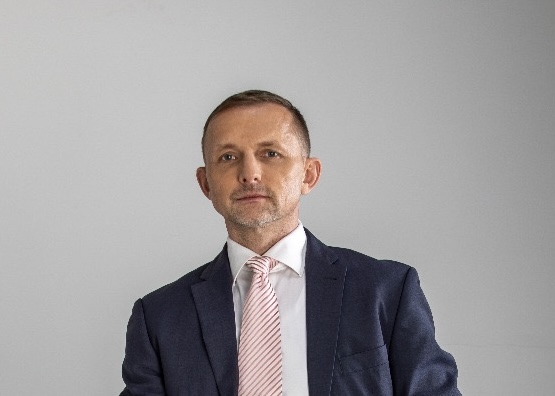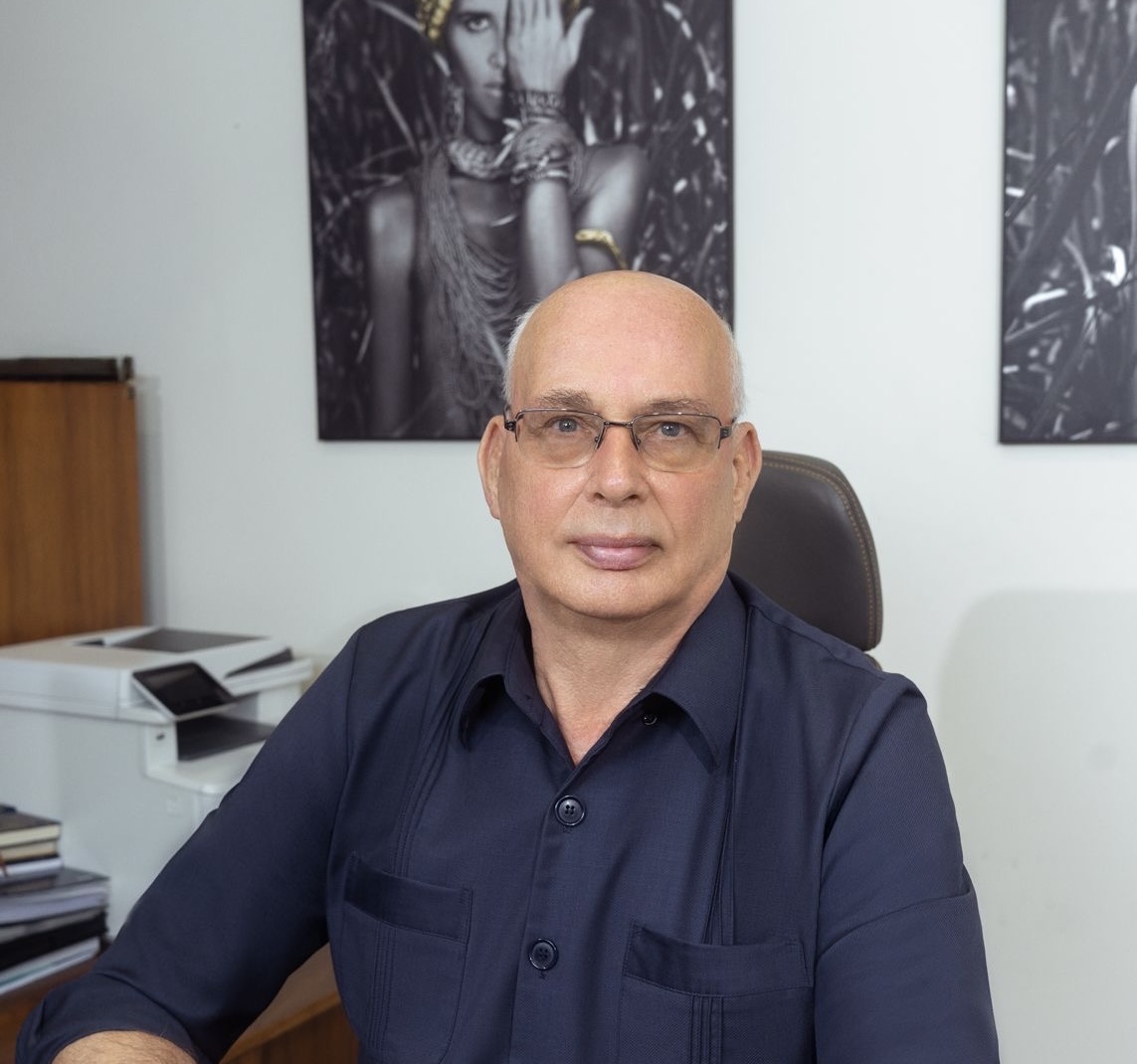

1. As Uganda’s construction sector continues to expand, leading players are evolving alongside it. Could you share how Hima Cement has grown in recent years and how you position the company within the market today?
As a company, we’re currently the only integrated producer of cement in the country. We’ve got an integrated plant, and that means producing clinker and cement in Kasese district in western Uganda. Then we’ve got a grinding unit in Tororo in eastern Uganda.
There is now a new, quite large, Chinese-backed cement company entering the market, and they’re expected to commission their cement production soon as well. But as far as we are concerned, I think we’re proud of the fact that the company, since 1994, has been able to supply 100% locally produced cement.
I think one of the big things that we’ve been able to achieve as a company is the ability to use techniques or materials that make sense in this circumstance, and specifically what I’m talking about is substitution of coal. Of course, coal has quite a bad reputation in terms of the impact it has on the environment, but at the same time, you do need coal as a heat source to produce, whether it’s cement or whether it’s other products such as steel. But what’s unique about Hima is that we’ve been able to substitute up to 40% of our energy requirements with locally sourced alternative fuels.
Alternative fuels are things like biomass, which is agriculture waste; things like coffee husks and sugarcane waste. And this has been able to significantly offset our emissions, or our carbon footprint. But they’ve also been able to give us a bottom-line saving, which is quite unique as well, because there is no coal in Uganda. We have to transport it huge distances from Tanzania or from Mombasa. So that created a unique opportunity to do something that’s actually environmentally friendly as well. That’s something that we’re particularly proud of, and I think a big achievement for this company.
Beyond that, we try and maintain very high standards as far as the products are concerned. You would find most of the key infrastructure projects in the country have been built using Hima Cement products. And that’s a source of immense pride for us.
Cement remains a significant building block for any developing economy. And having a good source of locally produced cement, both in terms of quantity and quality, is critical to be able to expand infrastructure needs as the country continues to develop.
2. Could you share how Hima Cement has grown in recent years? How do you position the company within the market today?
We’ve seen overall market growth of around 15 percent per annum for the last three years or so. That’s a result of the broader economic context where there is a big infrastructure gap, and we’re beginning to see that gap being filled to some degree. There’s a lot of building happening, and with the inherent economic growth, we’re seeing cement volumes growing accordingly. We are also embarking on an expansion plan at the end of this year to basically double our capacity at the plant in western Uganda. That comes on the back of the outlook that we see for that part of the country. And looking to tap into the demand that we forecast is going to come in. And that’s not limited only to Uganda itself.
There has been a big push by Uganda in cooperation with the National Army of the Democratic Republic of Congo to bring peace to the border areas of Uganda on the DRC side. What we’ve seen as a result of that is a big spike in exports of cement from Uganda to the DRC, which basically means that peace has brought about some significant amount of development. Because it’s not as if we’re substituting that cement with cement that was coming from elsewhere before. It’s just that now, because some degree of peace and stability has been brought to those areas, we have seen the direct impact in our performance, and opening opportunities for regional trade.
3. Have the exports to DRC benefited Hima Cement directly in terms of production, sales and overall growth?
Yes. I mean, we’re seeing on that particular segment alone, probably 50% growth. And I would translate that directly to the impact of the peace and stability that’s been brought about in recent times. Within Uganda, as I said, the market’s grown at around 15% at least for the last three years.
For example, there was stadiums coming up for the African Cup of Nations. There are hydro dams that have been built in recent times, we’re looking at the revamping of the railway line, lots of roads that get constructed. That inherent economic growth is what we’re able to see translate into improved sales in volumes.
4. As cement plays a foundational role in national development, how is Hima Cement contributing to Uganda’s infrastructure expansion and broader industrialization agenda?
We’ve made a conscious effort to make sure that the products we produce are meeting not only local standards but international standards. Because a lot of these large infrastructure projects have a requirement that’s of a high-quality cement. We have been able to meet the requirements of these projects, and that’s why we are the choice of cement for the large majority of these key projects. Whether it’s Entebbe Airport, the Entebbe Expressway, there’s the Jinja Nile Bridge, some of these stadiums I just mentioned that are being built. Like I said earlier, you’ve got to have the availability of the cement and also be able to produce the quality required for these projects. And we’re proud to say that we’re able to achieve both those metrics.
5. Would you say that ability is the key for Hima to stand out among your competitors?
I would like to think so, yes. We’ve got a very good quality control system, and I think that’s what makes us achieve the quality but also to be consistent with that quality. That’s also very important. These infrastructure projects are meant to last decades, and therefore we need consistency with regards to all the building materials that go into them. And that’s why not only quality, but quality control as well, is critical. Because sometimes, unfortunately, we see buildings that don’t last as long as maybe they’re expected to last.
We are ISO is certified. And, going beyond that for example, we have our labs independently calibrated every year. That’s what allows us to make sure that what we’re producing is consistent every single day.
6. As sustainability is becoming central to the global cement industry, how is your company embracing innovation and new technologies to improve efficiency and reduce environmental impact?
I think the big, unique thing about our company is the ability to substitute a big percentage of our heat needs with alternative fuels. That step puts us at quite an advantage relative to our peers. If we put some numbers to that, our carbon footprint per ton of cement is approximately 450 kilograms per ton of cement versus a global average of 850.
7. Have you participated in partnerships or collaborations that have helped or contributed to the growth of the company?
No. I mean, any successful business has a big ecosystem of people and companies around them. We’ve got lots of companies that have grown and even branched out into other things, but as a result of partnering with Hima.
When I look at the supply chain side, we’ve got a lot of people that are supplying. For example, all these alternative fuels go through various tiers. We’re essentially buying coffee husks sometimes from small-scale coffee mills, and the husk comes out of there. Then we’ve got aggregators, and those aggregators will supply to our suppliers, and that will eventually end up with us.
Similarly, on the sales side as well, we’ve got a whole network of distributors, wholesalers and retailers countrywide that have benefited off this ecosystem.
Logistics plays a huge part in the cement industries, and we’ve got a lot of logistics companies that have grown, being associated with Hima, and then branched out into doing logistics services for other industries. For example, the oil and gas. I think in that way as well, cement plays an interesting role in development, because the volumes in terms of tons, are generally higher than in other industries. It allows you to build scale, and then that scale can be translated into other industries down the line for some of our suppliers and partners. So, that’s something that we’re proud of as well.
8. And what kind of partnerships or collaborations would you like to pursue to expand your footprint within Uganda or across East Africa?
I think there’s a big push from the government now, and they’ve understood maybe the value of PPPs. That has the potential to unlock a lot of growth in the infrastructure space in the country. We’ve seen some very successful examples. I think the best one being the Entebbe Expressway, which has been able to provide a very good alternative. For those of us who were there before, to compare the impact of that one project serves as an example for what’s possible under such frameworks in the future.
As a provider of building materials, one of the things we’d be excited to see in the future is that, if there was more growth in that space, it would really unlock a lot of private capital that allows us to enhance our infrastructure as a country. And the good thing is that the government seems to be receptive of that model. I think it would be exciting to see where that develops as we go along.
9. Do you have plans to expand horizontally and diversify your products?
We are venturing into steel. We’ve got a lot of iron ore deposits in Uganda that have not been exploited for a long time. But over the last five years or so we’ve seen some synergies with cement and steel. So, by the end of the year we hope to be in production with our steel plant as well.
10. Do you have any other key priorities for the remaining of the year?
Under Hima Cement the main priorities for now will be to get our cement expansion underway and also to complete this steel project on time so that we can tap into the existing distributor network that we have, the brand loyalty that we have, and be able to extract those synergies for our business.
11. Beyond business performance, companies are increasingly expected to create social value. What are some of Hima Cement’s key CSR initiatives, particularly in supporting local communities and sustainable development?
The biggest thing we have is a scholarship program. What we’ve noticed is, given that we’re in rural parts of the country, one of the biggest things we could give back is to support especially the best-performing students, to make sure they can achieve their maximum potential. We also support with health camps; we support some schools around us. We actually have a school that’s built by HIMA and supported by HIMA very close to the plant in Kasese.
We also undertake health camps in not only the areas where our factories are located, but even some of the areas where we source raw materials from. We try and do that every quarter.
And we are also receptive towards needs of the community when they’re communicated to us. It might seem relatively simple, but things like boreholes. We’ve noticed that something as simple as a borehole for portable water is not something that’s very expensive for us to provide, but it ends up having a big impact on the community. It’s a lifeline. And sometimes that’s a bit more impactful, because we’re tailoring the program to what’s required as opposed to deciding it in a boardroom and then imposing it on; something that may not be exactly what is required. So we try and be a bit flexible with our programs.
We also have an internship program where we try to screen and retain as many of them as possible during that period. And in the future, we’re trying to create a training center, something like a polytechnic, so that we’re able to scale people up. We are finding that, given the scale of industrial expansion in the country, there is starting to be a gap in manpower requirement at certain scale levels. By having training centers, it not only helps us to support the community and support the development of young people, but it also helps us to, in a way, cover that gap. Because then we’re able to absorb almost all the graduates that come out from these training programs. So that’s something else that we’re looking to do moving forward.
12. How is the composition of your staff balanced between locals and expats?
Over 95% of our stuff is local. Because of the fact that we were the only integrated cement producer for a long time, we needed the requirement of some expats to come in to support. But more than 95% is local.
13. As Uganda continues to invest in infrastructure, what is your outlook for the cement industry, and what message of confidence would you share with Fortune readers about investment opportunities in the country?
There is a big entry from China West Cement Limited into Uganda, and I think they’re adding a lot of capacity into the market. So, we don’t expect there to be much of a supply gap moving forward.
There isn’t one right now so, at least for the next few years, we expect quite a bit of intense competition. But I think these are normal in any business. There’s got to be a business cycle where a new entrant comes in.
Over time, we feel fundamentally the market continues to grow because of the infrastructure needs. When one looks around the country, there’s been a lot of improvement, but there’s definitely a lot of scope for fulfilling our infrastructure requirements. At the rate that the economy is growing and even the industrialization is growing, it’s only going to intensify these infrastructure needs. A lot of this infrastructure, almost all infrastructure, requires cement. Therefore, we do see the market growing as a whole, and that should be able to absorb some of this excess capacity that we see.
Uganda, as far as an investment climate is concerned, I see it very positive because they’ve been very open with capital flows both in and out of the country. They’ve got policies in place that support value addition quite actively and give reasonable incentives for investment. For example, in targeted sectors, things like income tax holidays, which provide an incentive to invest. I think all in all, the biggest point is that there is a clear and conscious effort by the government to support these investments, to make sure they are successful.
There’s also a big push to bring down the cost of power, which has largely been implemented, and that gives us a good competitive advantage in the region. We’ve got a government in place that is very pro-investment and has always tried to have the regulations and the framework in place to make sure that all these projects end up being successful. Especially when it comes to value addition, because I think that’s a key priority of the country.
There are still some sectors that are lacking in investment. There are still opportunities in some of the infrastructure under PPPs. That’s something that would interest anyone who’s in that sector, because I don’t know how many countries there are where there’s such a big requirement and such a gap there in terms of infrastructure, and yet there’s so much growth coming on the back of it. So I think it’s a big race to keep up with the infrastructure requirements of the country.